Xing or Ding? Unravelling the Mystery of a Tang “Guan” Bottle
邢窯還是定窯?唐代「官」字款白瓷瓶之謎
A single character incised beneath this Tang dynasty white porcelain bottle has helped place it at the centre of a much larger question in the study of early Chinese white wares.

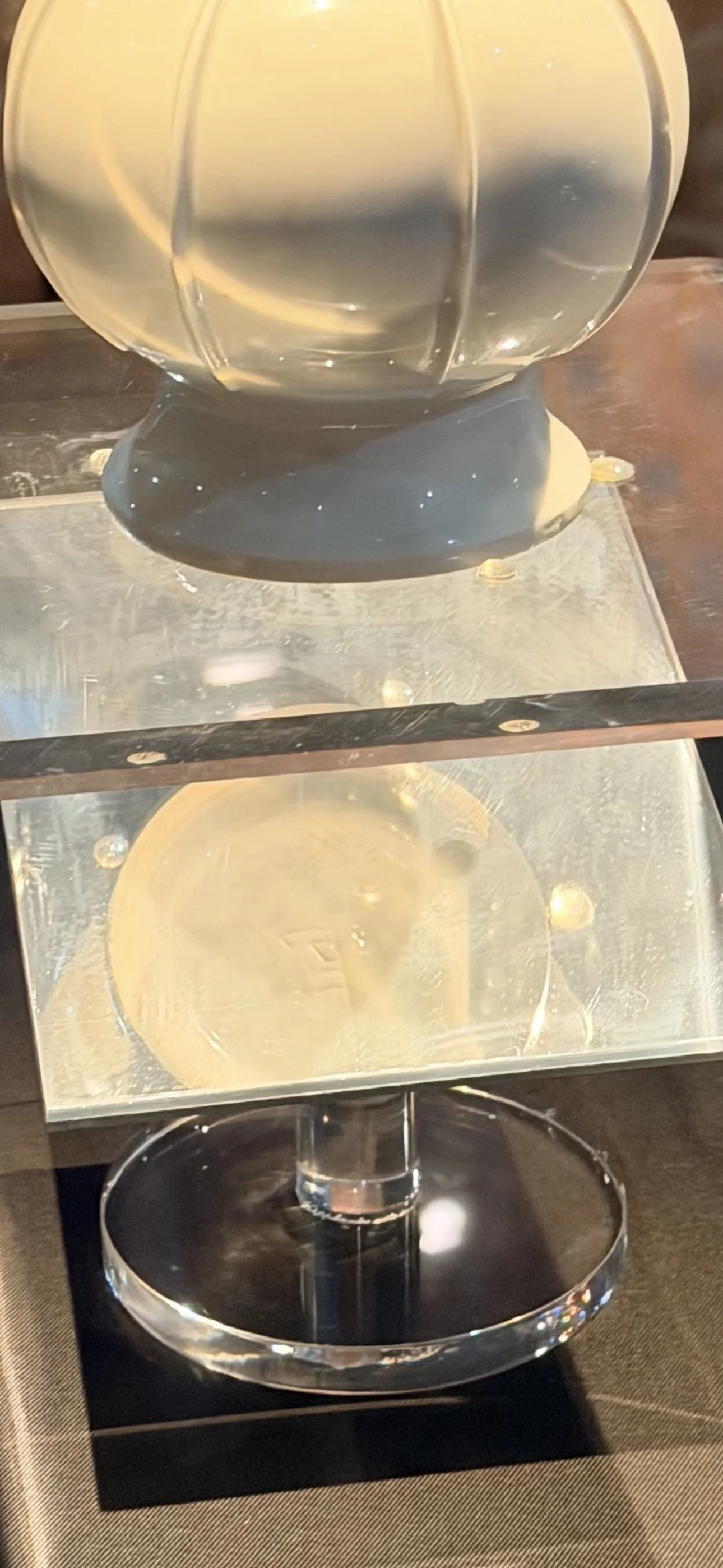
The character is 官 (guan), which means “official.”
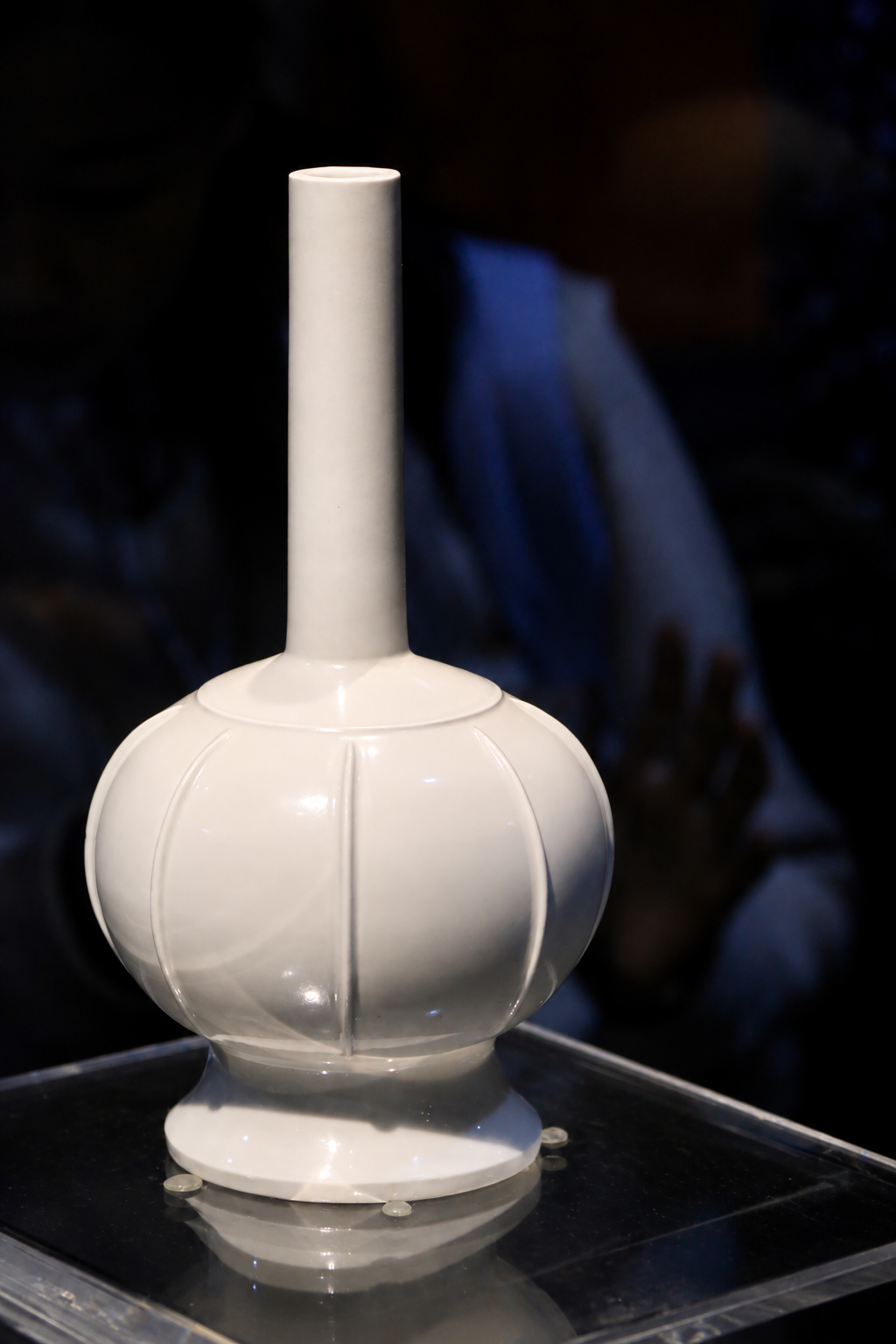
Today, Chengdu Museum identifies the vessel as a Tang dynasty Xing ware white porcelain bottle. Excavated from the Jiangnan Guan Street 江南館街 site in Chengdu, its brilliant white glaze, eight-ribbed body and extraordinarily elongated neck make it a striking example of the sophistication achieved by Tang potters.
But Guan-marked white porcelains have a complicated history.
Over decades of research, scholars have debated whether different examples should be attributed to Xing, Ding, Jingxing and other northern kilns. Archaeological discoveries have gradually demonstrated that Guan cannot simply be treated as the signature of one kiln.
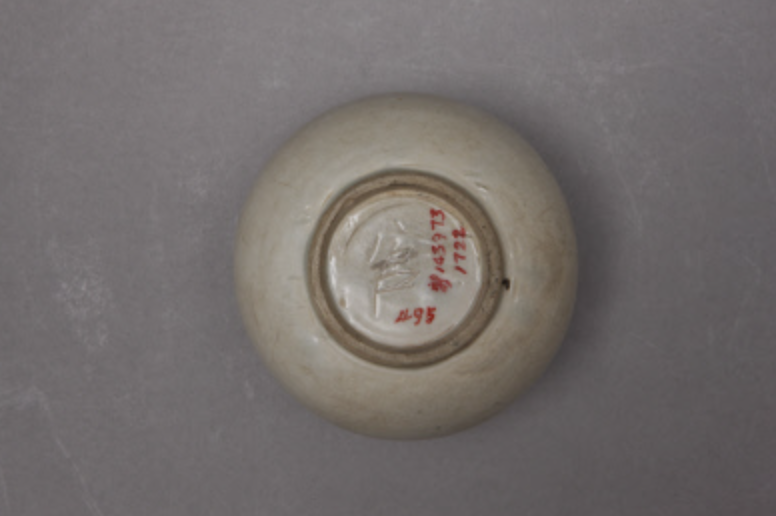
Ding Ware White-Glazed Water Vessel with Incised “Guan” Mark, Palace Museum, Beijing
White as Silver, White as Snow
By the Tang dynasty, white porcelain had become one of the great achievements of northern Chinese ceramic production.
Among the most celebrated centres of Tang white porcelain were the Xing kilns of present-day Hebei. In his Classic of Tea (《茶經》), the eighth-century writer and tea connoisseur Lu Yu 陸羽 famously compared the whiteness of Xing porcelain to silver and snow — 類銀、類雪 — while contrasting it with the jade- and ice-like qualities of Yue celadon.
Tang Dynasty Xing Ware White Porcelain Bottle with Incised “Guan” Mark
Yet identifying a white porcelain vessel as Xing is not always as straightforward as its appearance might suggest.
Xing and Ding: Two Traditions of Northern White Porcelain
Xing was one of the dominant white-porcelain traditions of the Tang, while Ding emerged as another major northern centre and became particularly important from the late Tang through the Five Dynasties and Northern Song.
The relationship between the two was close.
Early Ding production absorbed aspects of the technological and aesthetic tradition established by Xing. Similarities in body, glaze, firing technology and vessel forms can consequently make attribution difficult, particularly when dealing with objects excavated far from their kiln of manufacture.
Modern archaeological science has added another layer to this discussion. Chemical and technological studies of Xing, Ding and other northern white wares have revealed both close technological relationships and significant differences in the preparation of their ceramic bodies and glazes. Scientific analysis of Xing, Ding and Gongyi wares, for example, has identified differences in body and glaze recipes while also suggesting that early Ding fine white porcelain inherited aspects of the technological tradition established by Tang Xing ware. Attribution therefore increasingly draws upon scientific analysis alongside stylistic comparison, archaeological context and kiln-site evidence, rather than appearance alone.
And this is where the character 官 becomes especially important.
What Does 官 Guan Actually Mean?
Literally, Guan relates to an official or governmental context.
It is therefore easy to see why earlier interpretations sometimes treated Guan-marked ceramics as straightforward evidence of imperial or official production. But discoveries made over the last several decades have complicated this picture considerably.
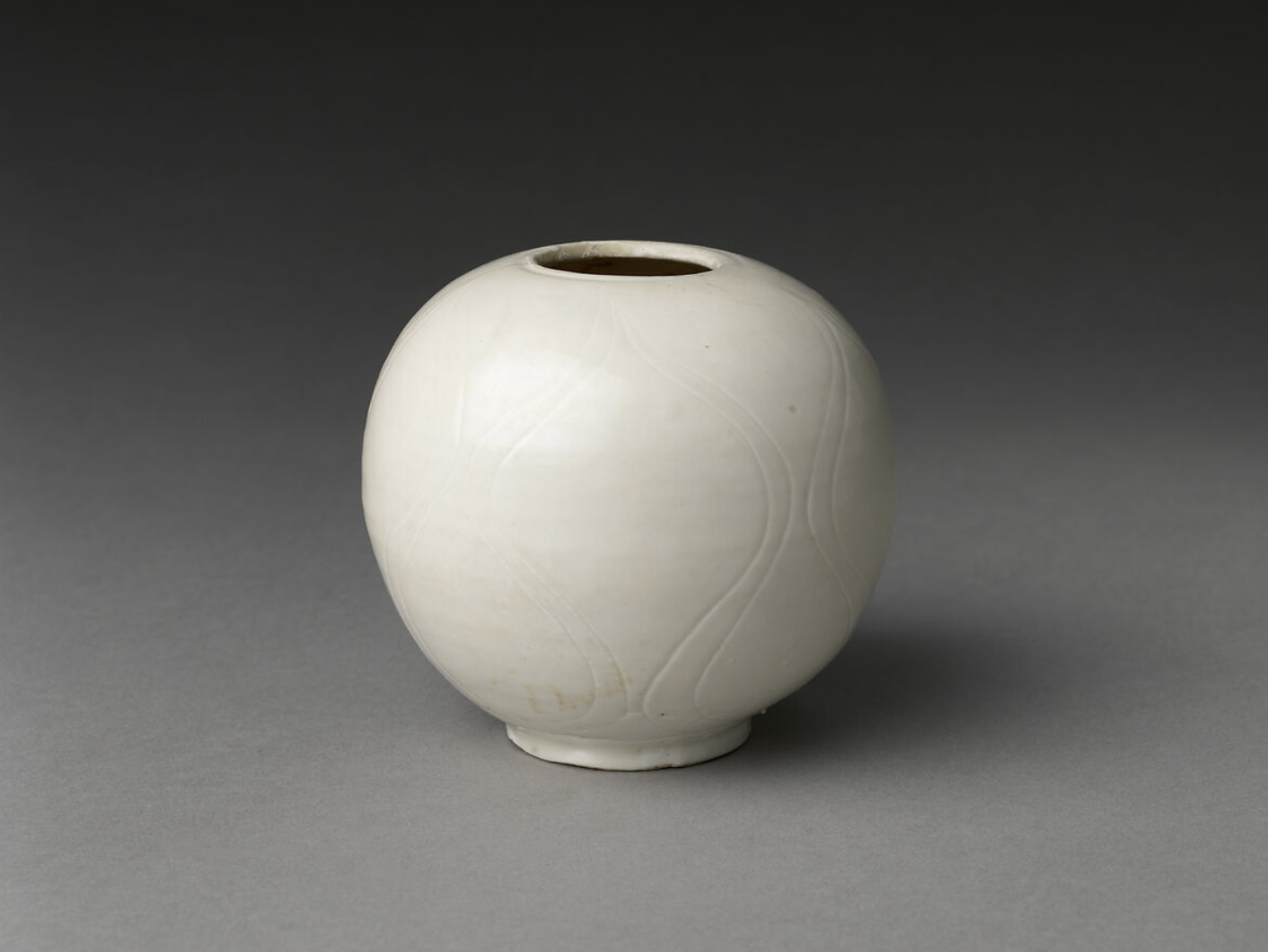
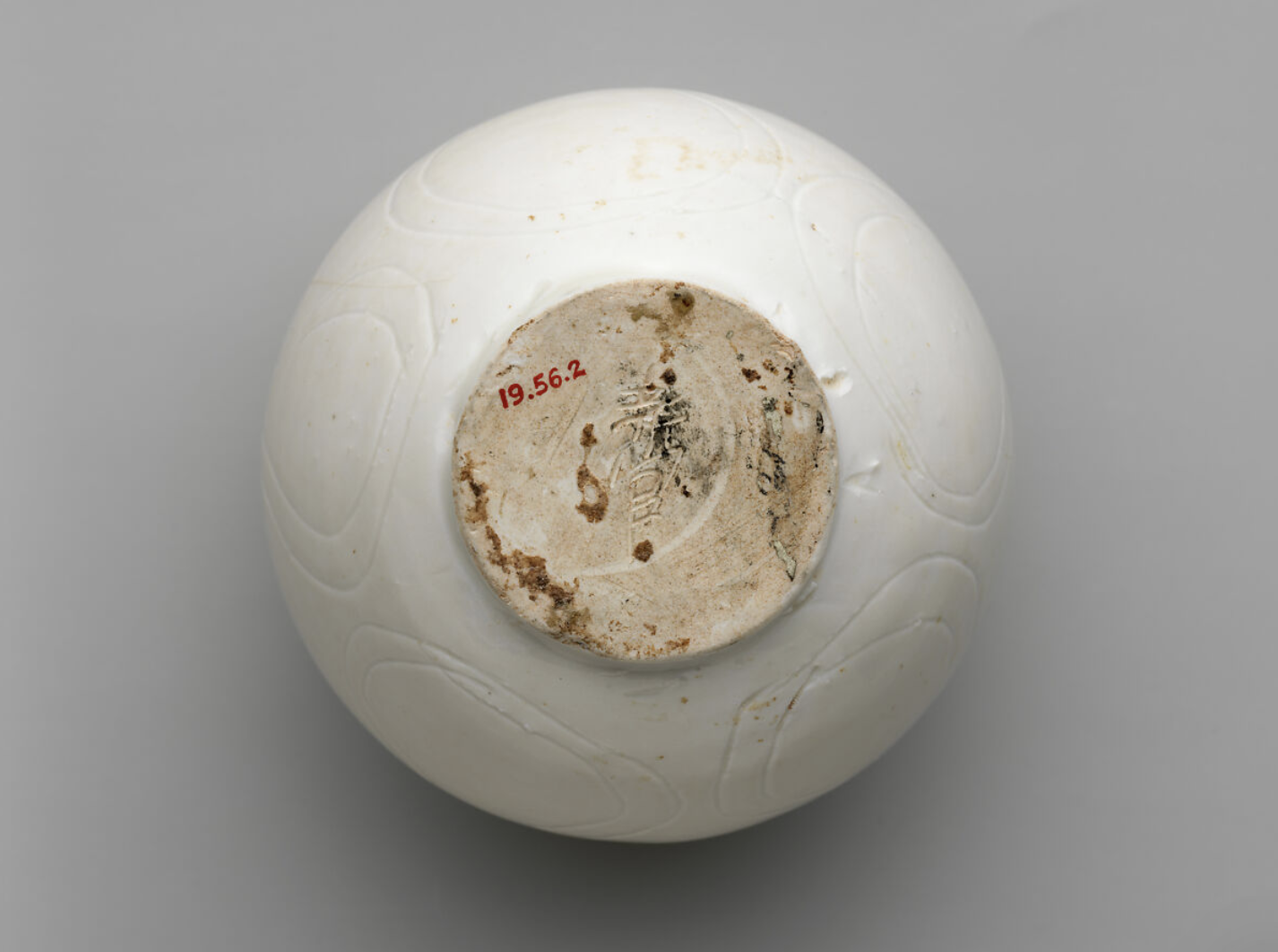
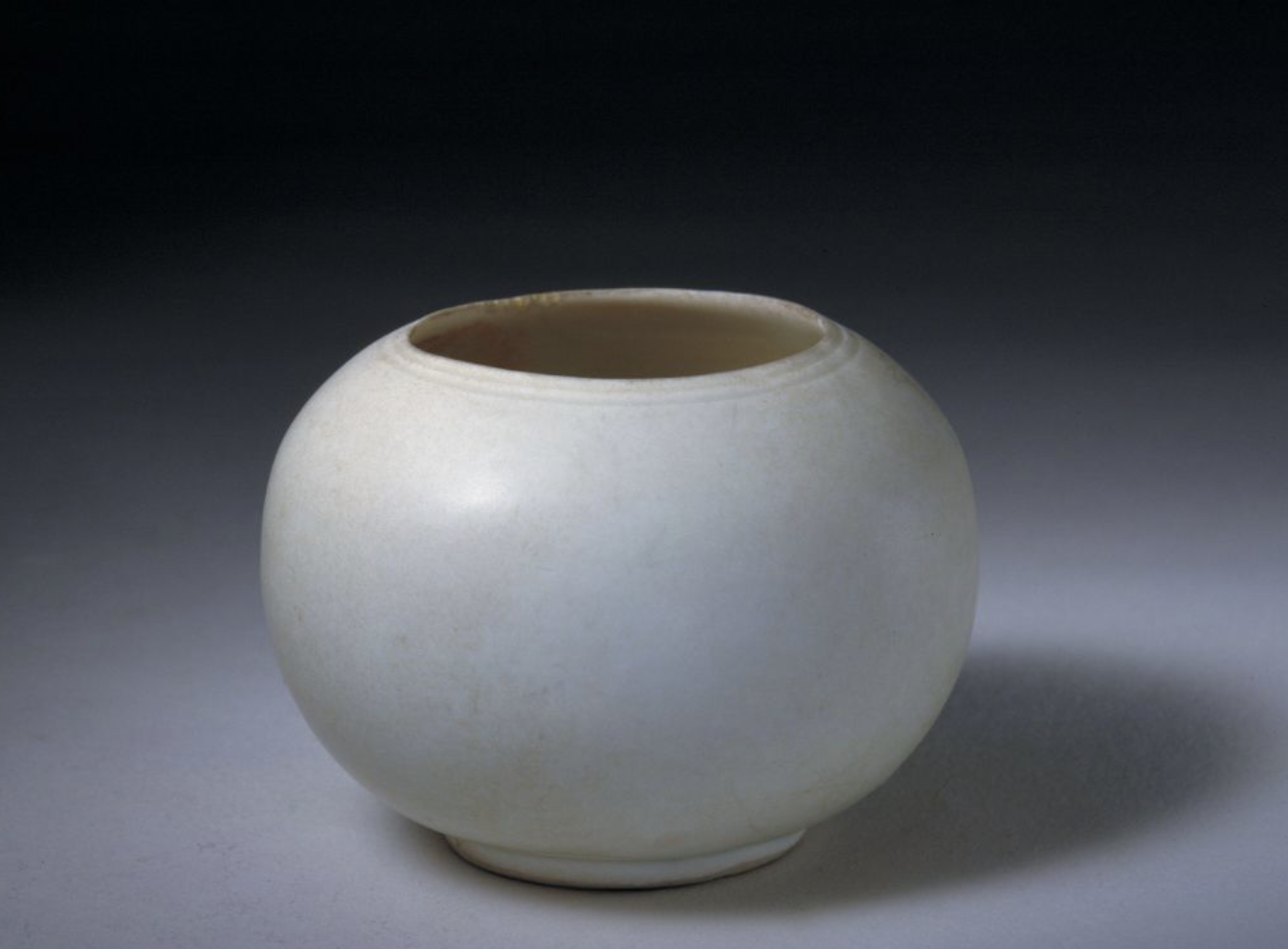
Five Dynasties Ding ware white porcelain globular jar at The Metropolitan Museum of Art
Marks reading 官 Guan and 新官 (xin guan, literally “new official) occur particularly on fine white porcelains dating from the late Tang through the Five Dynasties and into the Northern Song.
A Palace Museum review of scholarship surrounding these wares identifies three fundamental questions that have occupied researchers:
Where were they made? When did the marks first appear? And what exactly did 官 signify?
These questions have produced remarkably different answers.
At different points, scholars have associated Guan-marked white porcelain with Ding (定窯), Xing (邢窯), Jingxing (井陘窯), Gangwa (缸瓦窯), Longquanwu (龍泉務窯) and other production centres. Archaeological excavation has been particularly important in changing the discussion because Guan-marked material has subsequently been recovered from more than one kiln complex.
This means that Guan cannot simply be read as a kiln mark in the modern sense.
It does not mean “made at Ding”, nor does it automatically mean “made at Xing.”
Instead, the inscription appears to relate in some way to the official production, commissioning, selection or circulation of these ceramics, although exactly how this system functioned remains debated.
The precise meaning of Guan, however, remains debated. The Palace Museum has interpreted the mark in relation to 官樣 (guanyang), suggesting ceramics made according to official requirements or commissioned by government authorities.¹ More recently, Zhao Fanqi has challenged this interpretation, proposing that Guan may instead refer to 官營(guanying), or officially administered production. Under this interpretation, the institutions responsible for such production may have changed considerably between the late Tang, Five Dynasties and early Northern Song.
官樣 (guanyang) — best translated as “official standard”, “official model”, or “officially prescribed design.”
官營 (guanying) — “officially administered”, “government-operated”, or “state-run.”
A single character therefore opens a surprisingly large window onto the organisation of China's early porcelain industry.
How Archaeology Changed the Debate
The history of the debate is almost as interesting as the ceramics themselves.
When Guan-marked white porcelains began receiving serious scholarly attention in the twentieth century, their place of production quickly became a subject of debate. Following the discovery of Guan-marked white porcelains in Liao contexts, Jin Yufu 金毓黻 proposed that they were products of a Liao official kiln. The influential ceramic scholar Chen Wanli 陳萬里, however, challenged this interpretation, arguing that the finely made white porcelains should instead be attributed to the Ding kilns. Subsequent discoveries of Guan-marked sherds at the Ding kiln site provided important archaeological support for this attribution.
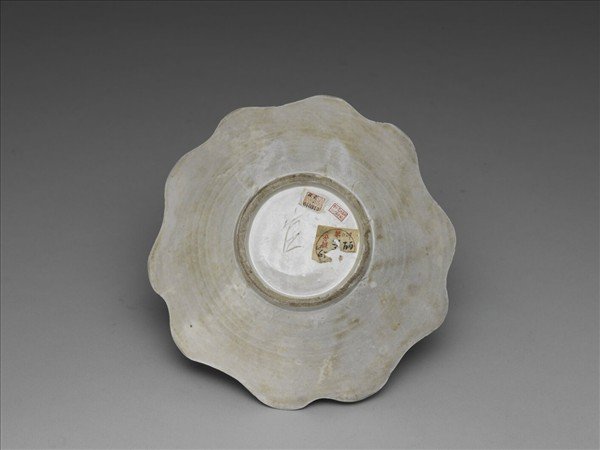
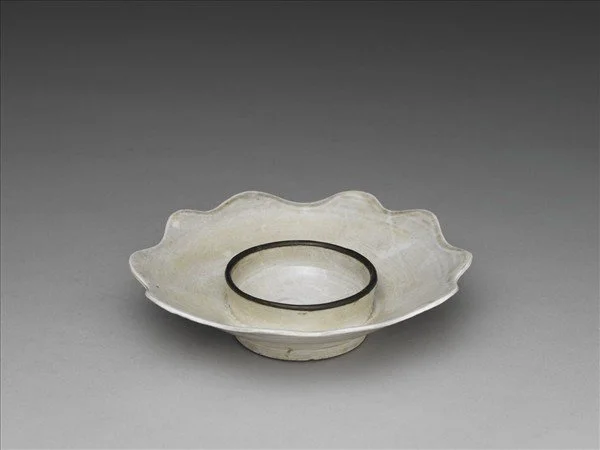
Owl Stand with Floral-shaped rim in White Glaze and "Guan" mark, Xing or Ding ware from the National Palace Museum Digital Archive
For a time, discoveries associated with the Ding kilns appeared to strengthen this connection.
But archaeology did not stop there.
Excavations at other northern kiln sites subsequently revealed further Guan-marked material. Significantly, examples were also recovered from the Xing kiln complex at Neiqiu, Hebei.
The implications were important.
If Guan-marked ceramics were actually being produced at more than one kiln, the character could no longer serve as evidence for attributing an otherwise unprovenanced vessel to Ding, or to any other single kiln.
This helps explain the present position of the Chengdu bottle.
Chengdu Museum identifies it as Xing ware, and archaeological discoveries now demonstrate that the presence of Guan is entirely compatible with Xing production. At the same time, the wider family of Guan-marked white porcelains remains more diverse than scholars once thought.
So the question “Xing or Ding?” cannot be answered simply by turning a vessel over and finding Guan underneath.
From Hebei to Chengdu
There is another dimension to the bottle's story.
If produced at Xing, it began its life in present-day Hebei in northern China.
Yet it was excavated more than a thousand kilometres away in Chengdu, Sichuan.
The Jiangnan Guan Street site represents an important Tang-Song urban area of Chengdu, close to the historical Daci Temple 大慈寺 and associated with a district of temples, markets and commercial activity.
The presence of such a refined northern white porcelain vessel in Chengdu provides a small but tangible indication of how widely prestigious ceramics circulated during the Tang.
Objects travelled through overlapping networks of commerce, tribute, official exchange and elite consumption. The geographical distribution of Guan-marked porcelain is particularly revealing: examples have been recorded from archaeological contexts in places including Xi'an, Luoyang, Taiyuan, Chengdu, Inner Mongolia, Liaoning and Yangzhou, as well as from the kiln sites themselves.
The character Guan therefore connects not only different kilns, but different regions.
A Second Mystery: The Missing Mouth
There is one final reason to look carefully at the Chengdu bottle.
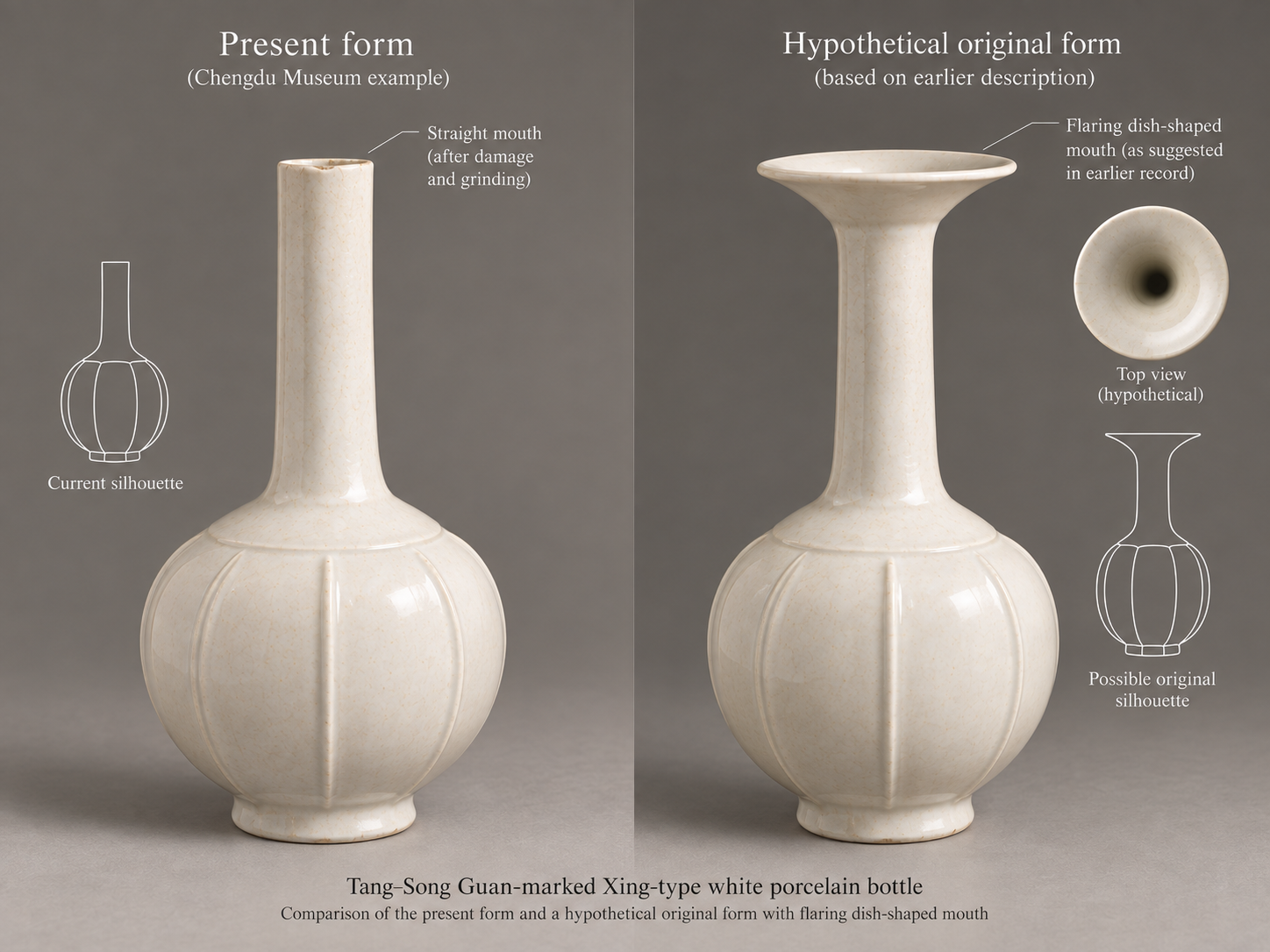
Its most immediately recognisable feature, the exceptionally long, narrow neck may not survive exactly as it left the kiln.
Academic study of late Tang and Five Dynasties eight-lobed porcelain bottles has identified traces of breakage and subsequent grinding around the mouth of the Chengdu example. Qiu Ningbin 邱寧斌 argues, however, that the vessel was probably always a straight-mouthed, long-necked bottle, and that the grinding was undertaken after damage to neaten the broken edge rather than fundamentally altering its original form
This becomes particularly interesting when compared with earlier documentation.
A 2009 study by Yi Li 易立 records a Guan-marked white porcelain vessel excavated from Jiangnan Guan Street in 1996 as having:
盤口、細直頸、球腹、圈足
a flared or dish-shaped mouth, slender straight neck, globular body and ring foot.
Another scholar, Wang Guangyao 王光堯, also recorded a Guan-marked long-necked white porcelain bottle from the Tang–Song Jiangnan Guan Street site, based on information provided by archaeologist Huang Xiaofeng 黃曉楓. Wang discusses such marked wares more broadly in his study, “Reflections on the ‘Official Standard’ (guanyang) Inscriptions Found on Yue Ware: With an Interpretation of the ‘Guan’ and ‘Xin Guan’ Marks” [〈關於越窯瓷器所見「官樣」銘的思—兼釋「官」「新官」款的含義〉], Journal of the Zhejiang Provincial Institute of Cultural Relics and Archaeology, vol. 5, 2002, pp. 174–179. The record is particularly significant because it independently confirms the presence of a Guan-marked long-necked white porcelain vessel among the Jiangnan Guan Street finds, although the available published descriptions are not sufficiently detailed to establish with certainty whether Wang’s reference and the bottle now in the Chengdu Museum are the same object.
Later scholarship has questioned whether these records and the bottle now preserved in Chengdu Museum refer to the same object. Without sufficiently complete published archaeological documentation, the identification cannot be established with certainty.
But if they do describe the same vessel, the implication is fascinating.
The bottle may originally have possessed a flaring dish-shaped mouth above its long neck, producing a noticeably different silhouette from the apparently minimalist form displayed today.
What looks strikingly modern may therefore be partly the product of survival.
One Character, Many Questions
Seen in the gallery, this is an exceptionally quiet object.
White porcelain. Eight ribs. A long neck.
Then we turn it over.
官.
That single character connects the bottle to decades of debate concerning Xing and Ding, the organisation of official ceramic production, the movement of prestigious porcelain across Tang China and the growing importance of archaeological evidence in understanding early Chinese ceramics.
Even the bottle's silhouette refuses to provide a completely straightforward answer.
Chengdu Museum today identifies the vessel as Xing ware, and archaeological discoveries at the Xing kilns support the presence of Guan-marked production there. Yet the wider history of Guan wares demonstrates why ceramic attribution cannot rest upon an inscription alone.
Kiln archaeology, typology, body and glaze, scientific analysis, archaeological context and inscriptions all contribute pieces of the same puzzle.
More than a thousand years after it was fired, this apparently simple white bottle therefore continues to ask questions.
Xing or Ding? What did 官 mean? And what did the vessel originally look like?
The closer we look, the more complicated its white surface becomes.
