Warring States Period (475–221 BC)
Height: 21.5 cm
Provenance: Hôtel Drouot, Paris, Binoche, 25 January 1995, lot 42
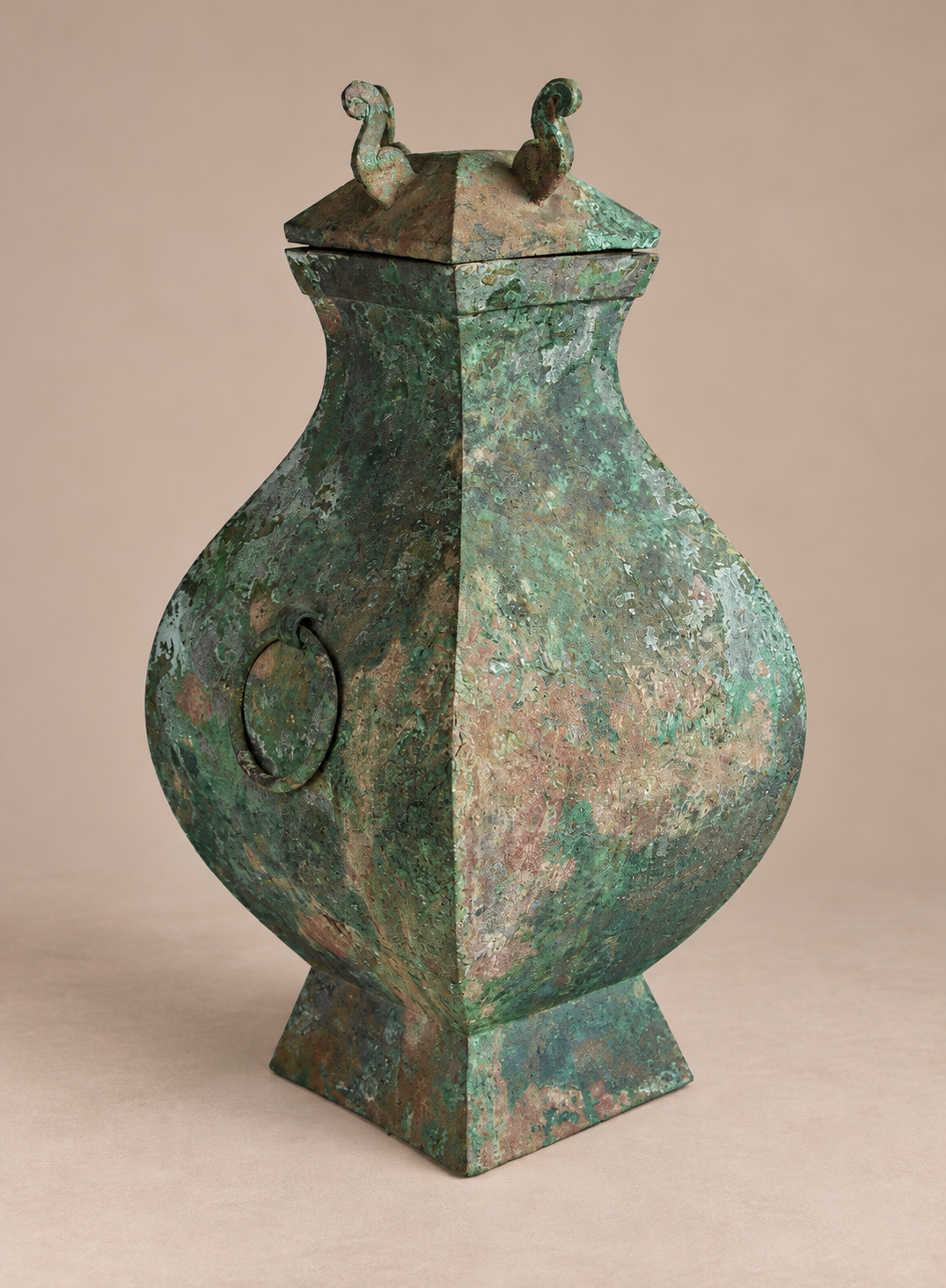
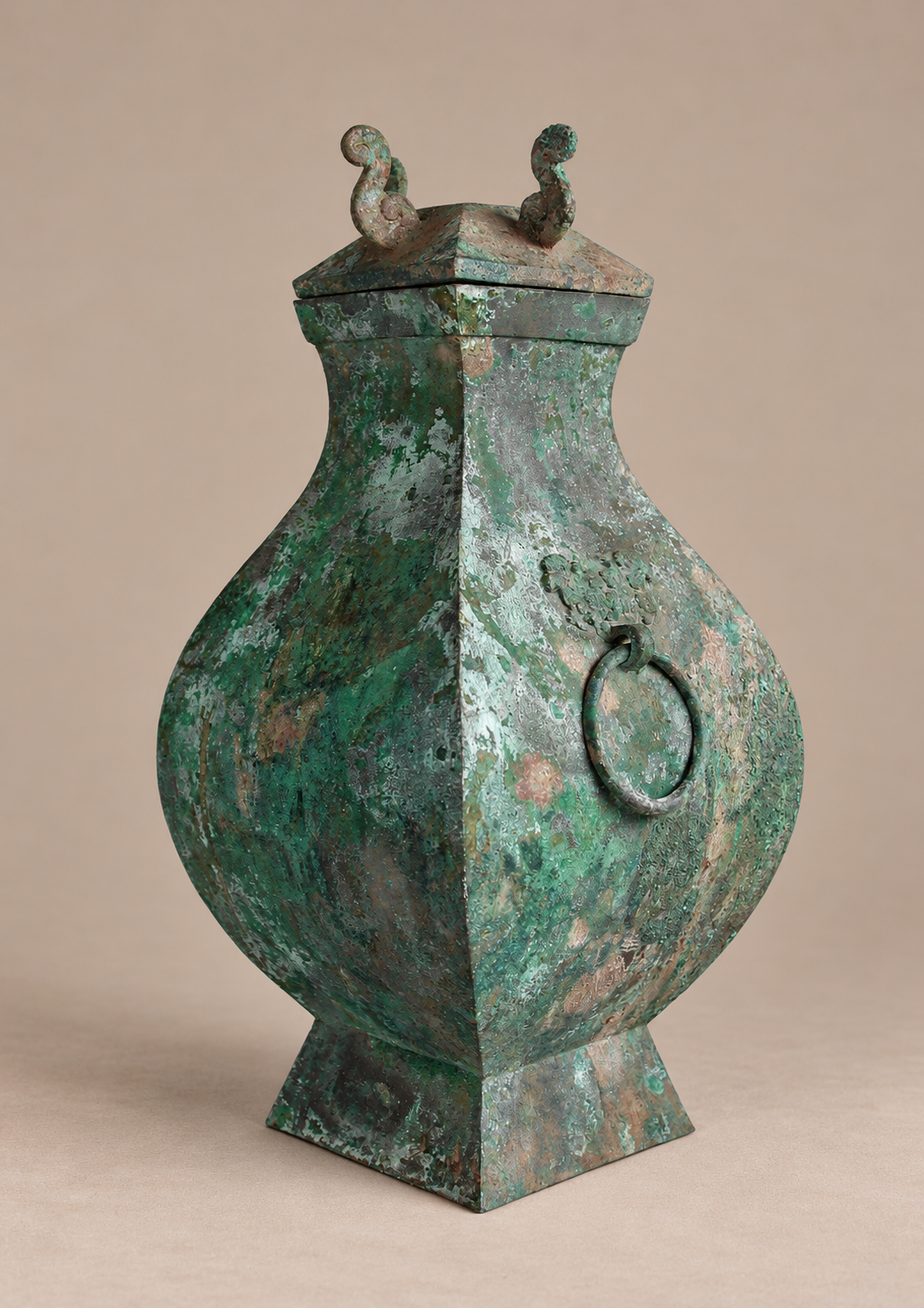
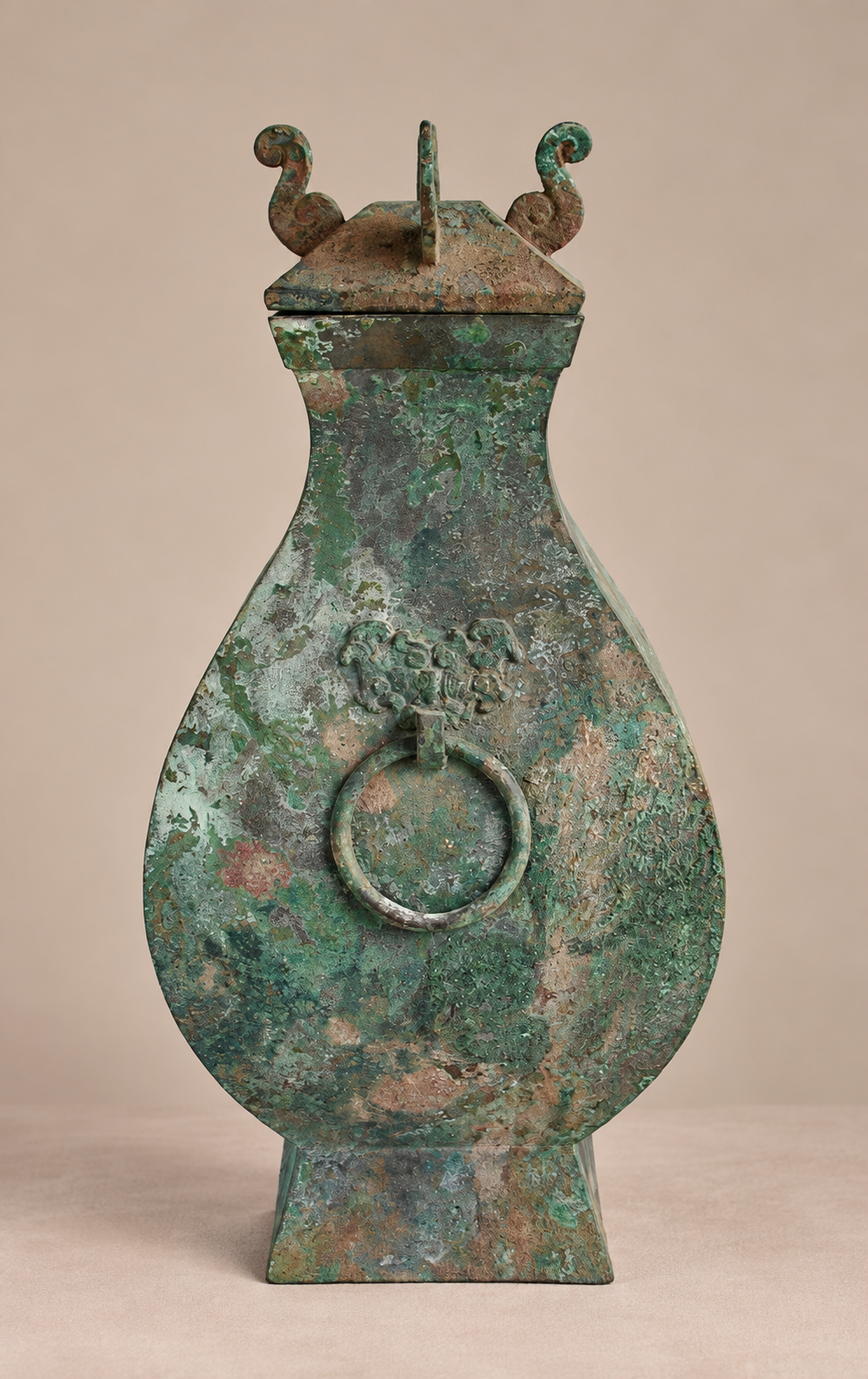
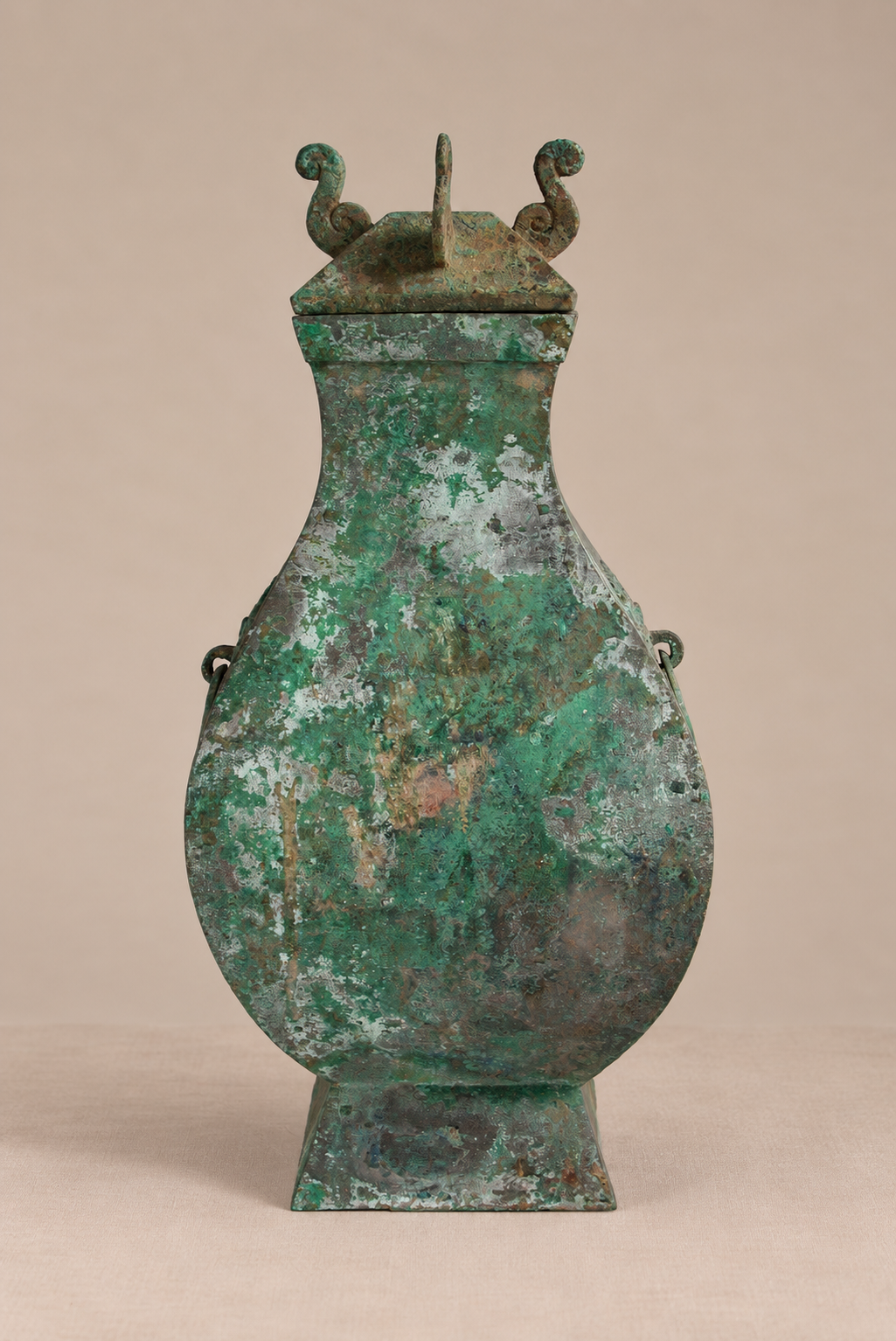
This finely cast archaic bronze covered ding dates to the Warring States period and is distinguished by its compact rounded form, domed cover and three sturdy animal-form legs. The vessel is fitted with a pair of upright rectangular handles, while the cover is surmounted by small loop fittings and a central ring handle, giving the piece a balanced and highly architectural silhouette.
The exterior is richly decorated with horizontal registers of interlocking geometric and zoomorphic motifs, worked in low relief across both the body and cover. These dense, rhythmic patterns are characteristic of later Eastern Zhou bronze design, when earlier ritual forms were increasingly enlivened by more intricate surface ornament.
The three legs are cast with stylised animal-mask decoration at the upper sections, adding further sculptural interest beneath the rounded body. The bronze surface displays a complex natural patina of olive green, brown and darker tones, with areas of oxidation accumulated over time.
Combining a traditional ritual vessel form with the more elaborate decorative vocabulary associated with the Warring States period, this covered ding is a strong example of late Zhou bronze craftsmanship.
Provenance: Hôtel Drouot, Paris, Binoche, 25 January 1995, lot 42.
Warring States Period (475–221 BC)
Height: 21.5 cm
Provenance: Hôtel Drouot, Paris, Binoche, 25 January 1995, lot 42
This finely cast archaic bronze covered ding dates to the Warring States period and is distinguished by its compact rounded form, domed cover and three sturdy animal-form legs. The vessel is fitted with a pair of upright rectangular handles, while the cover is surmounted by small loop fittings and a central ring handle, giving the piece a balanced and highly architectural silhouette.
The exterior is richly decorated with horizontal registers of interlocking geometric and zoomorphic motifs, worked in low relief across both the body and cover. These dense, rhythmic patterns are characteristic of later Eastern Zhou bronze design, when earlier ritual forms were increasingly enlivened by more intricate surface ornament.
The three legs are cast with stylised animal-mask decoration at the upper sections, adding further sculptural interest beneath the rounded body. The bronze surface displays a complex natural patina of olive green, brown and darker tones, with areas of oxidation accumulated over time.
Combining a traditional ritual vessel form with the more elaborate decorative vocabulary associated with the Warring States period, this covered ding is a strong example of late Zhou bronze craftsmanship.
Provenance: Hôtel Drouot, Paris, Binoche, 25 January 1995, lot 42.
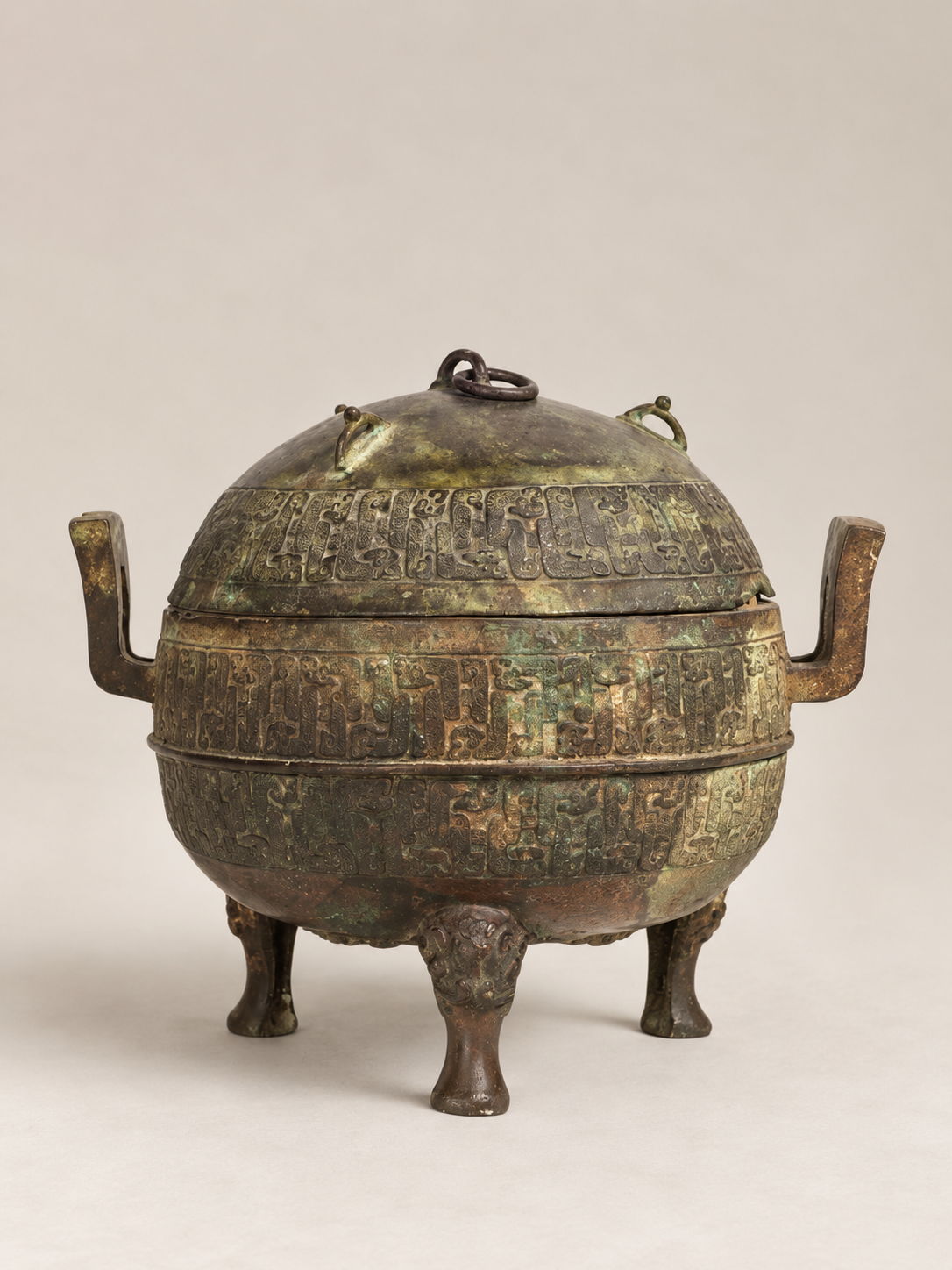 Image 1 of 8
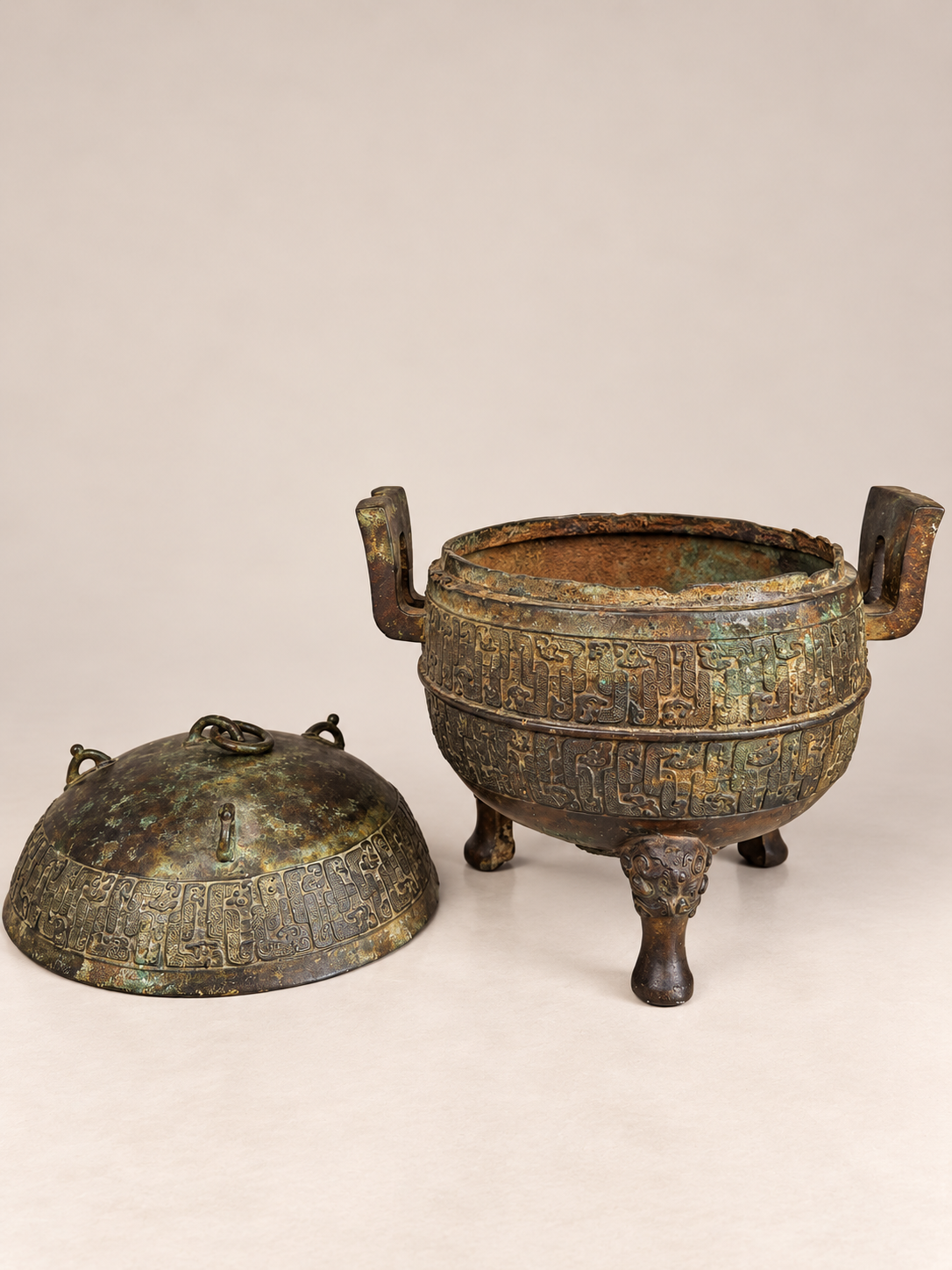 Image 2 of 8
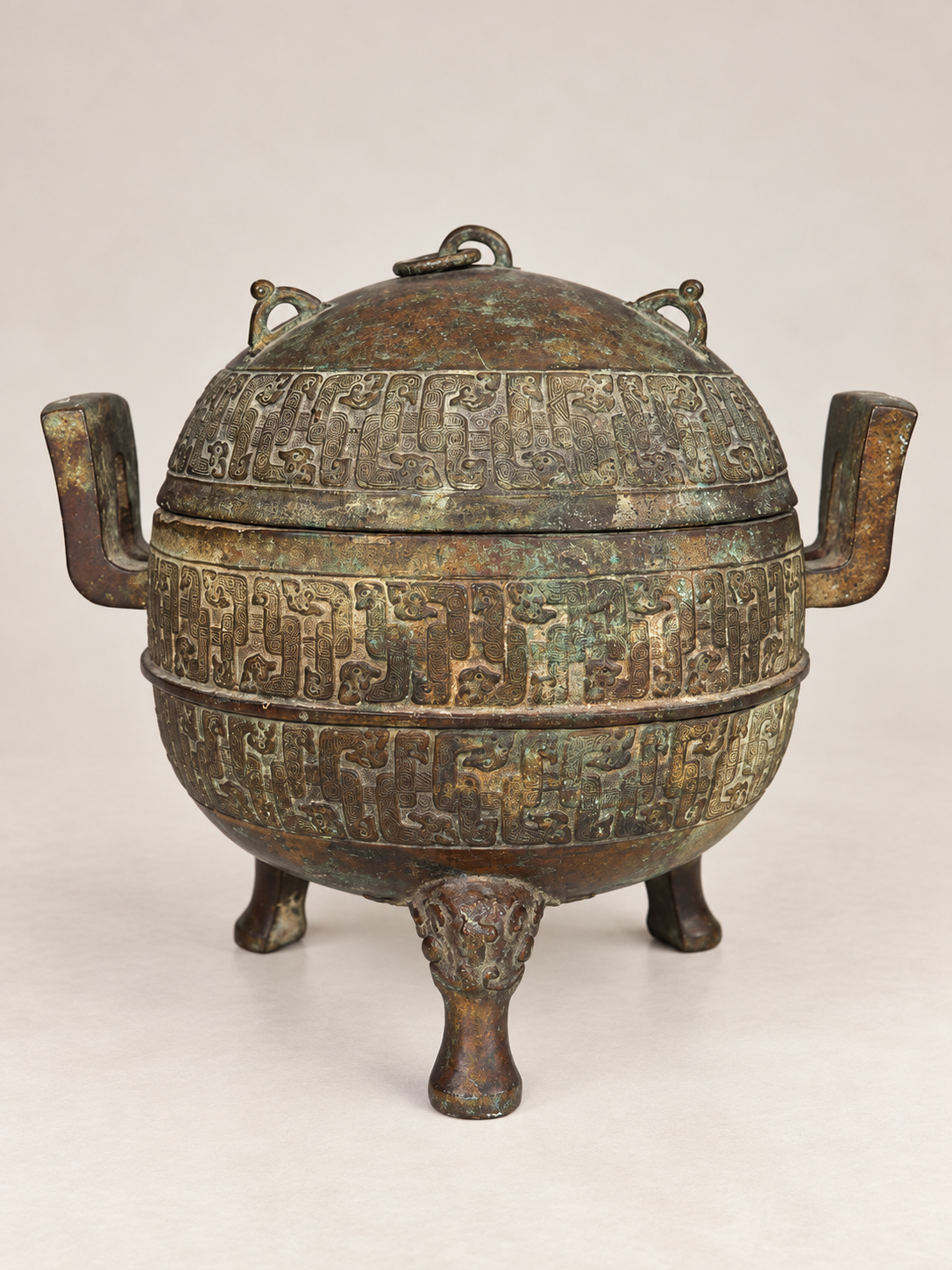 Image 3 of 8
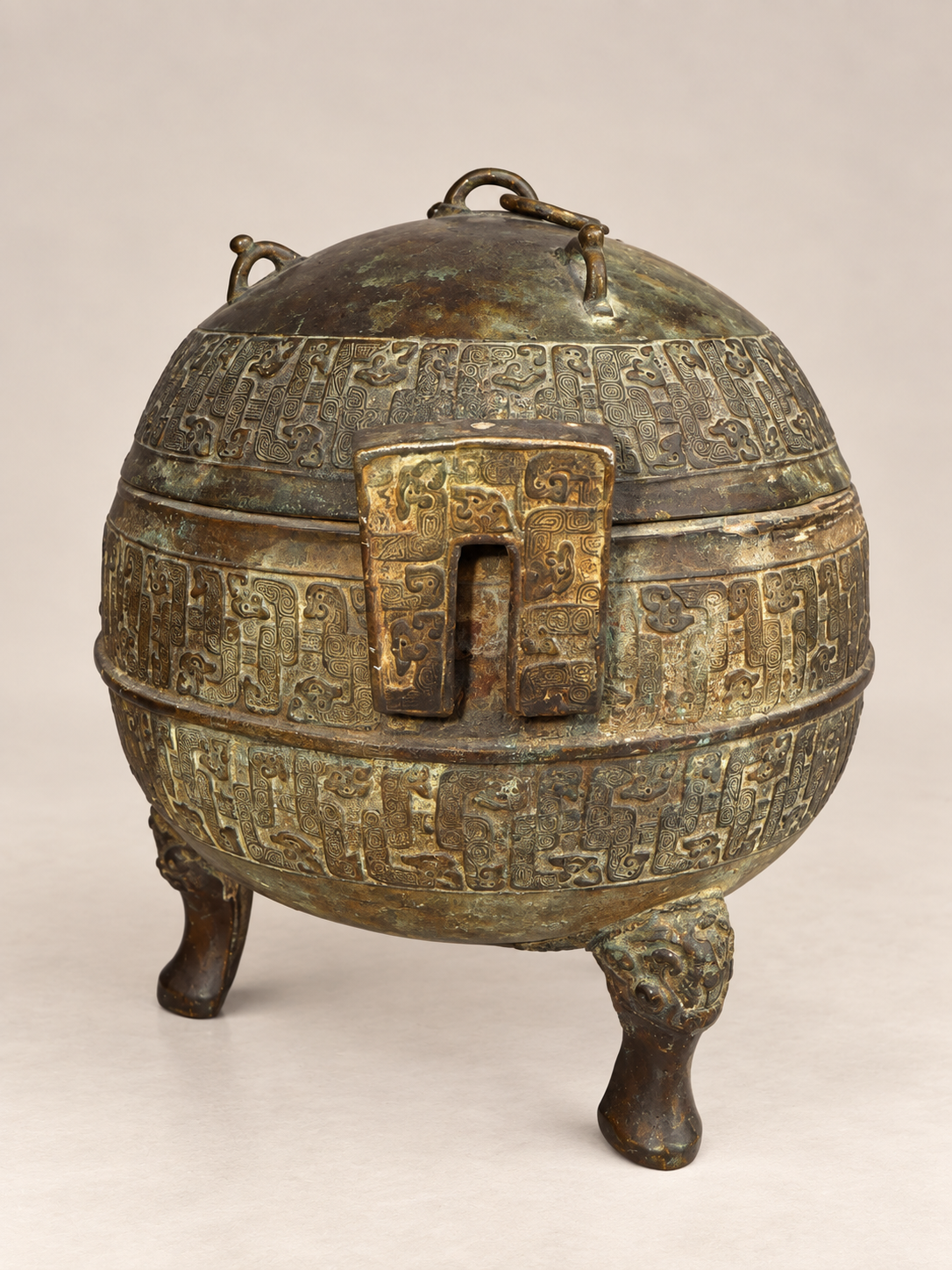 Image 4 of 8
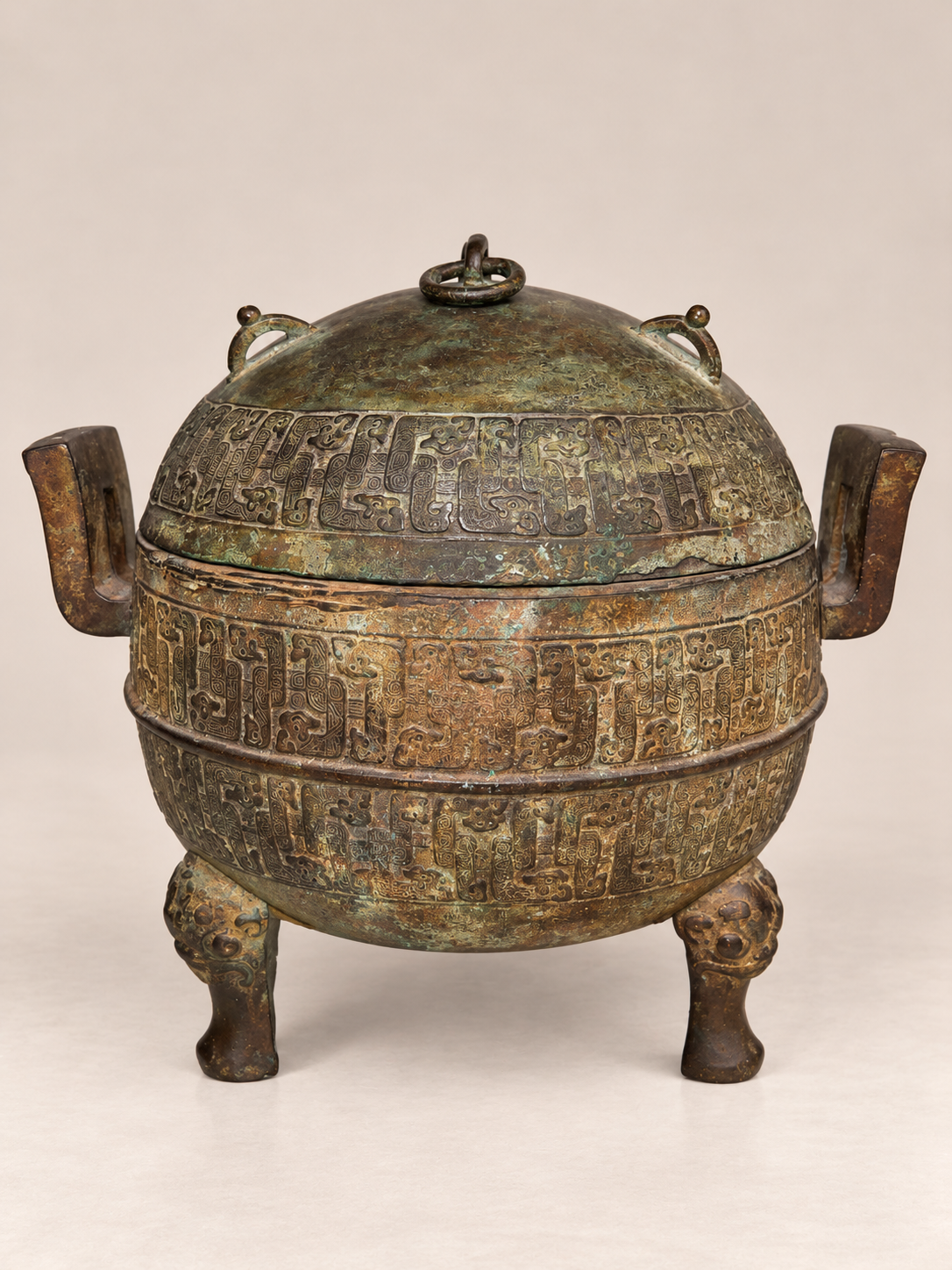 Image 5 of 8
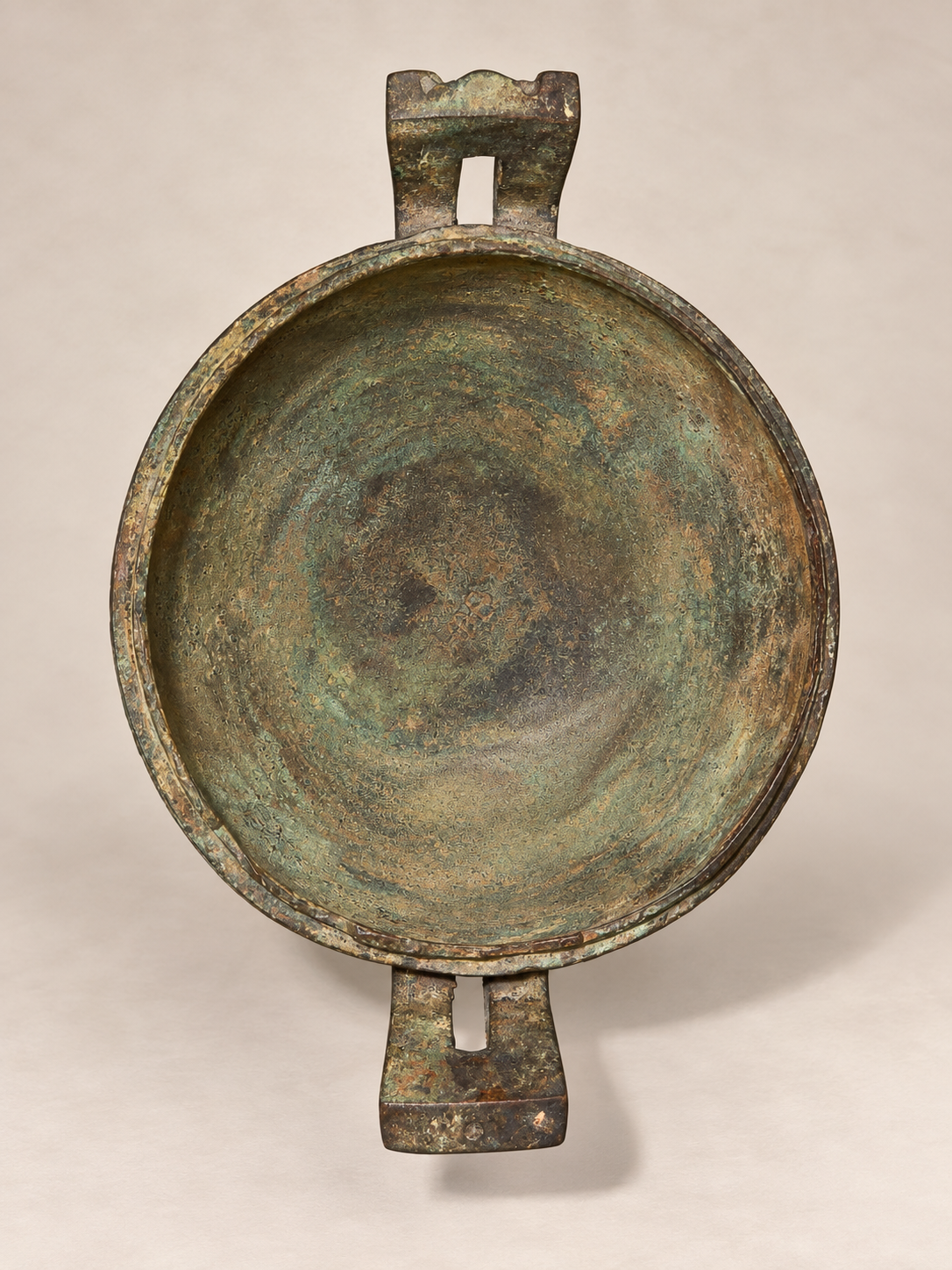 Image 6 of 8
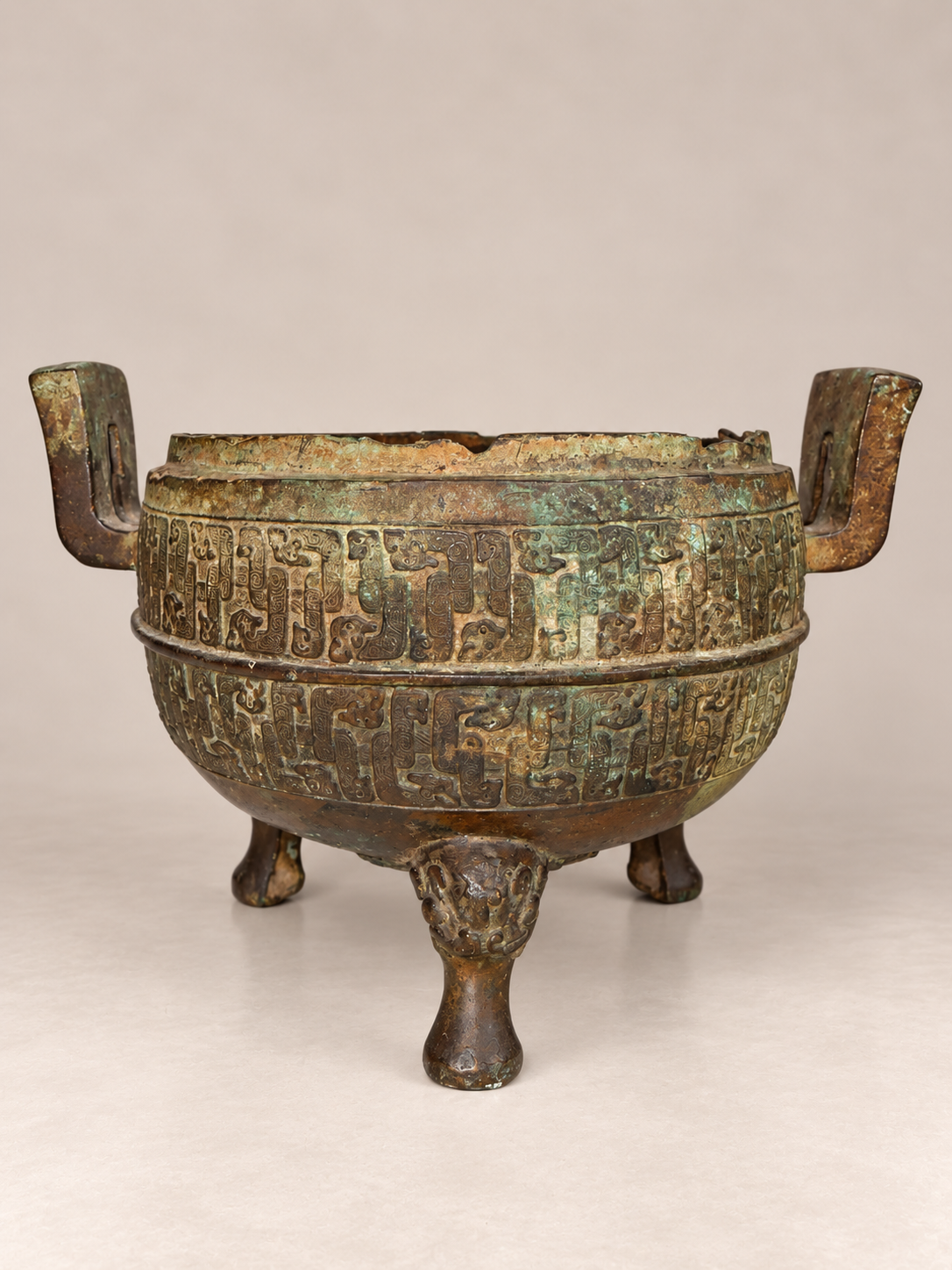 Image 7 of 8
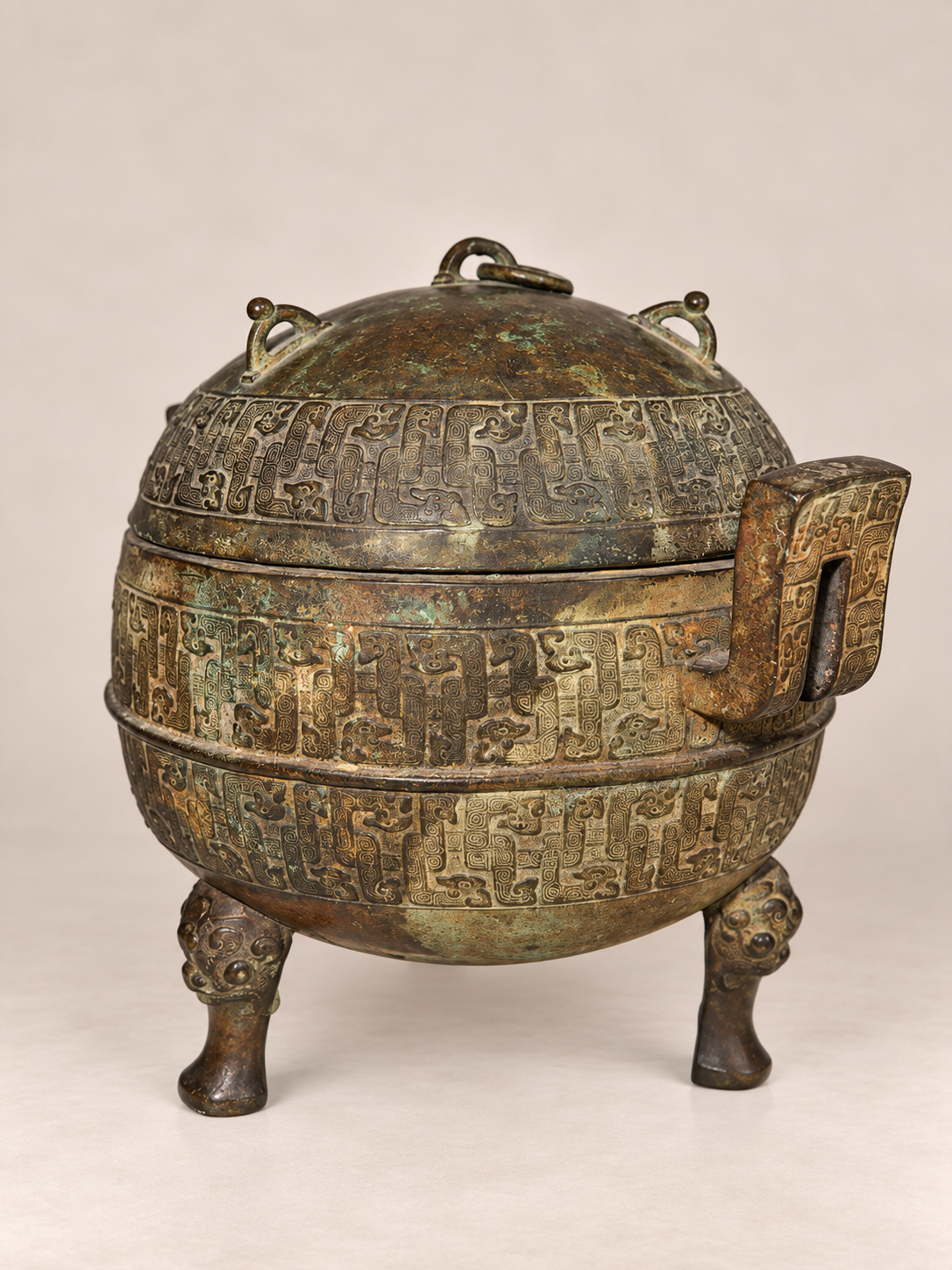 Image 8 of 8