 Image 1 of 5
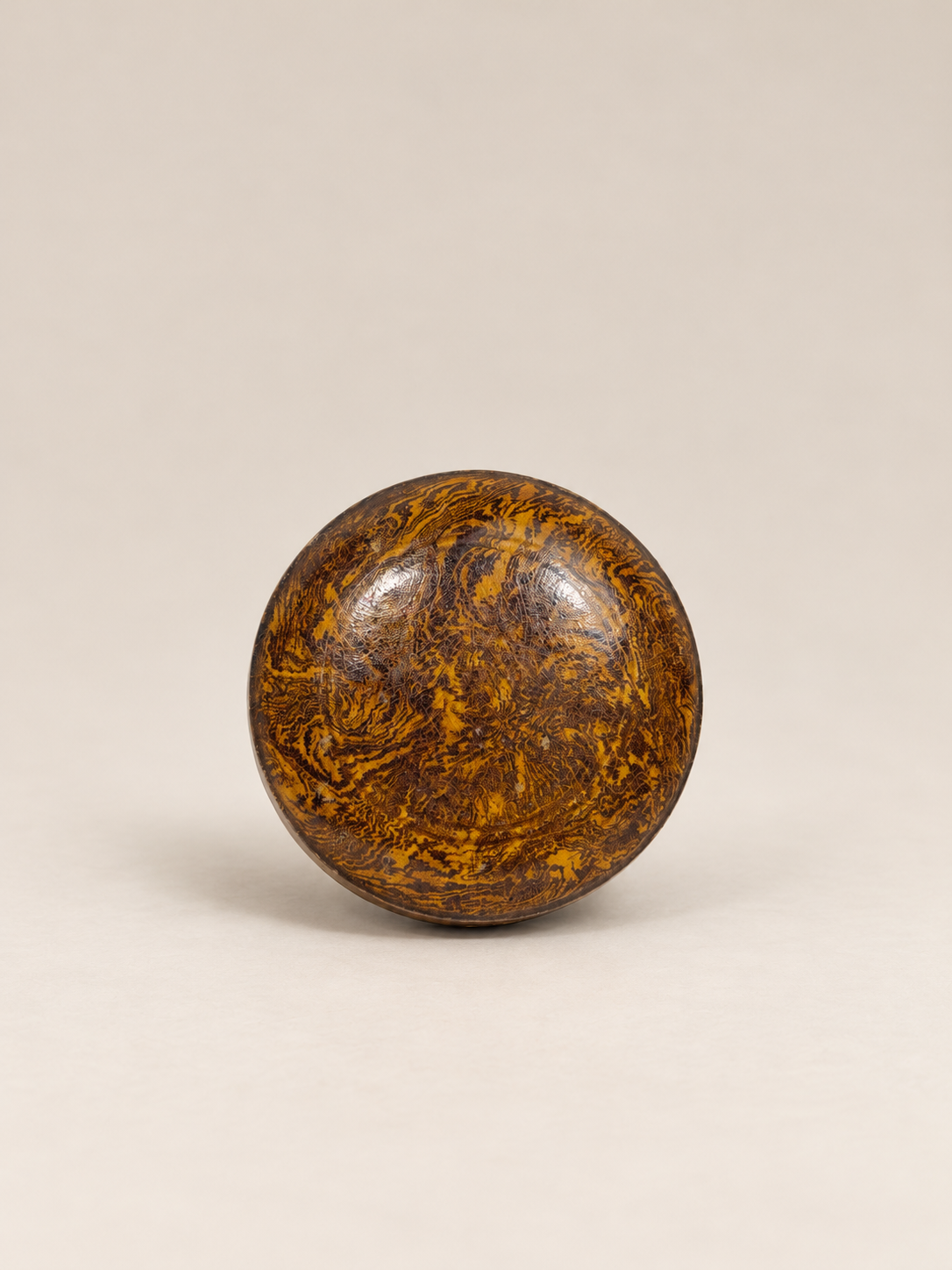 Image 2 of 5
 Image 3 of 5
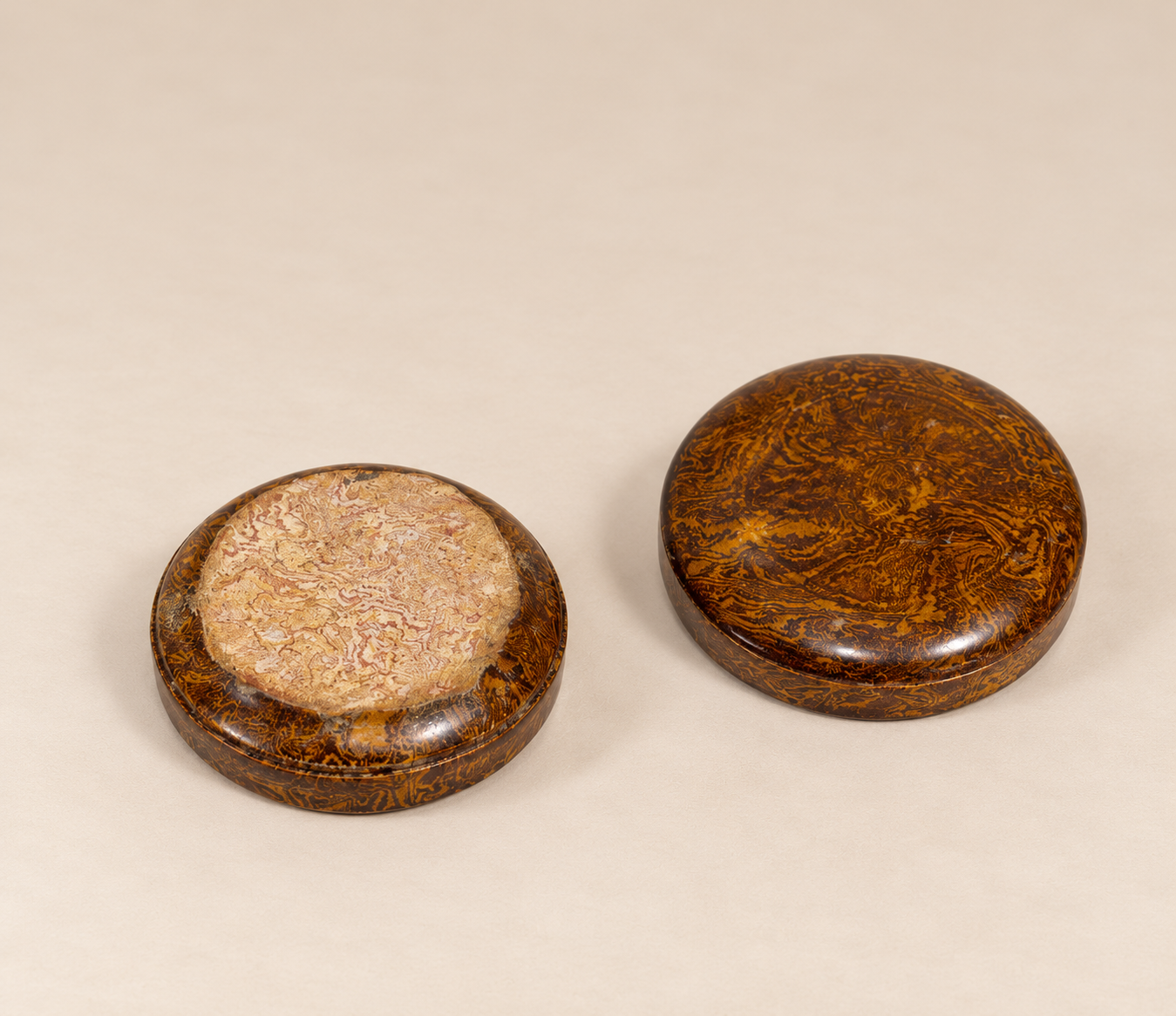 Image 4 of 5
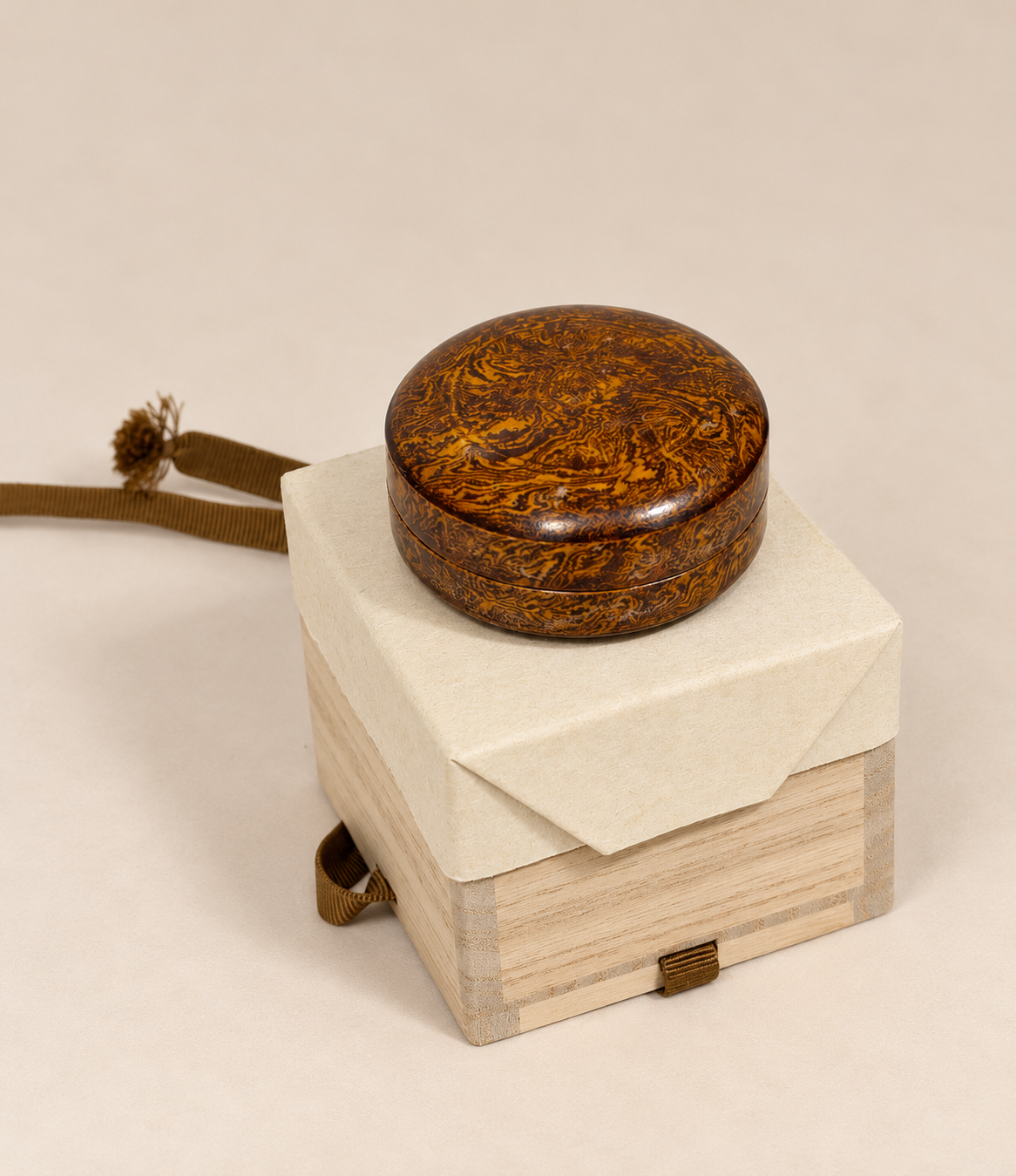 Image 5 of 5
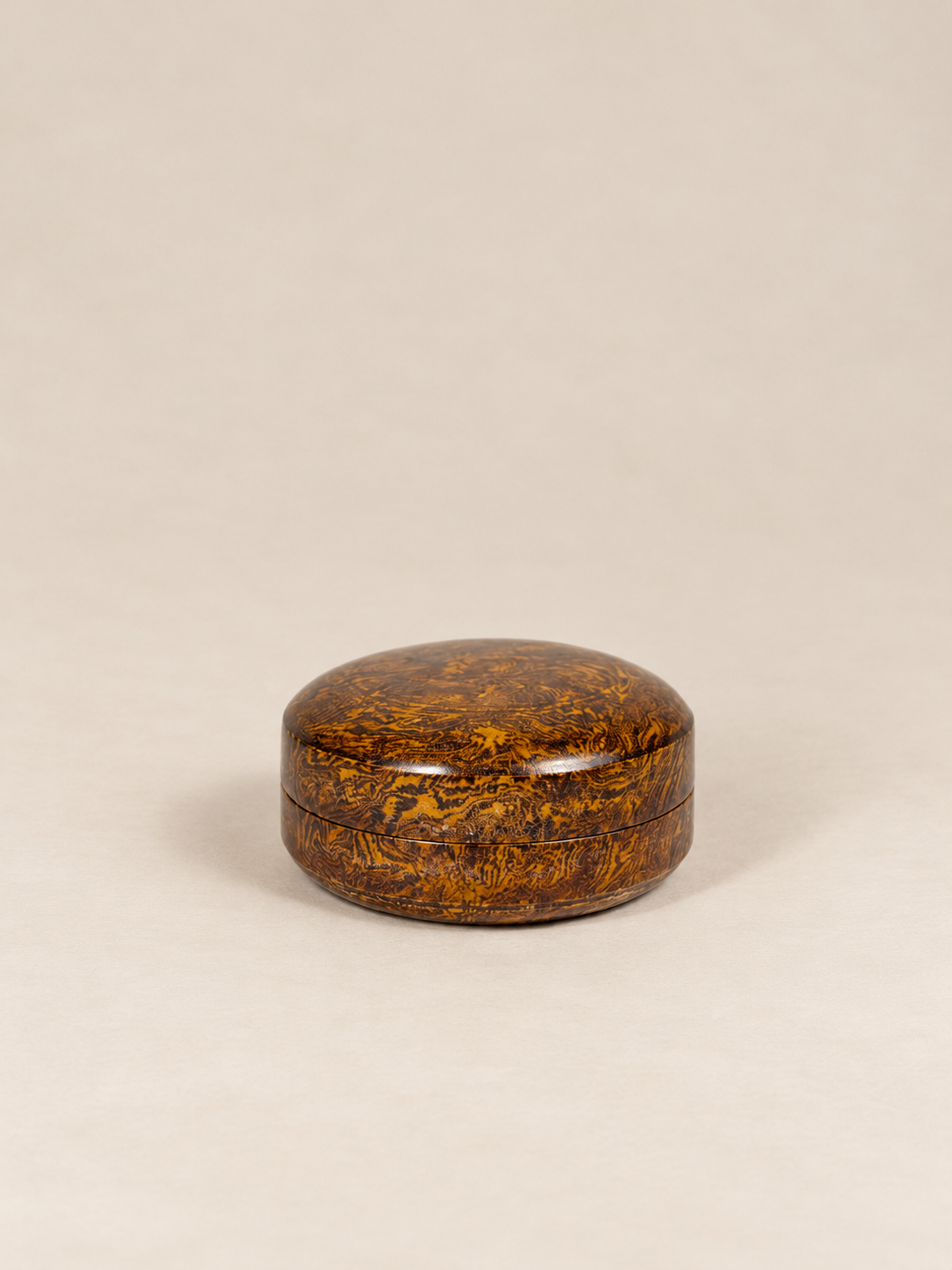
A finely made Tang Dynasty jiaotai (絞胎) lidded box, distinguished by its richly marbled body formed from contrasting clays worked together to create dense, flowing patterns of amber, ochre and deep brown.
Unlike painted decoration applied to the surface, the characteristic jiaotai effect is created within the clay body itself. Different coloured clays are layered, twisted and combined before shaping, producing irregular whorls and striations that continue through the material. The resulting pattern gives the box an appearance reminiscent of agate, wood grain or naturally veined stone.
The vessel is elegantly proportioned, with a gently domed circular cover fitting closely over the low cylindrical body. Its restrained form allows the marbled clay to become the principal decorative feature, while the polished surface enhances the depth and contrast of the swirling pattern.
Tang Dynasty jiaotai ware represents one of the most inventive ceramic techniques developed during the period. The method reflects the Tang fascination with richly patterned materials and sophisticated surface effects, while also demonstrating a high degree of technical control in the preparation and manipulation of differently coloured clays.
The interior and underside reveal lighter areas of the clay body, making the layered construction particularly apparent and providing a striking contrast with the darker, more densely patterned exterior.
An elegant and highly distinctive example of Tang Dynasty marbled ware, combining compact form, technical ingenuity and the natural visual complexity of jiaotai clay.