 Image 1 of 4
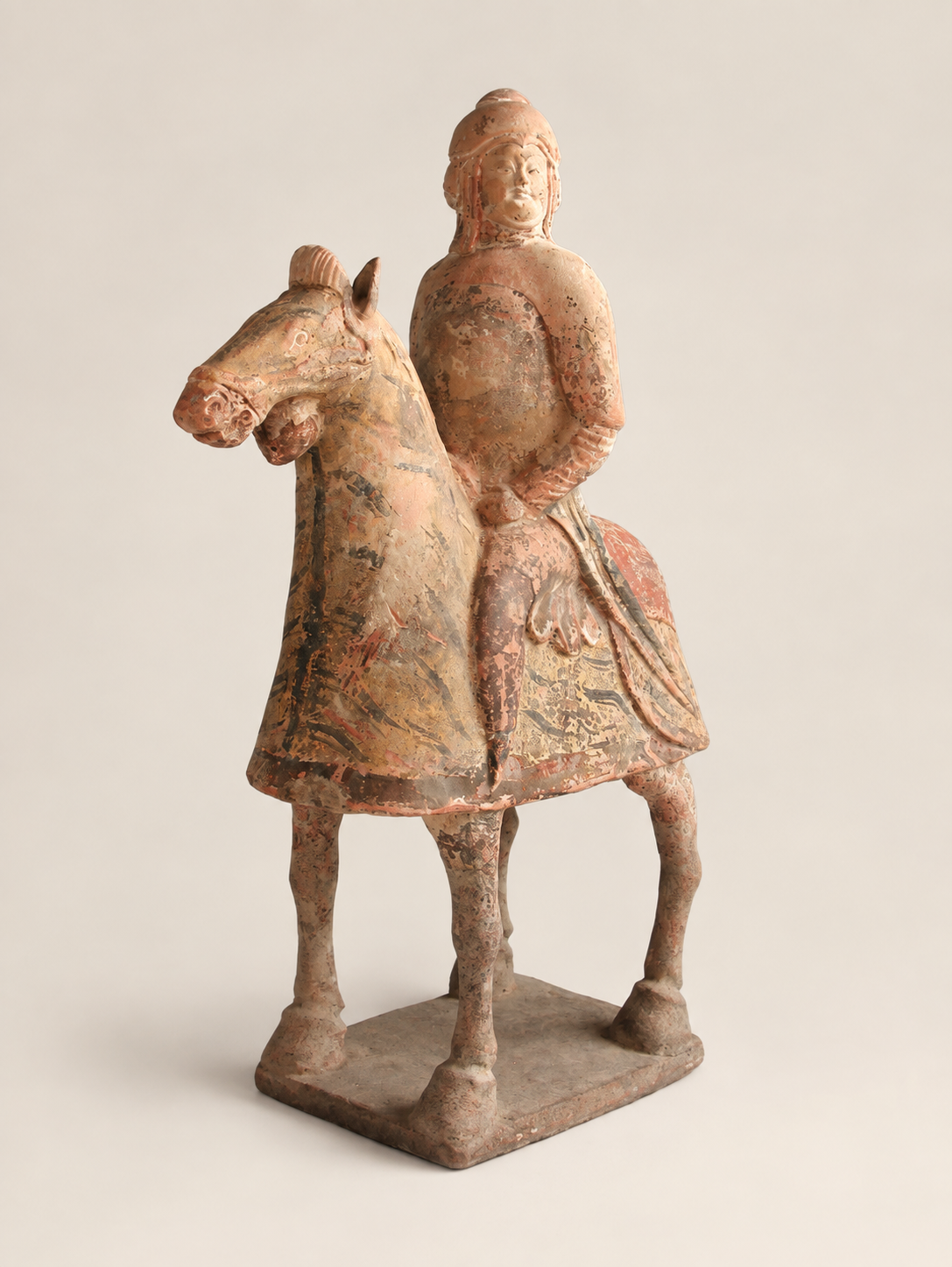 Image 2 of 4
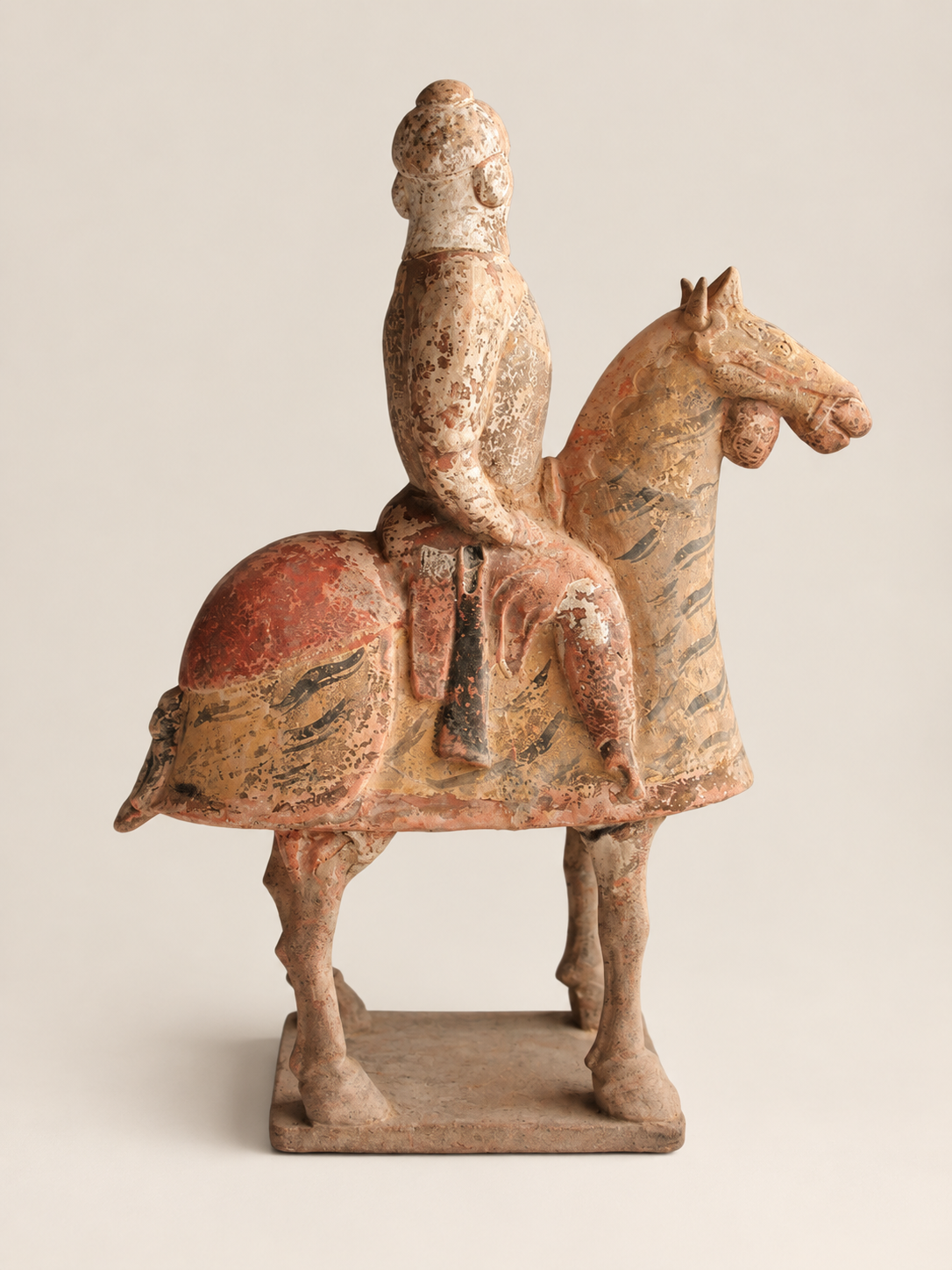 Image 3 of 4
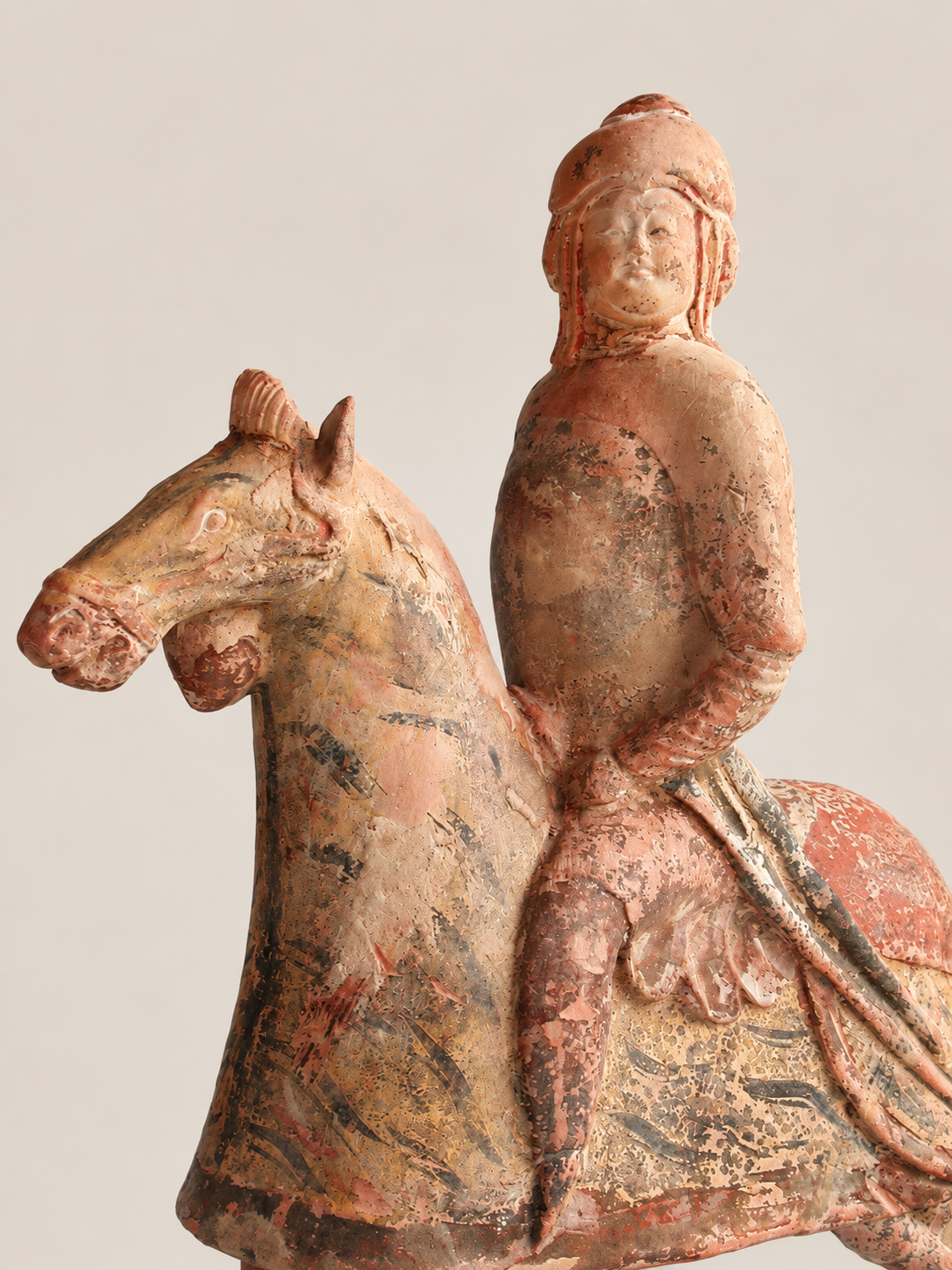 Image 4 of 4
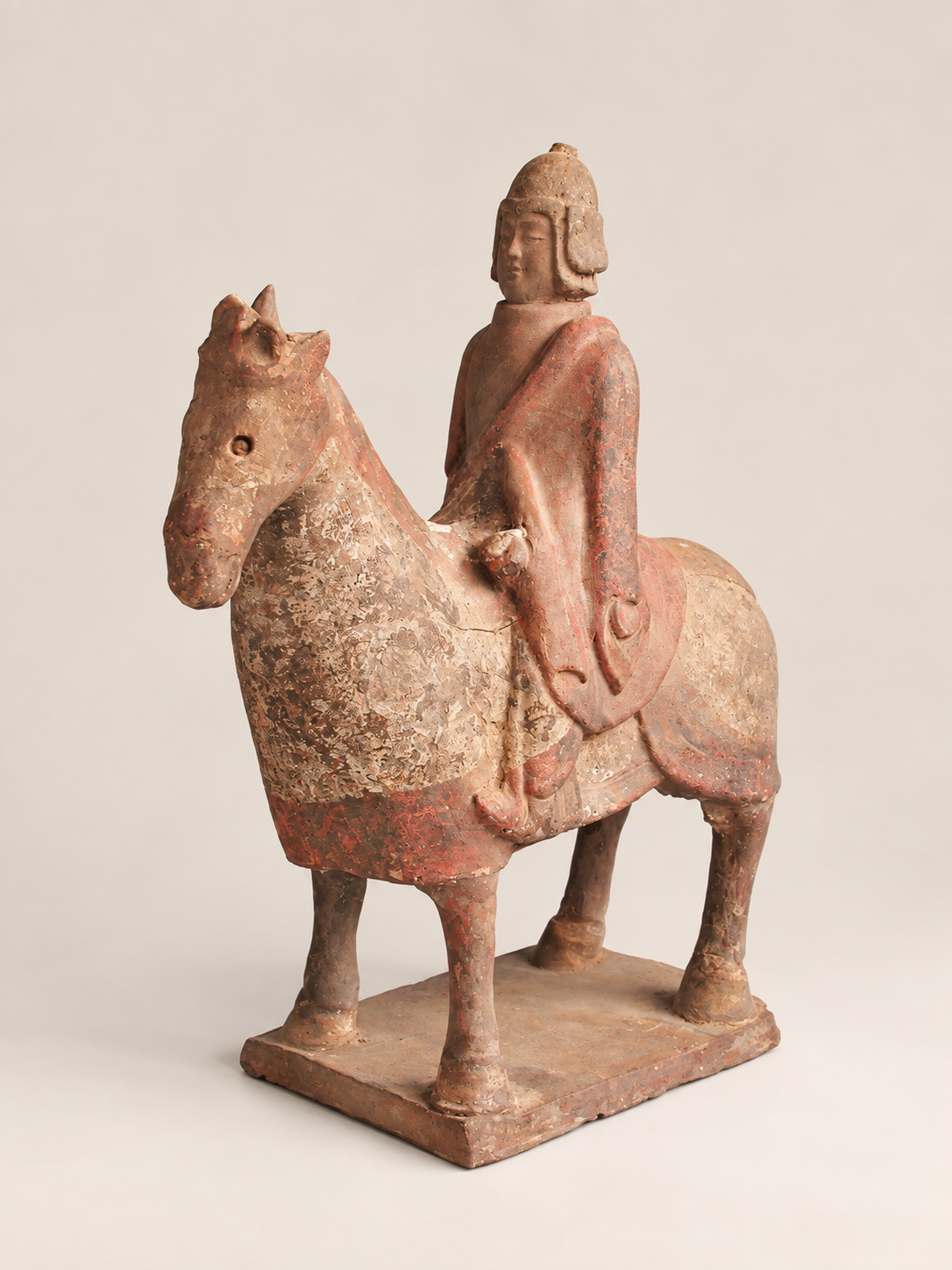
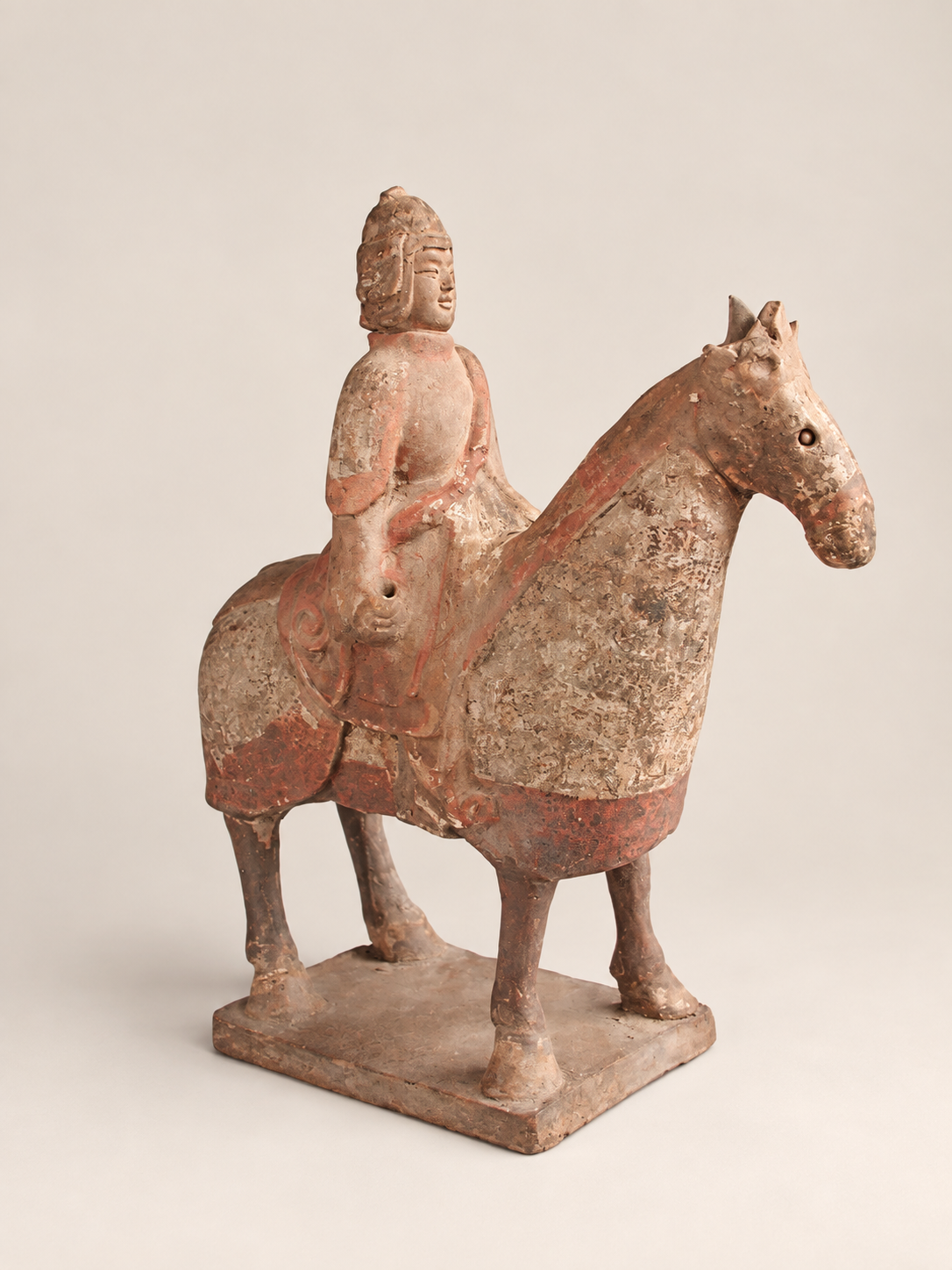
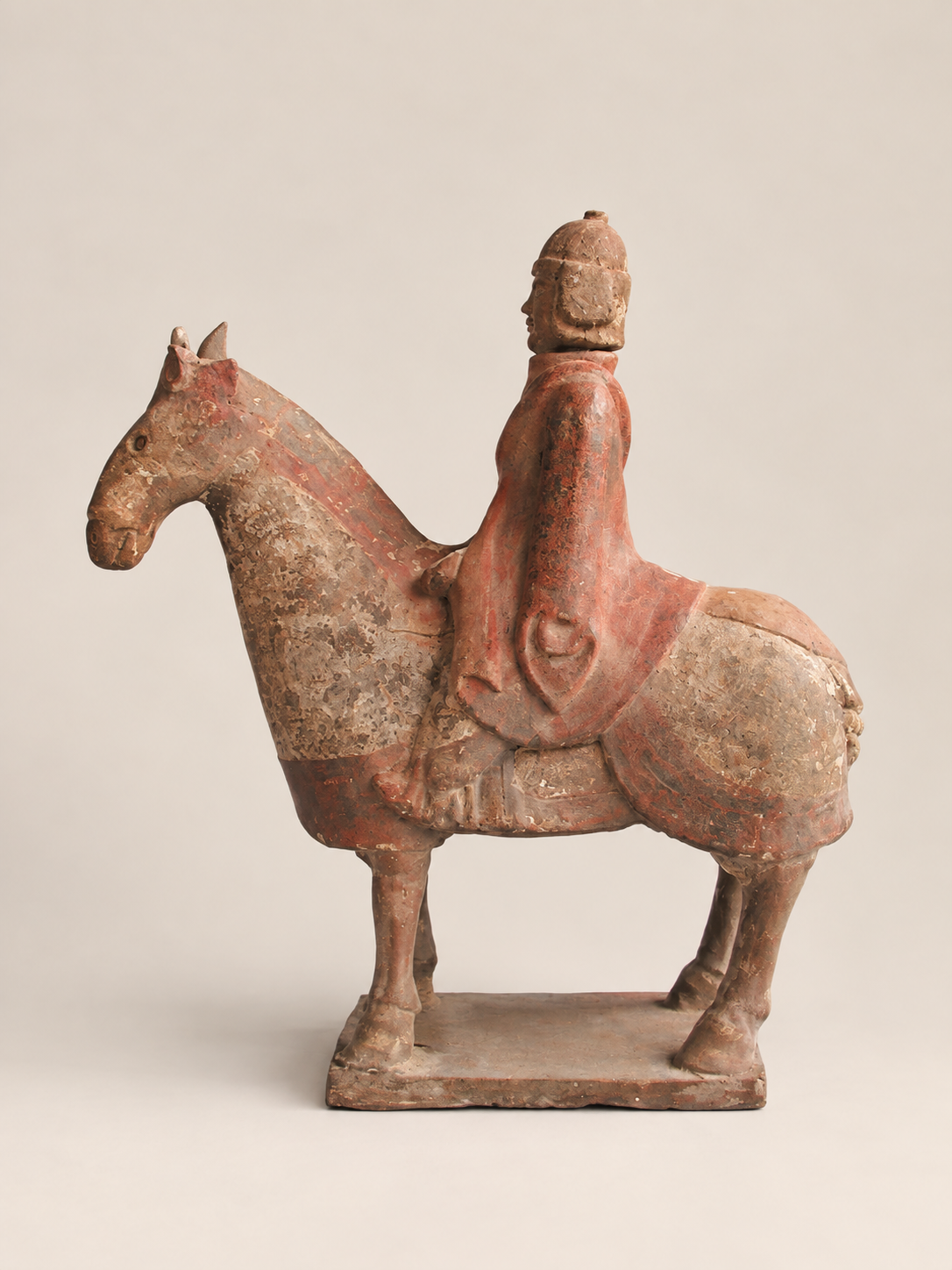
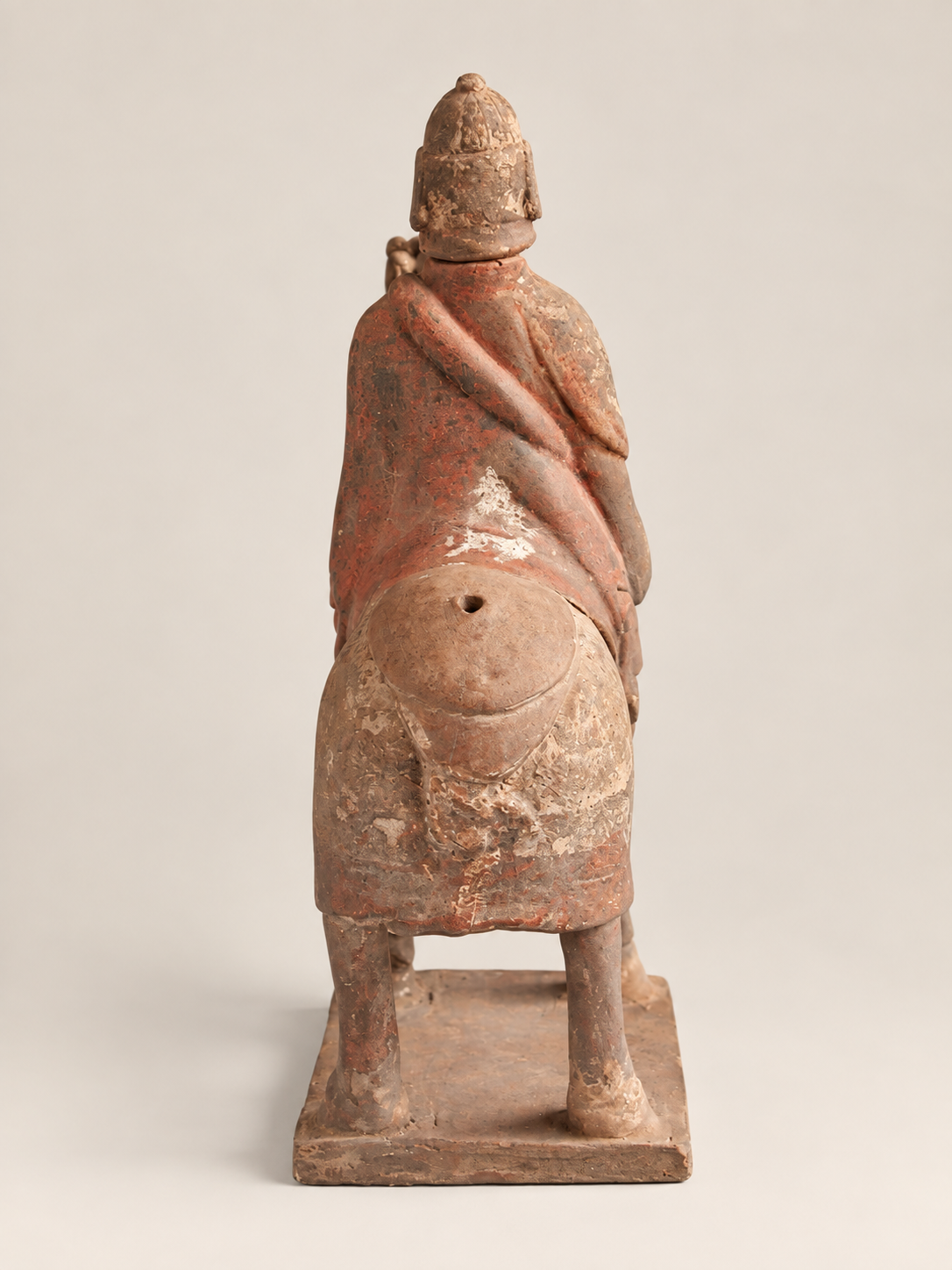
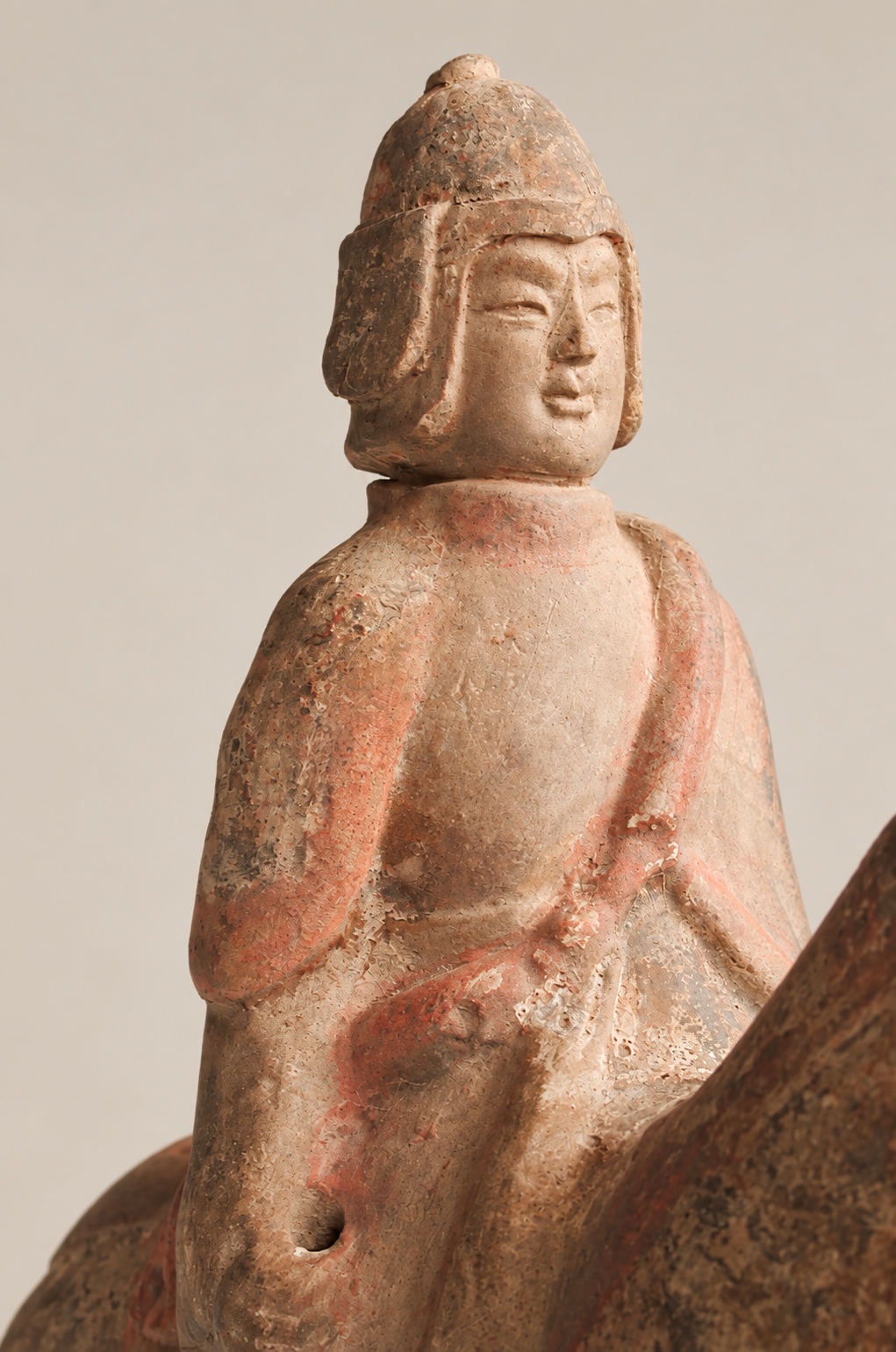
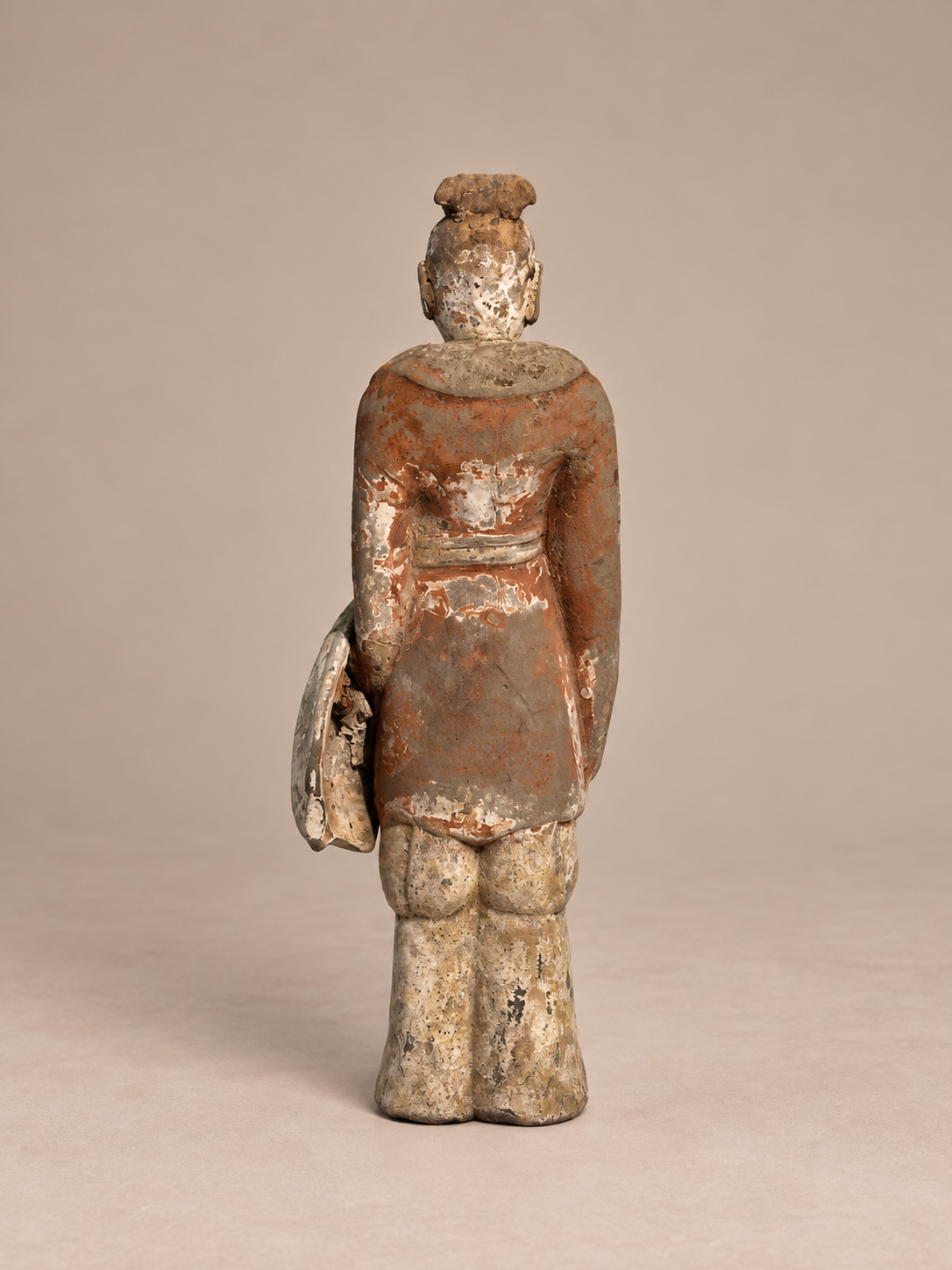
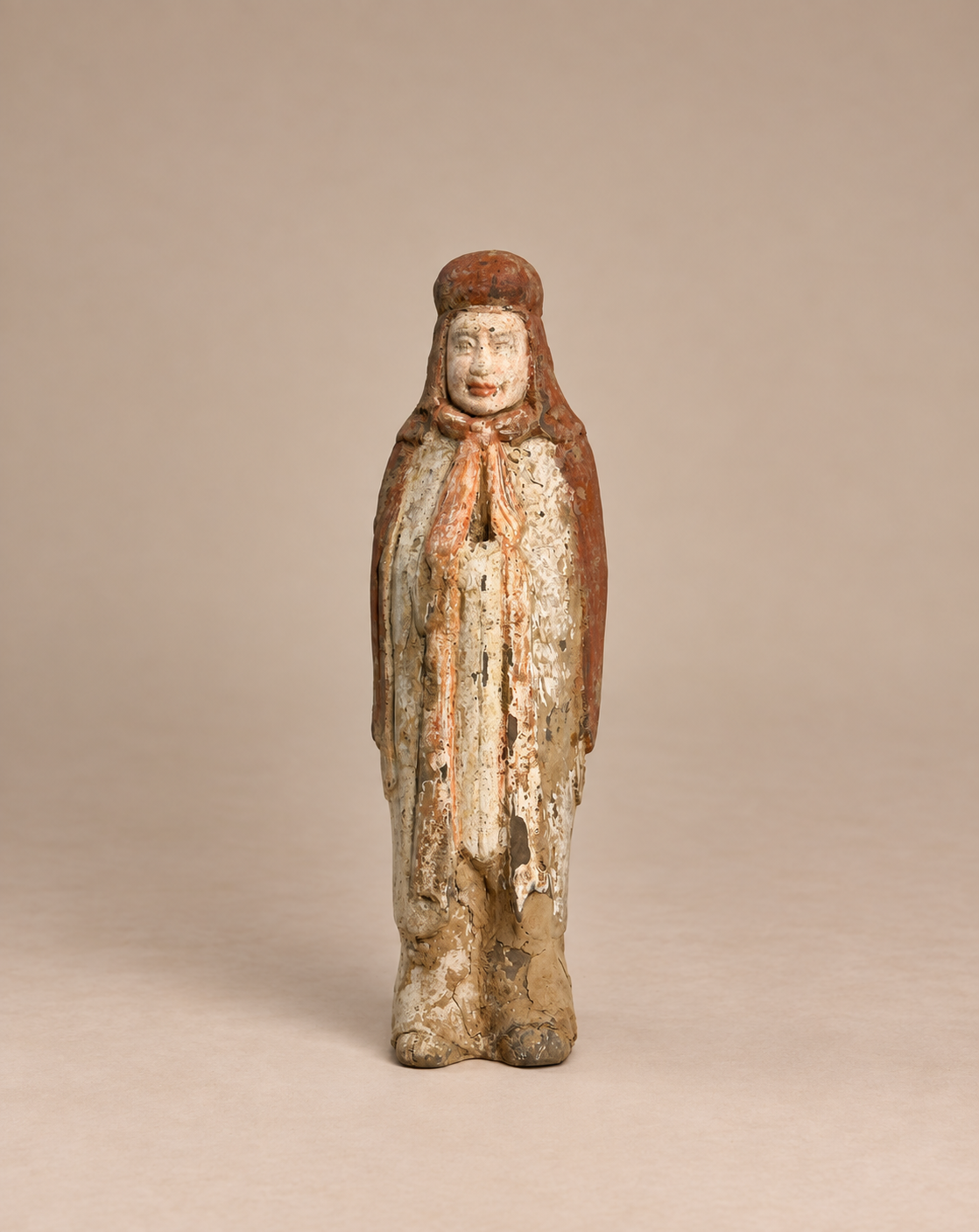
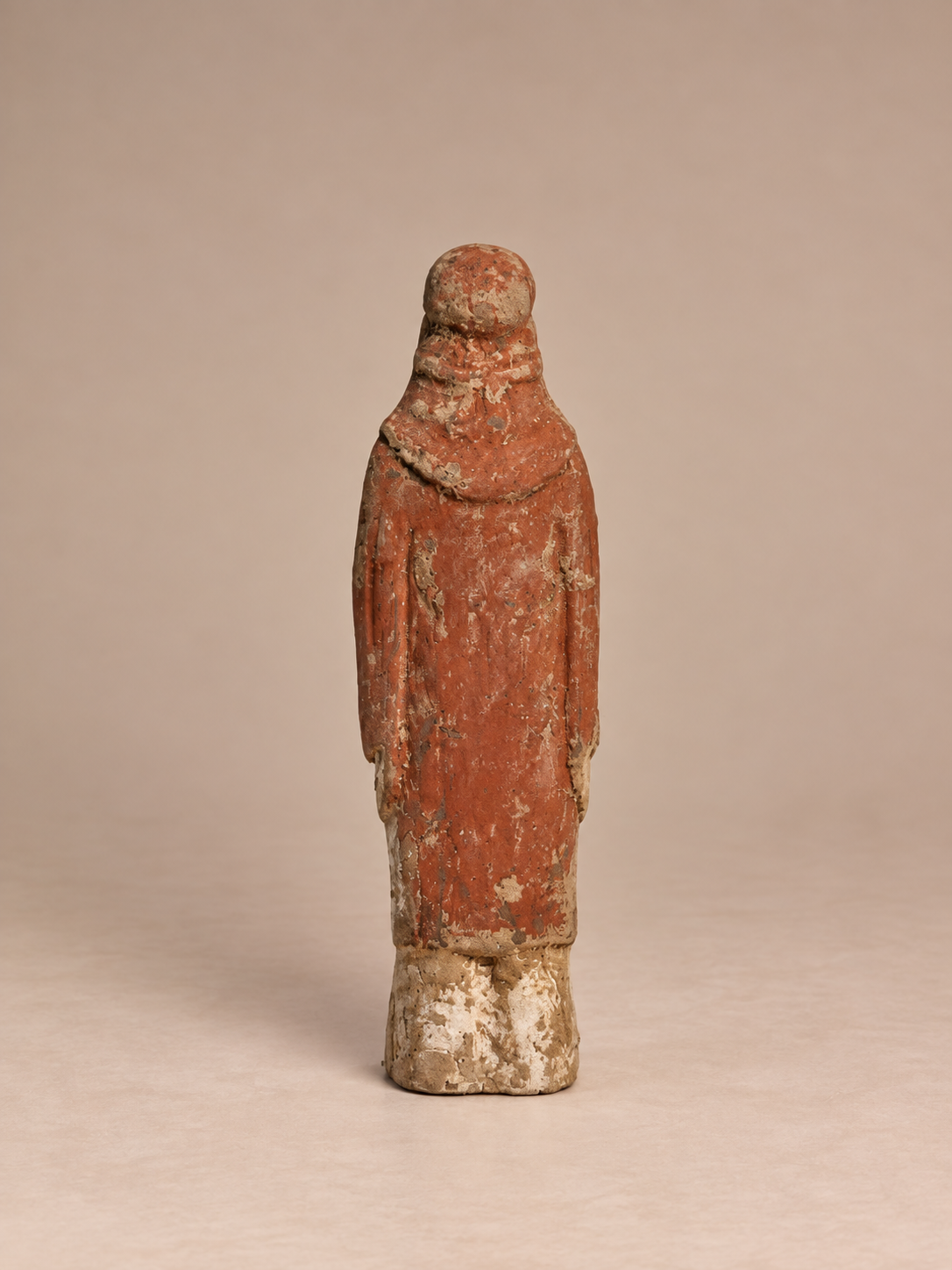
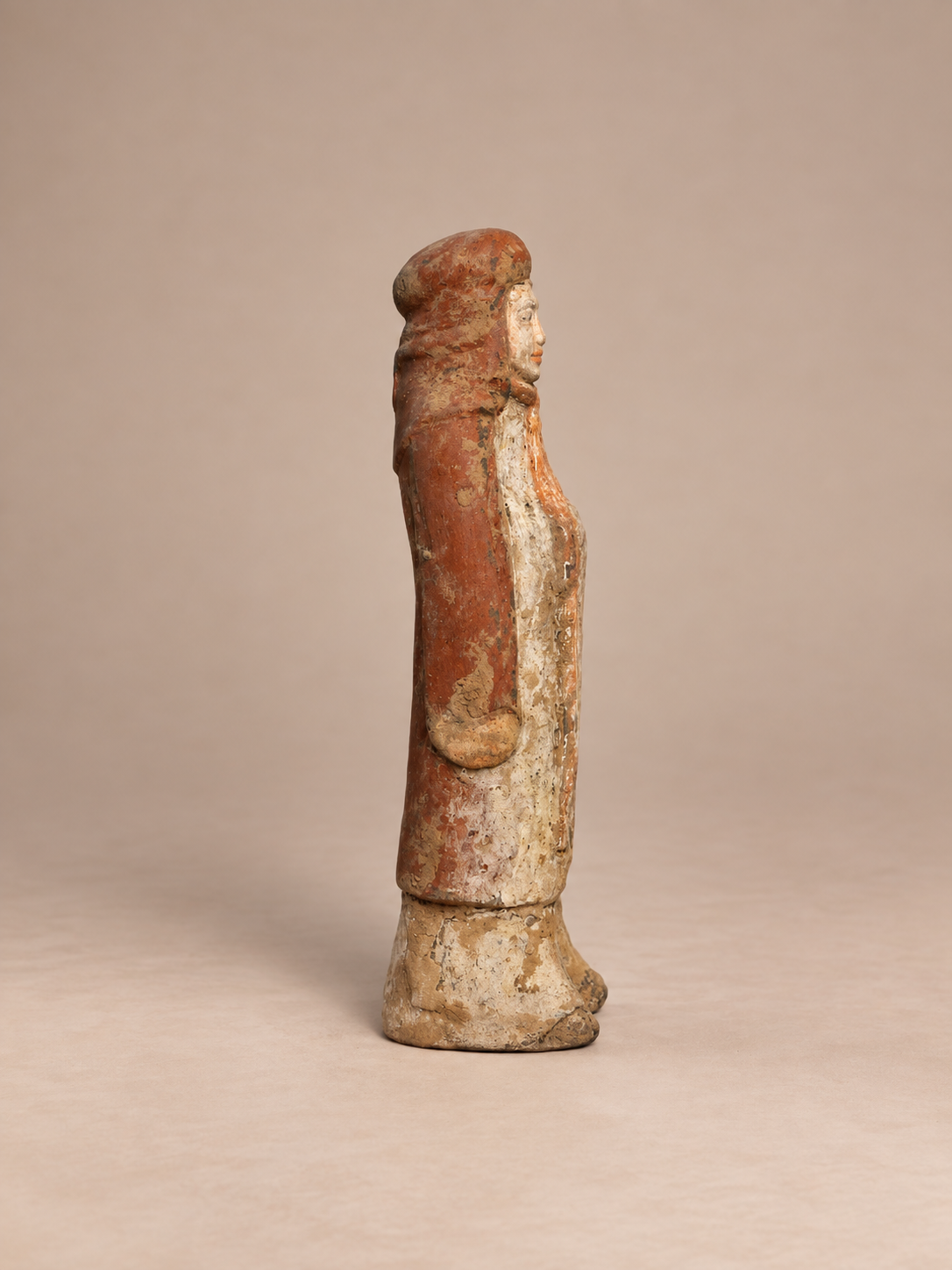
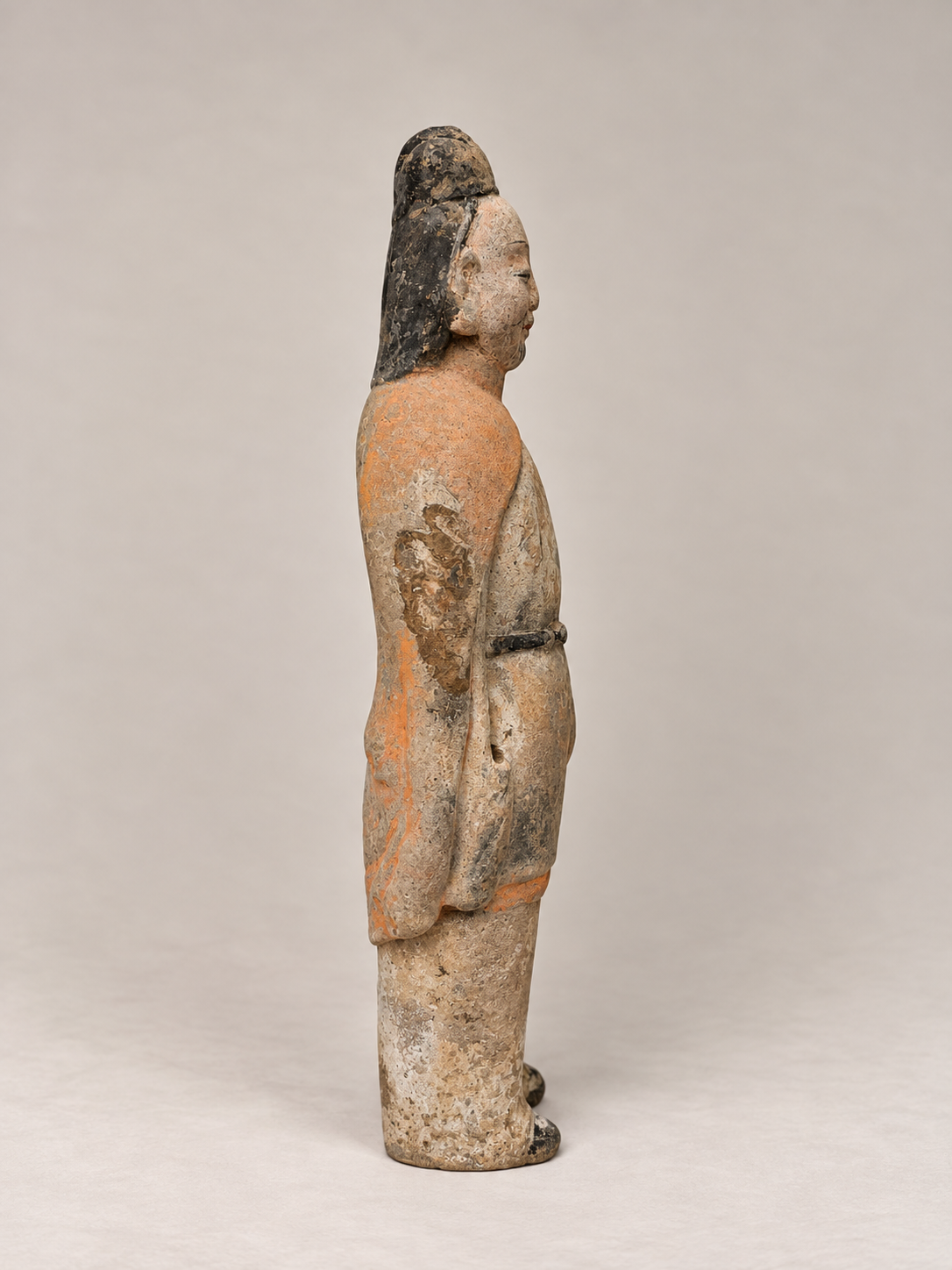
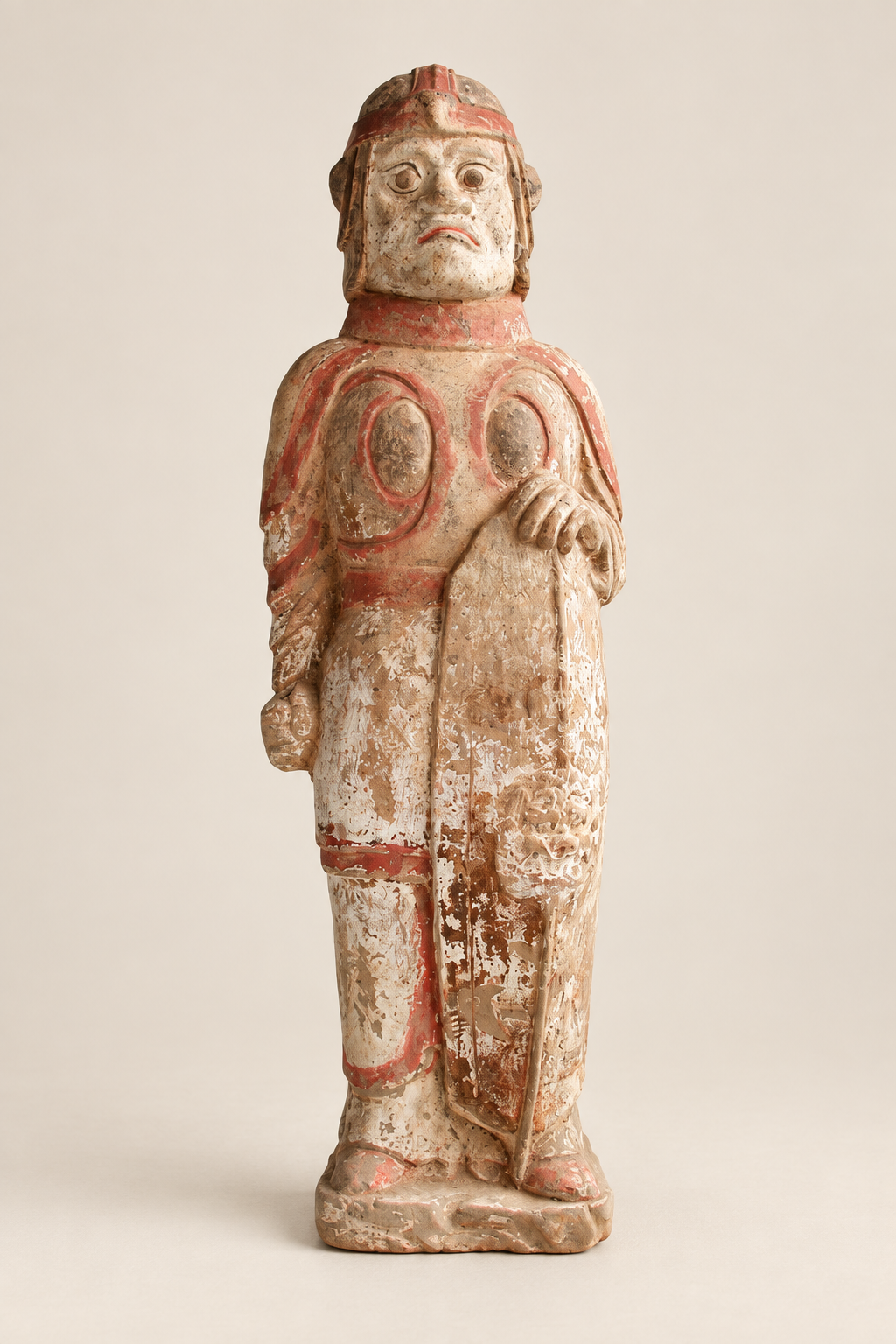
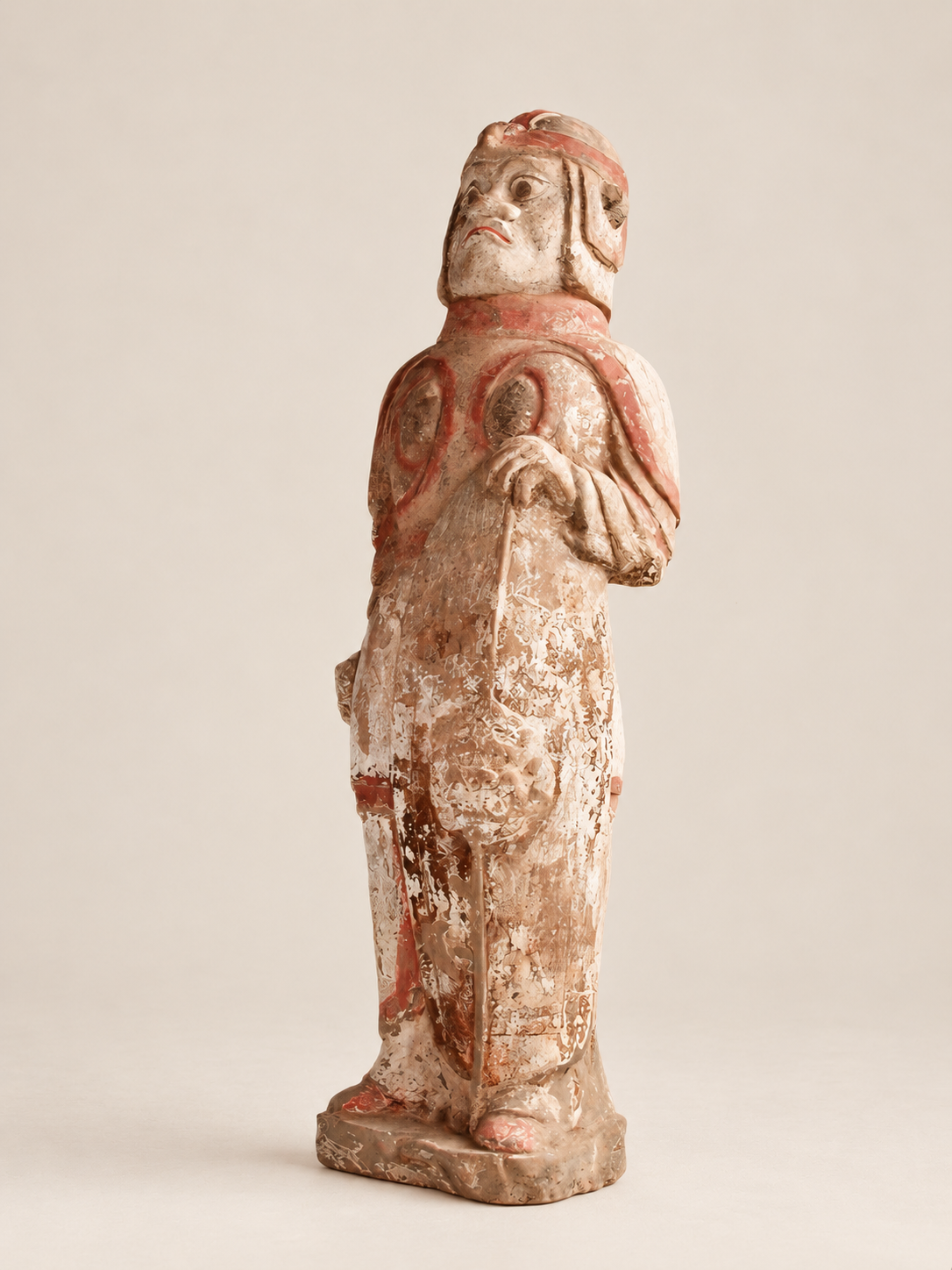
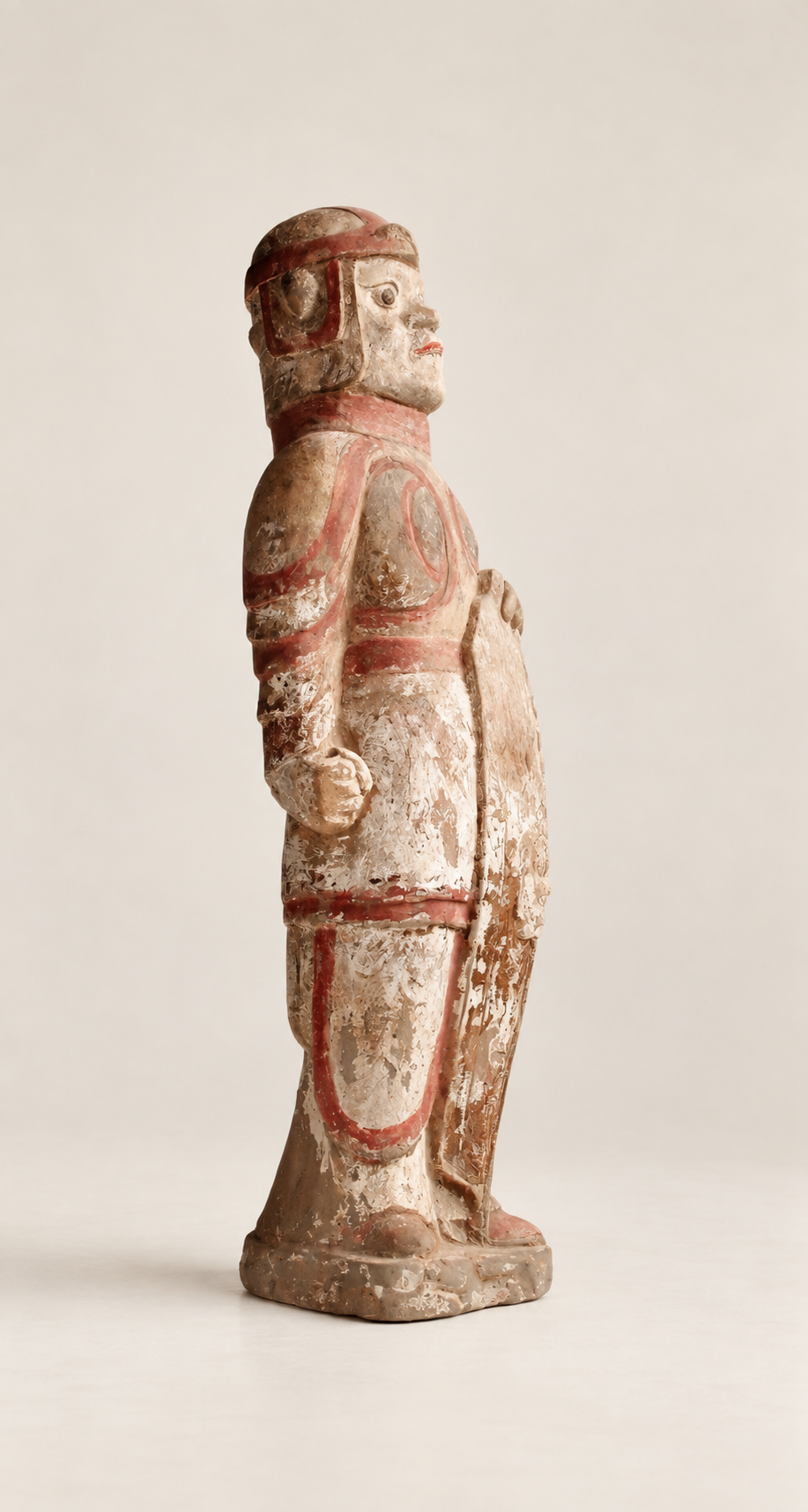
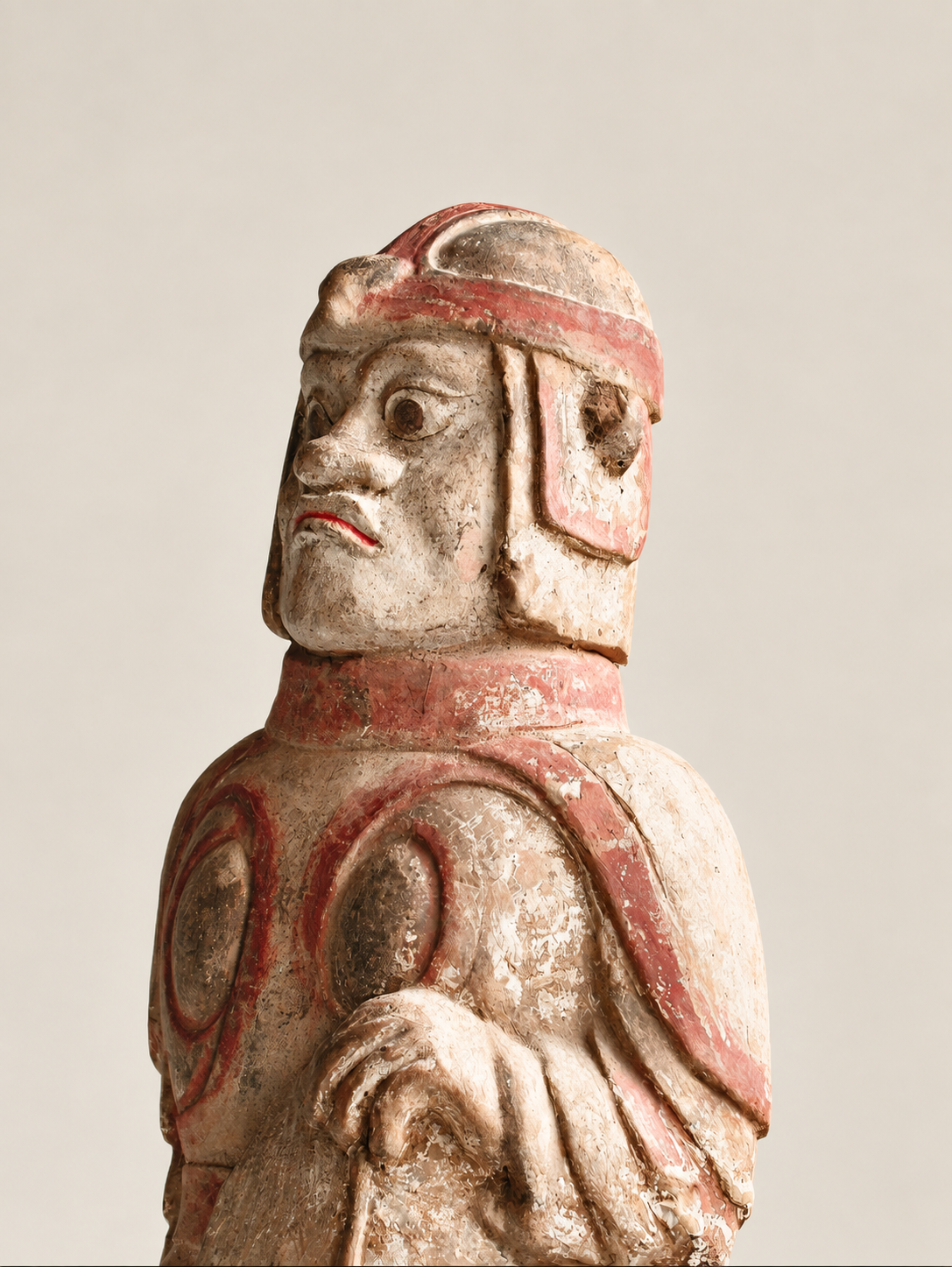
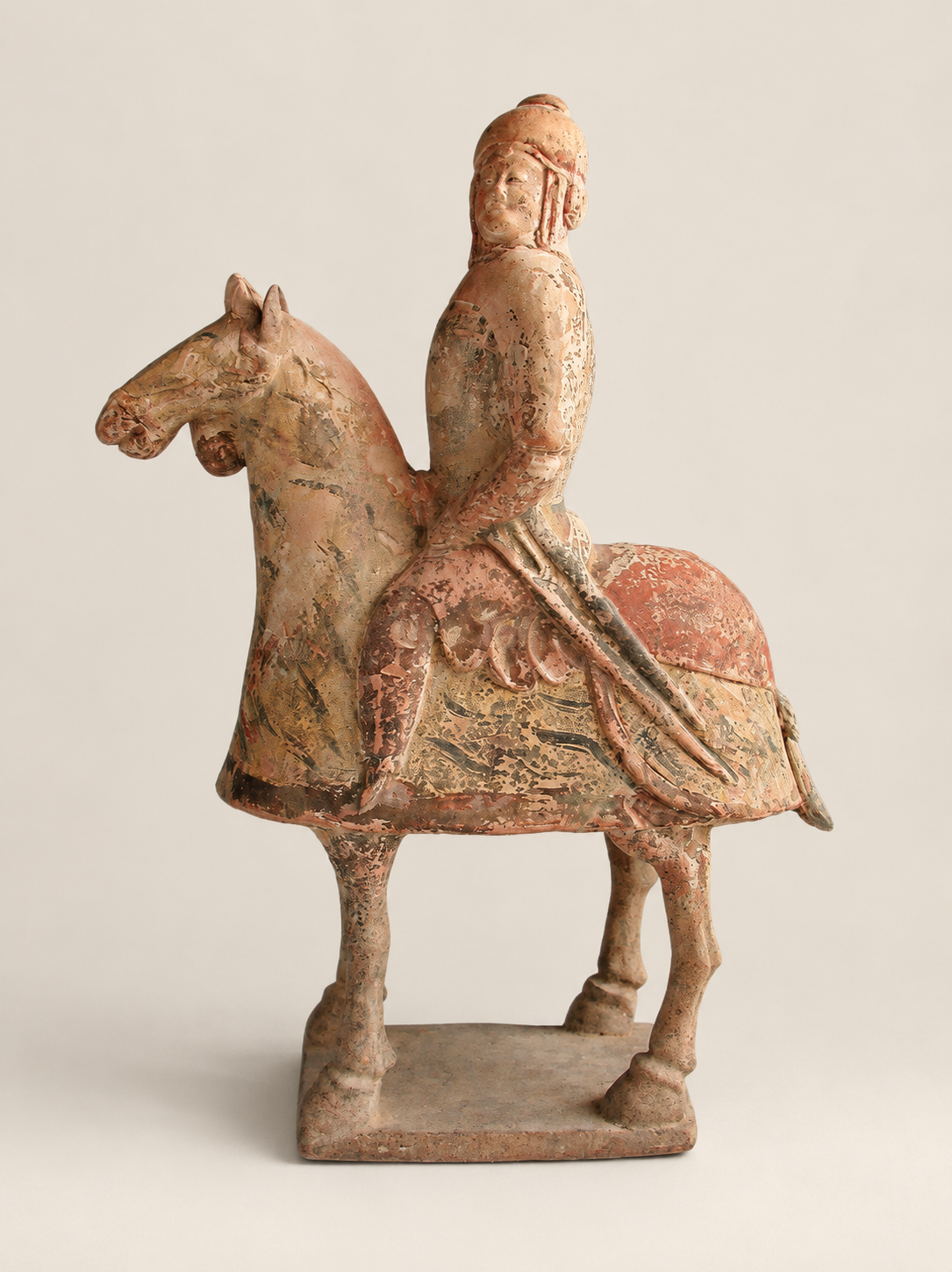
This impressive Northern Qi Dynasty painted pottery equestrian warrior is a powerful representation of the military and equestrian culture that flourished in northern China during the sixth century. Modelled as an armoured rider seated upright upon his horse, the figure combines a strong sculptural presence with remarkably well-preserved traces of its original painted decoration.
The warrior is depicted wearing a protective helmet and substantial military dress, seated erect and composed upon his mount. His rounded face, narrow eyes and restrained expression are characteristic of Northern Qi pottery figures, while the simplified yet confident modelling gives the rider a particularly commanding presence.
The horse is equally striking. Standing firmly upon an integral rectangular base, it is shown with a broad chest, long legs and an upright head. Particularly noteworthy is the elaborate protective covering enveloping much of the horse's body. Painted and incised details articulate the different sections of the horse armour and trappings, while black, red, ochre and white pigments remain visible across the surface.
Such imagery belongs to the important tradition of armoured cavalry that developed during the Northern Dynasties. Heavy cavalry played a significant role in warfare across northern China, with both rider and horse benefiting from increasingly sophisticated forms of protective equipment. Surviving ceramic representations provide an unusually vivid record of this aspect of sixth-century military culture.
The figure may also be considered within the artistic world of Jinyang (晉陽), present-day Taiyuan in Shanxi. Jinyang was of exceptional political and military importance under the Eastern Wei and Northern Qi. Under the Northern Qi it functioned as a secondary capital and major political centre alongside Ye. Archaeological discoveries from Northern Qi sites around Jinyang have produced important groups of pottery warriors, cavalry figures and military subjects, providing valuable parallels for understanding the dress, armour and equestrian culture represented by figures of this type.
What distinguishes Northern Qi Dynasty pottery is its remarkable synthesis of influences. Northern traditions of horsemanship and military culture were combined with the increasingly sophisticated sculptural language of sixth-century China, producing figures that are simultaneously monumental, restrained and highly individual.
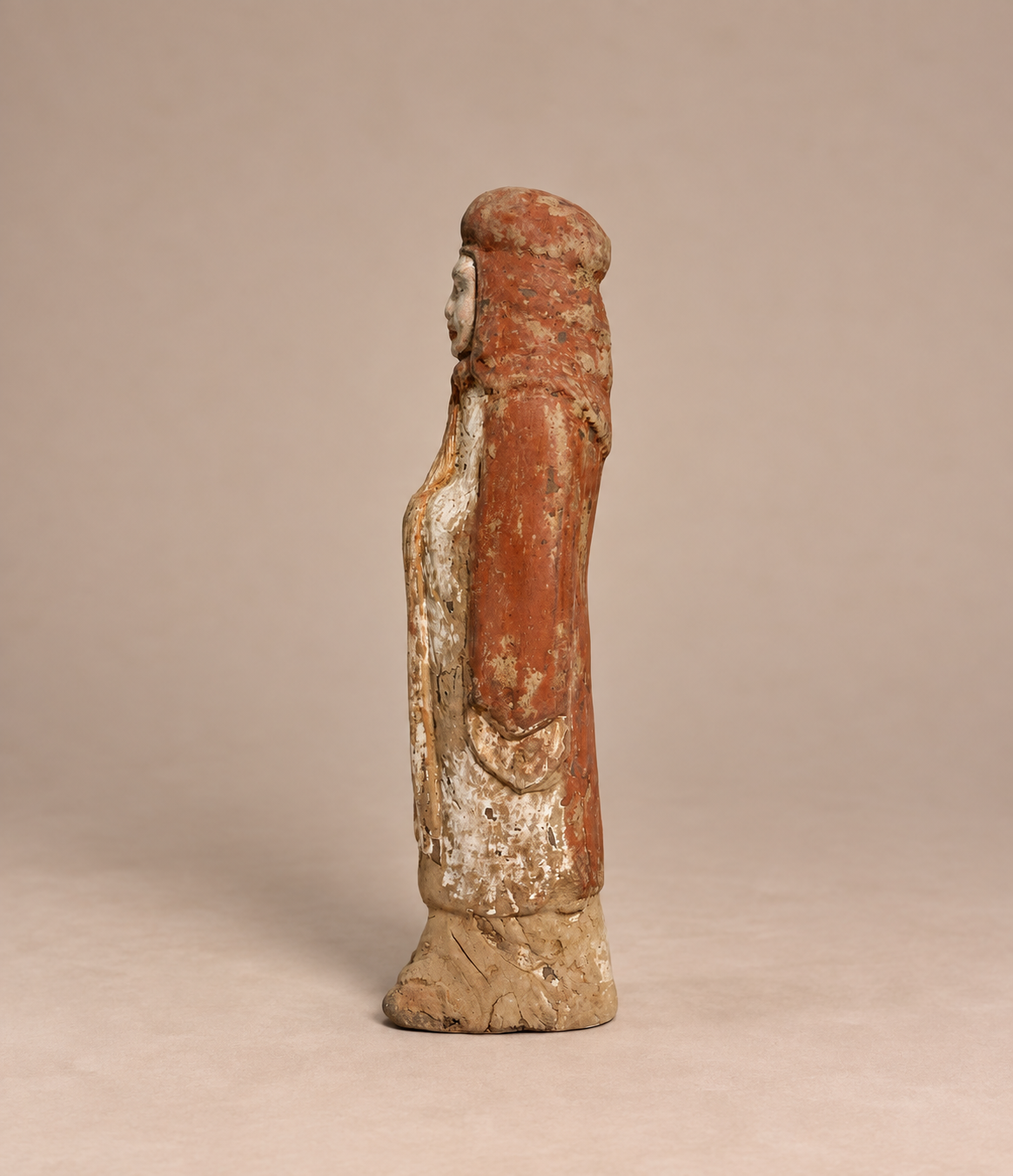
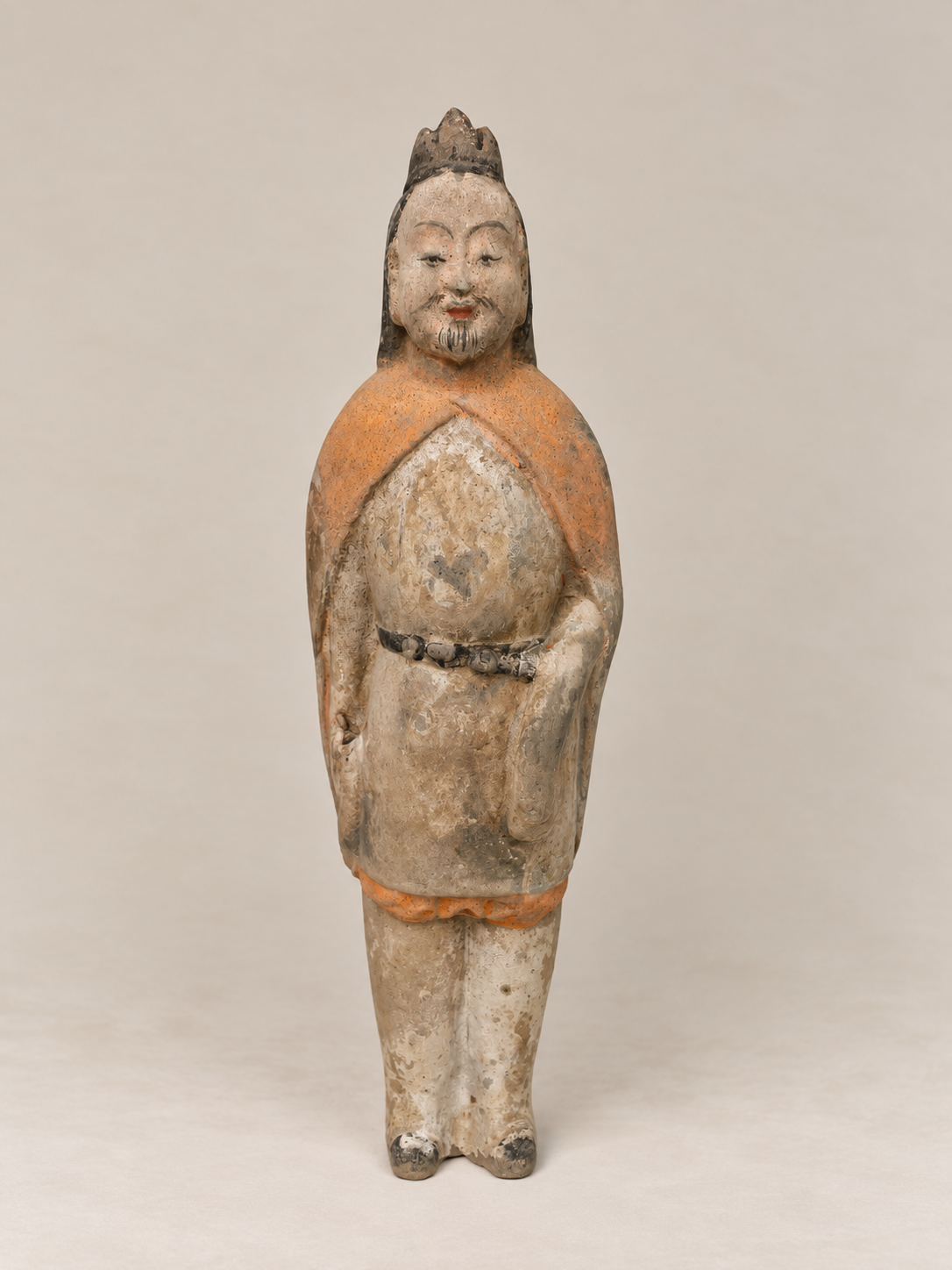
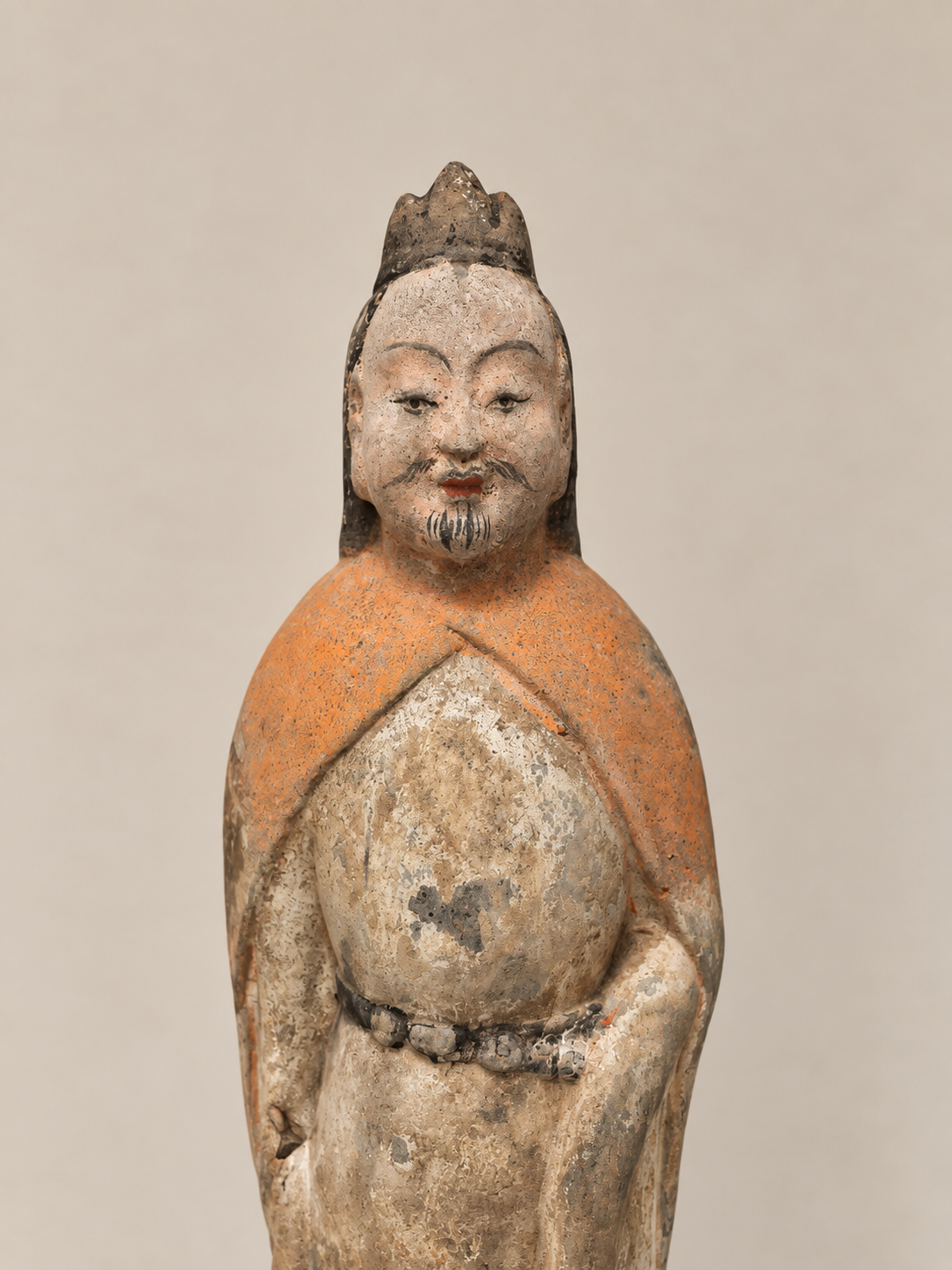
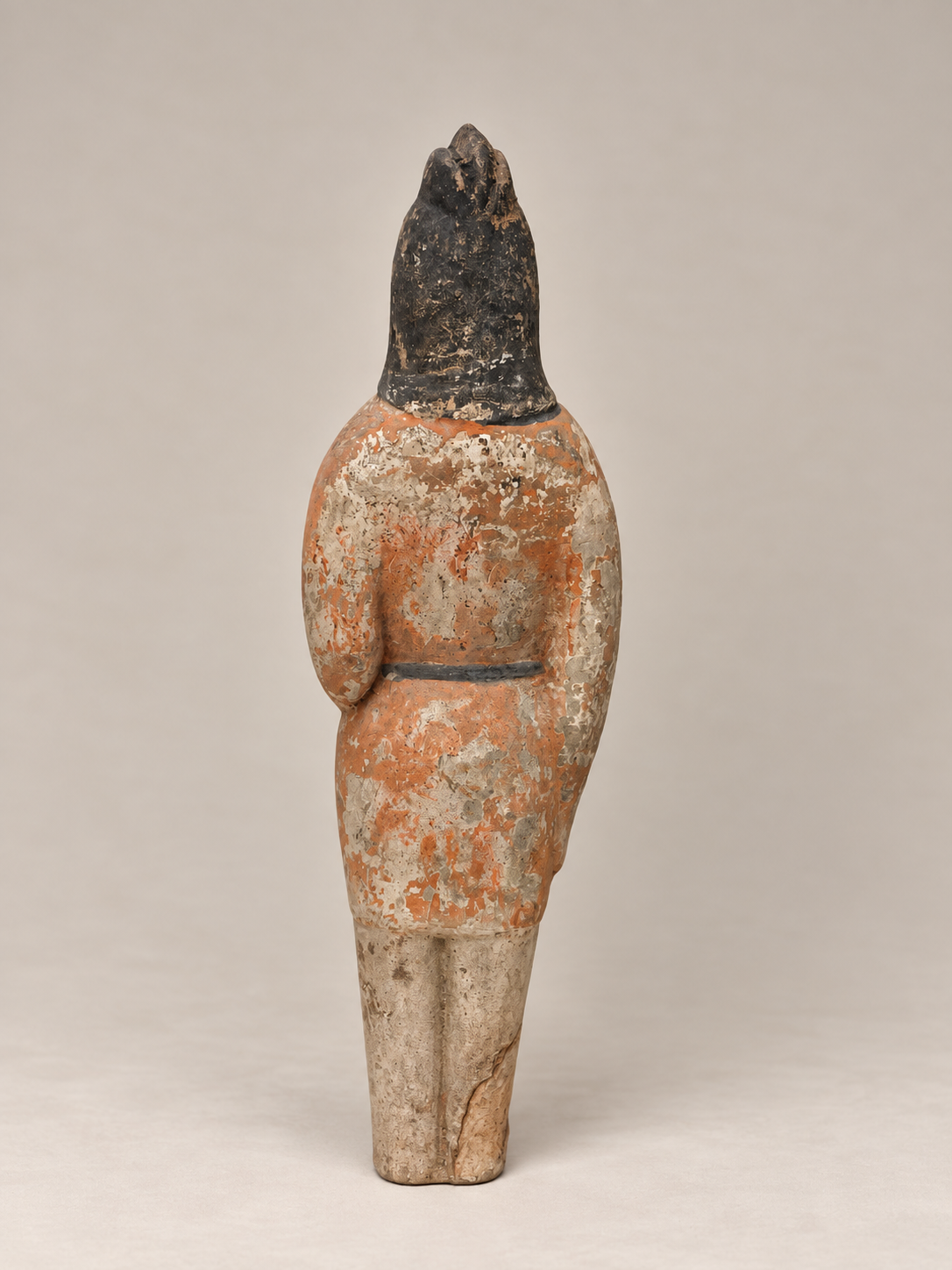
Despite being over 1,400 years old, substantial traces of the original cold-painted pigments remain visible across both horse and rider. The surviving reds, blacks, whites and earth tones reveal how dramatically different these ancient Chinese pottery figures would originally have appeared and add considerable depth to the modelling.
A particularly expressive example of Northern Qi Chinese ceramic art, this painted pottery armoured rider embodies the strength and cosmopolitan character of northern China immediately before the reunification of the empire under the Sui Dynasty.
Period: Northern Qi Dynasty (AD 550–577)
Culture: China, Northern Dynasties
Material: Painted pottery / earthenware with original pigments
Subject: Armoured equestrian warrior
Related historical centre: Jinyang (晉陽), present-day Taiyuan, Shanxi, China
This impressive Northern Qi Dynasty painted pottery equestrian warrior is a powerful representation of the military and equestrian culture that flourished in northern China during the sixth century. Modelled as an armoured rider seated upright upon his horse, the figure combines a strong sculptural presence with remarkably well-preserved traces of its original painted decoration.
The warrior is depicted wearing a protective helmet and substantial military dress, seated erect and composed upon his mount. His rounded face, narrow eyes and restrained expression are characteristic of Northern Qi pottery figures, while the simplified yet confident modelling gives the rider a particularly commanding presence.
The horse is equally striking. Standing firmly upon an integral rectangular base, it is shown with a broad chest, long legs and an upright head. Particularly noteworthy is the elaborate protective covering enveloping much of the horse's body. Painted and incised details articulate the different sections of the horse armour and trappings, while black, red, ochre and white pigments remain visible across the surface.
Such imagery belongs to the important tradition of armoured cavalry that developed during the Northern Dynasties. Heavy cavalry played a significant role in warfare across northern China, with both rider and horse benefiting from increasingly sophisticated forms of protective equipment. Surviving ceramic representations provide an unusually vivid record of this aspect of sixth-century military culture.
The figure may also be considered within the artistic world of Jinyang (晉陽), present-day Taiyuan in Shanxi. Jinyang was of exceptional political and military importance under the Eastern Wei and Northern Qi. Under the Northern Qi it functioned as a secondary capital and major political centre alongside Ye. Archaeological discoveries from Northern Qi sites around Jinyang have produced important groups of pottery warriors, cavalry figures and military subjects, providing valuable parallels for understanding the dress, armour and equestrian culture represented by figures of this type.
What distinguishes Northern Qi Dynasty pottery is its remarkable synthesis of influences. Northern traditions of horsemanship and military culture were combined with the increasingly sophisticated sculptural language of sixth-century China, producing figures that are simultaneously monumental, restrained and highly individual.
Despite being over 1,400 years old, substantial traces of the original cold-painted pigments remain visible across both horse and rider. The surviving reds, blacks, whites and earth tones reveal how dramatically different these ancient Chinese pottery figures would originally have appeared and add considerable depth to the modelling.
A particularly expressive example of Northern Qi Chinese ceramic art, this painted pottery armoured rider embodies the strength and cosmopolitan character of northern China immediately before the reunification of the empire under the Sui Dynasty.
Period: Northern Qi Dynasty (AD 550–577)
Culture: China, Northern Dynasties
Material: Painted pottery / earthenware with original pigments
Subject: Armoured equestrian warrior
Related historical centre: Jinyang (晉陽), present-day Taiyuan, Shanxi, China