 Image 1 of 3
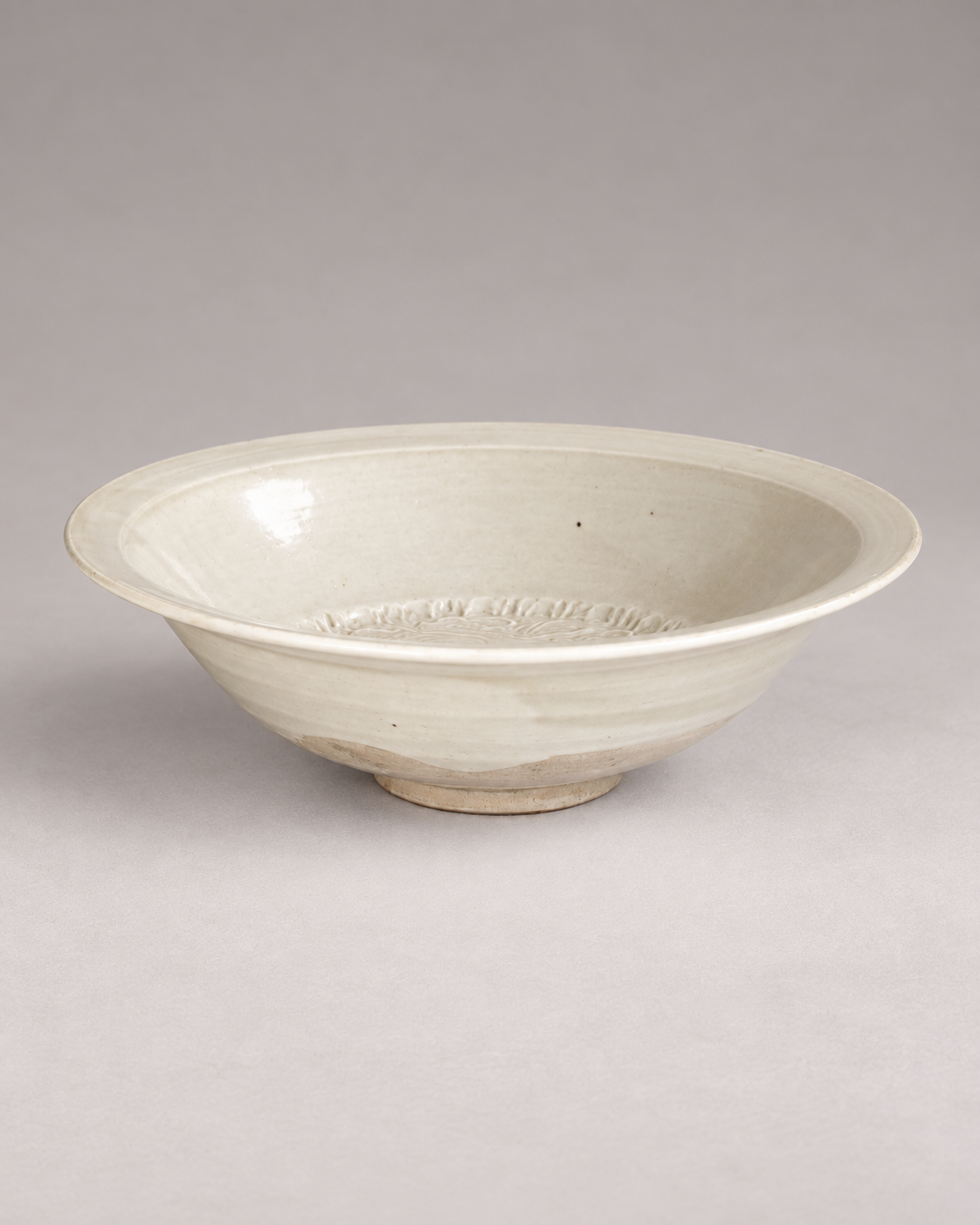 Image 2 of 3
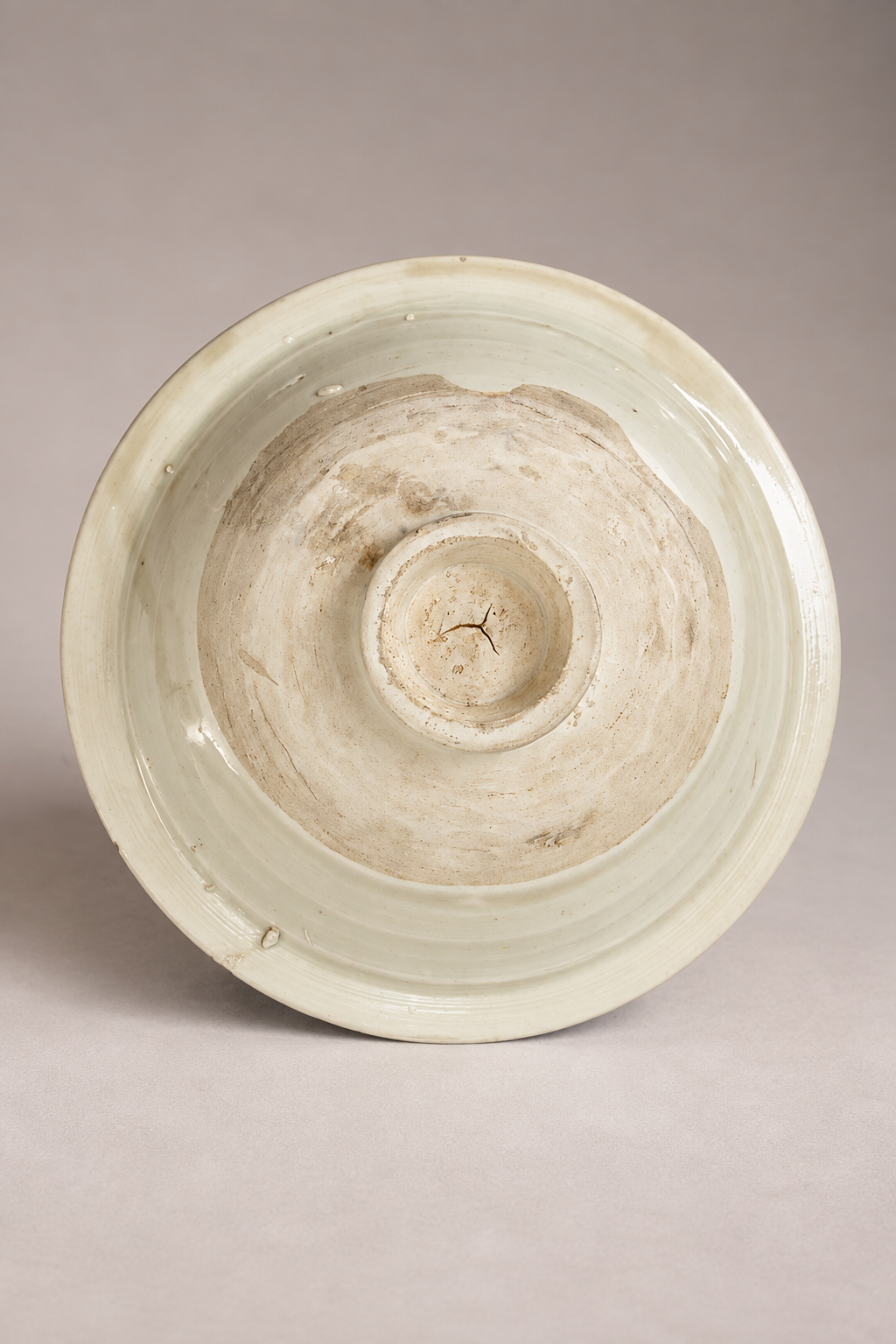 Image 3 of 3
Song Dynasty (960–1279)
Diameter: 12.75 cm
Provenance: Well-established private English collection
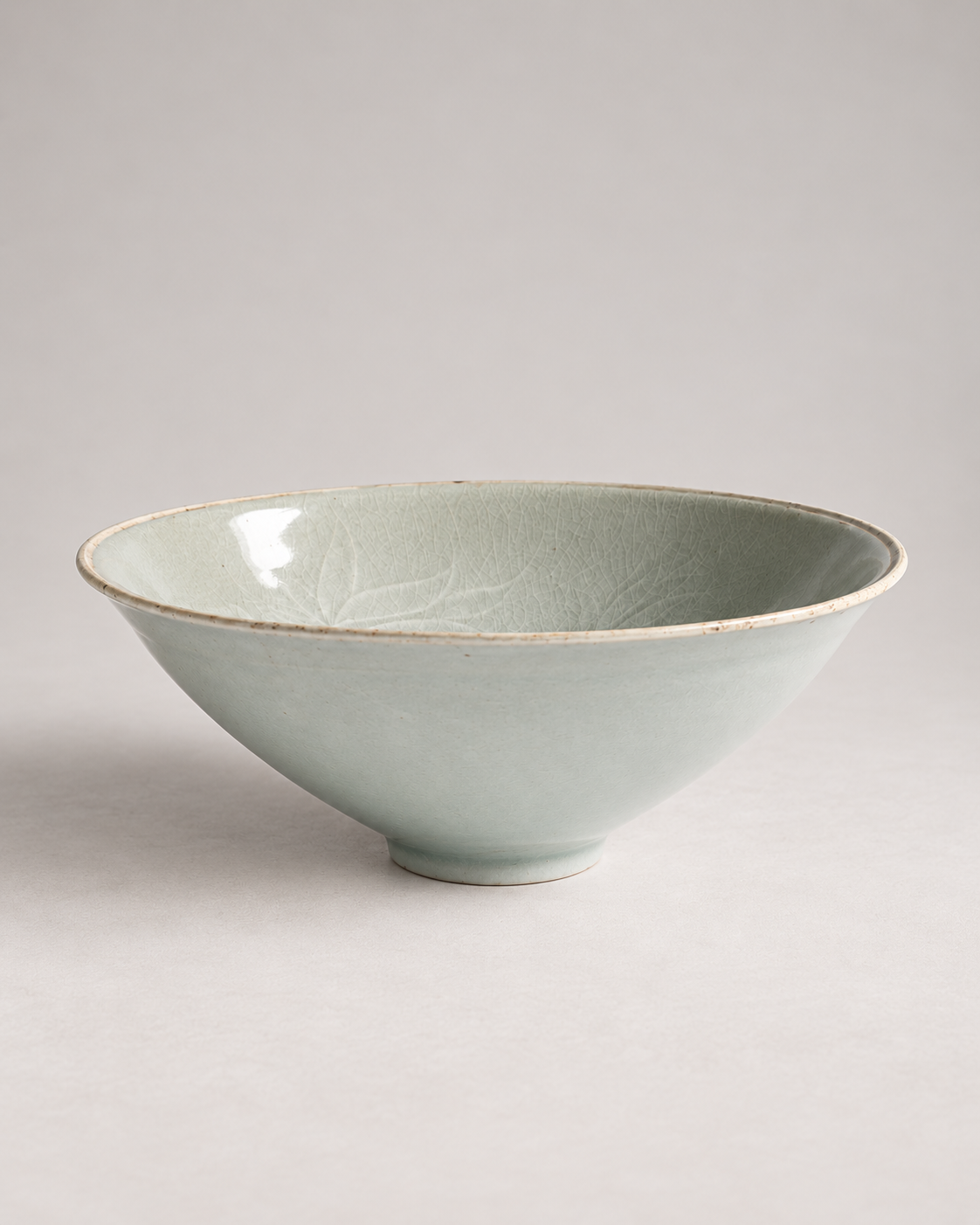
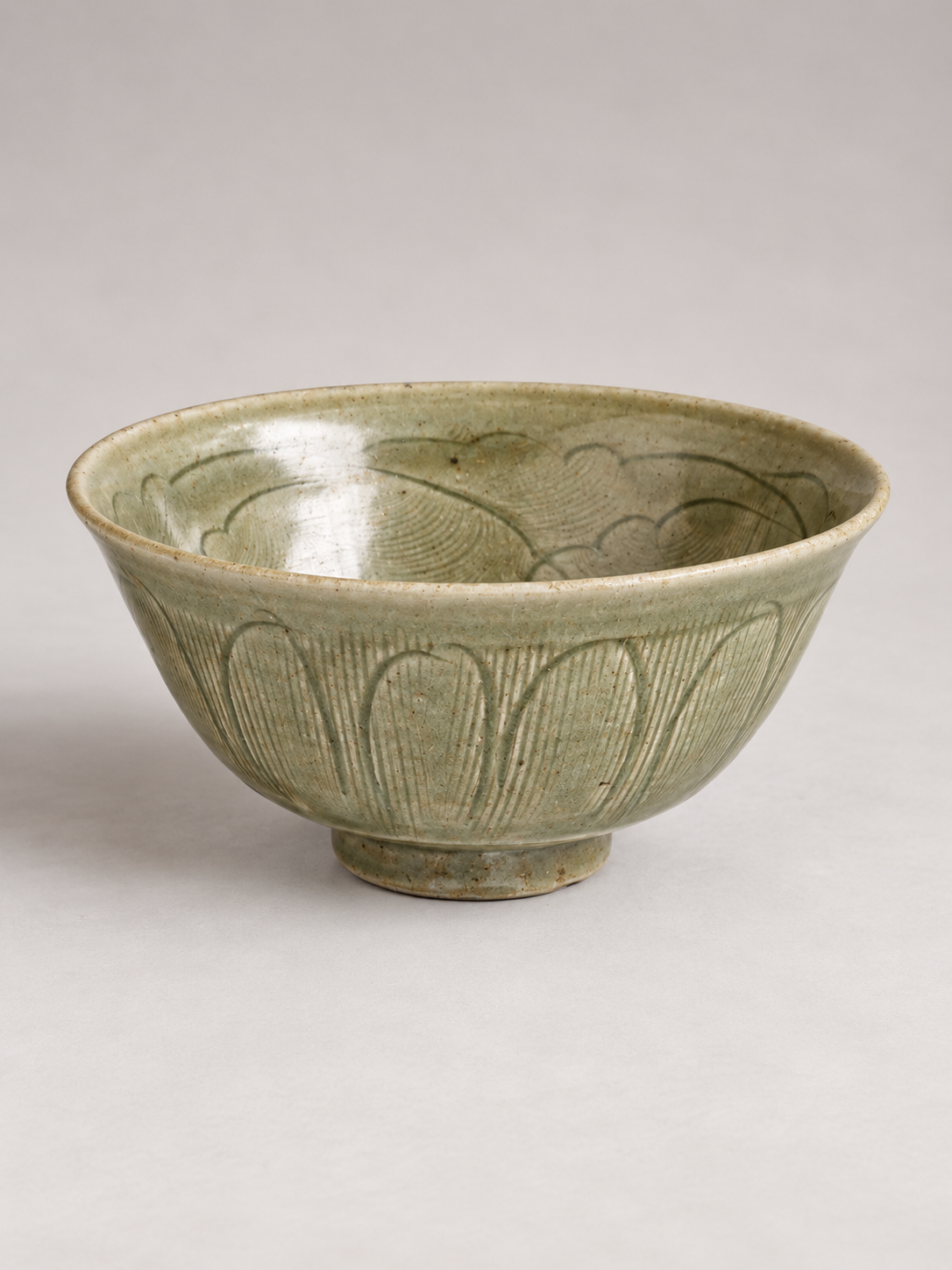
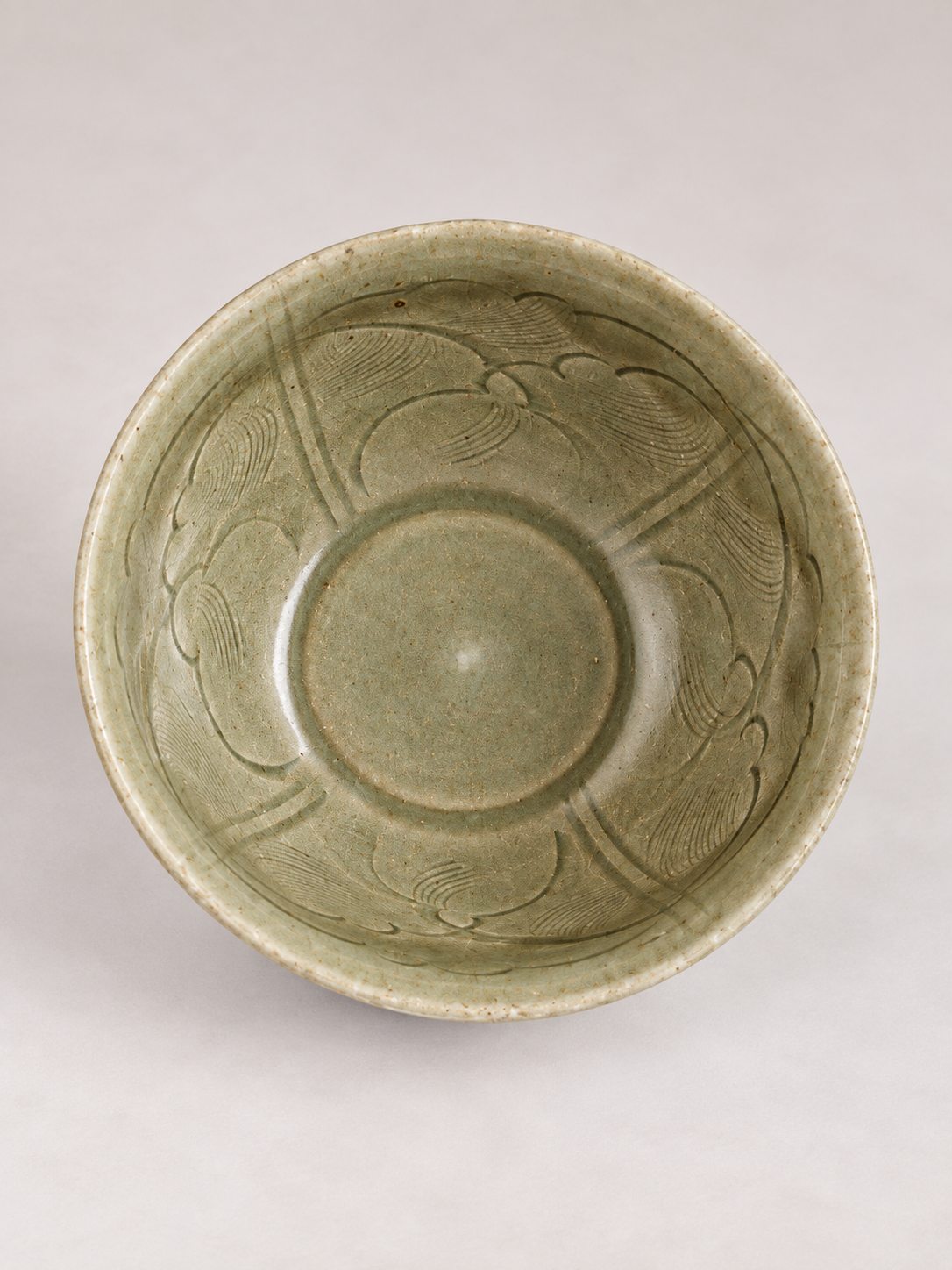
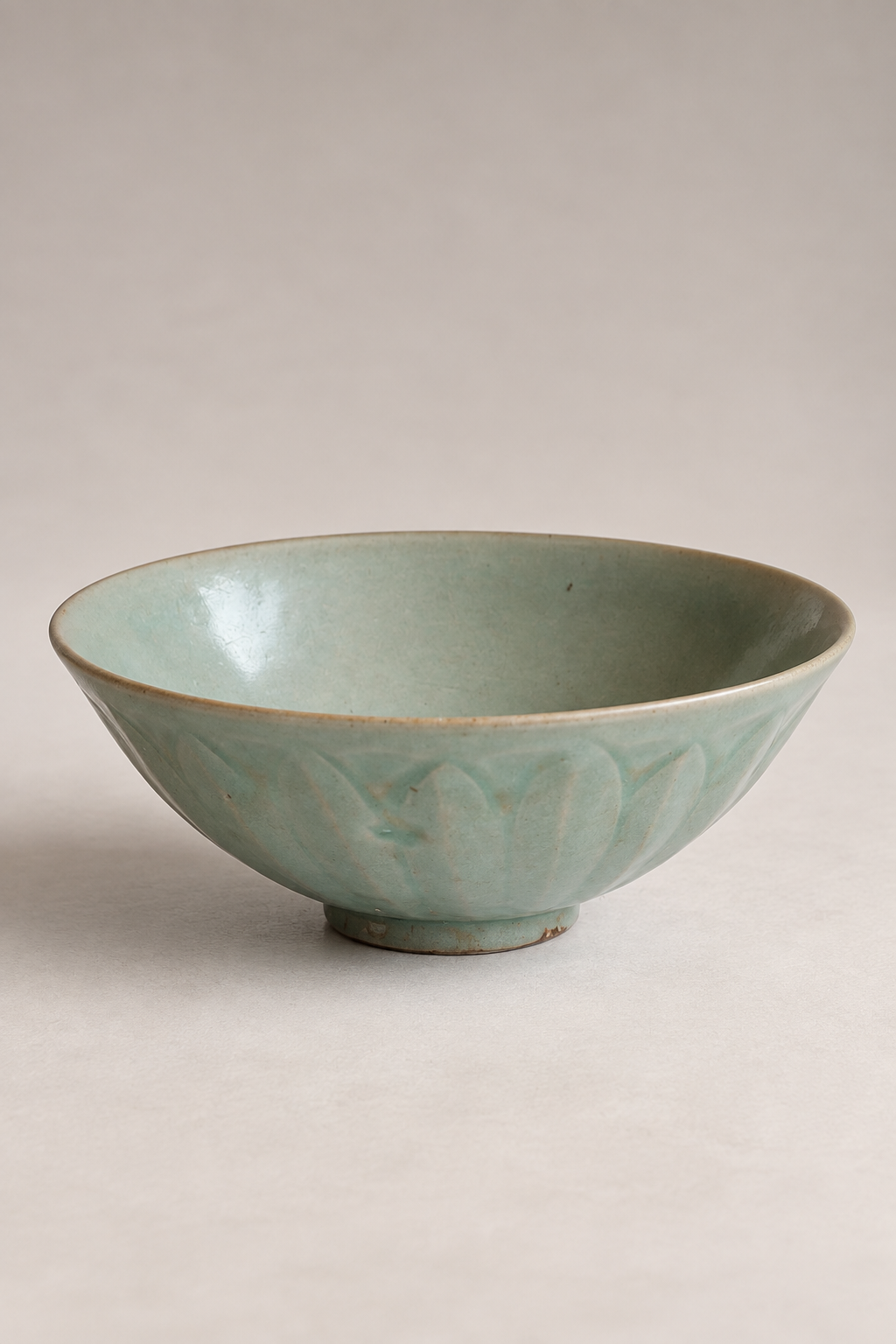
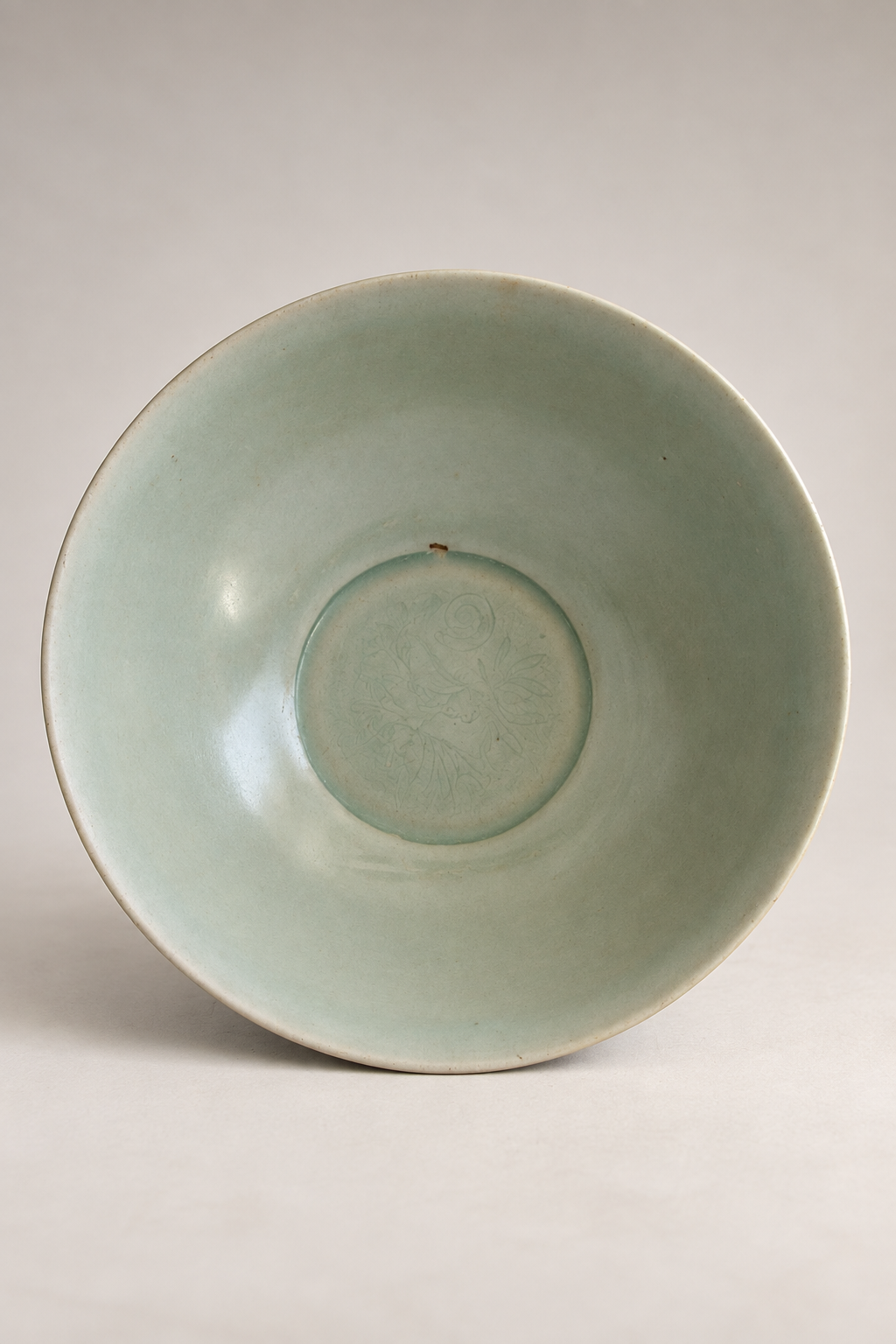
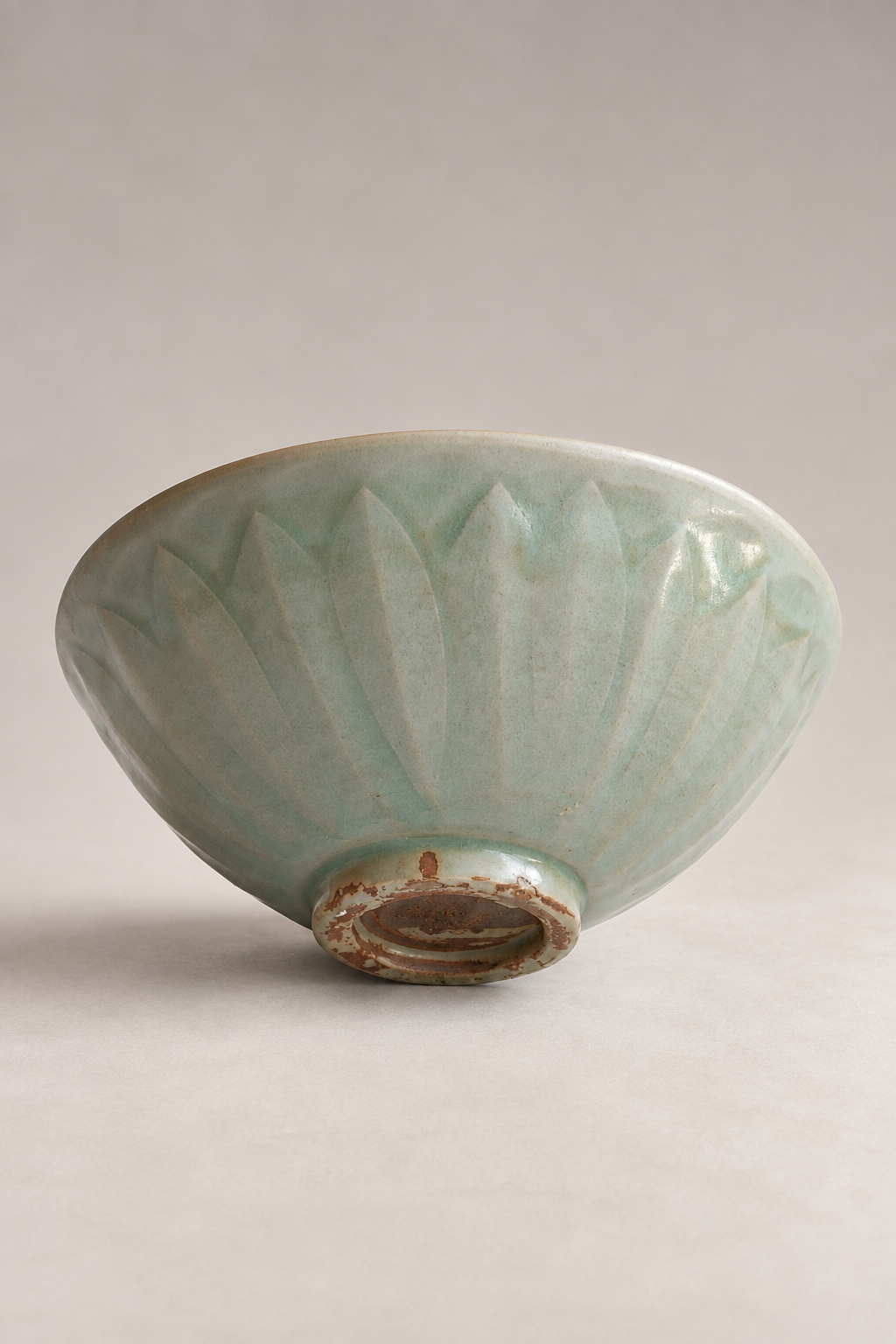
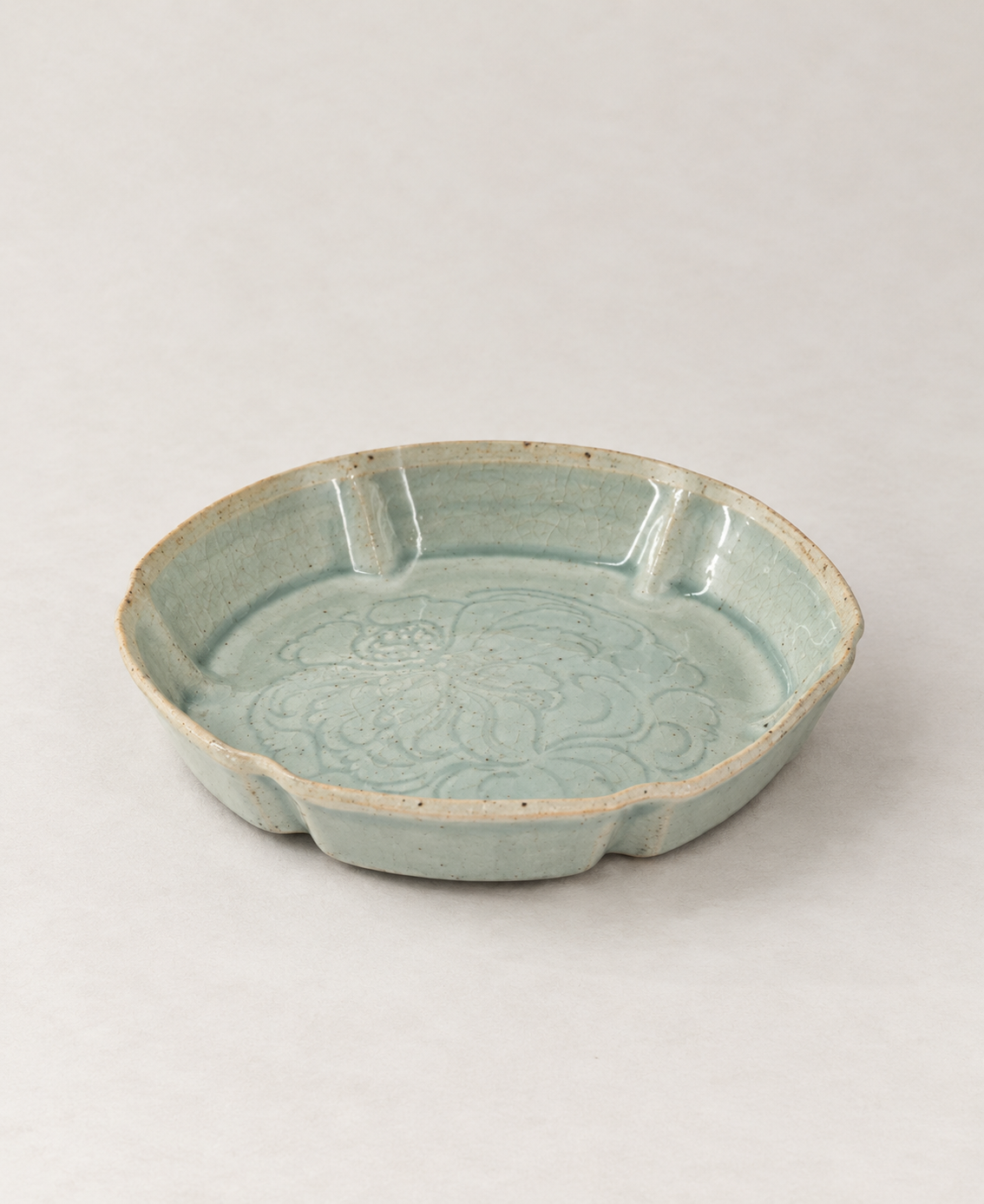
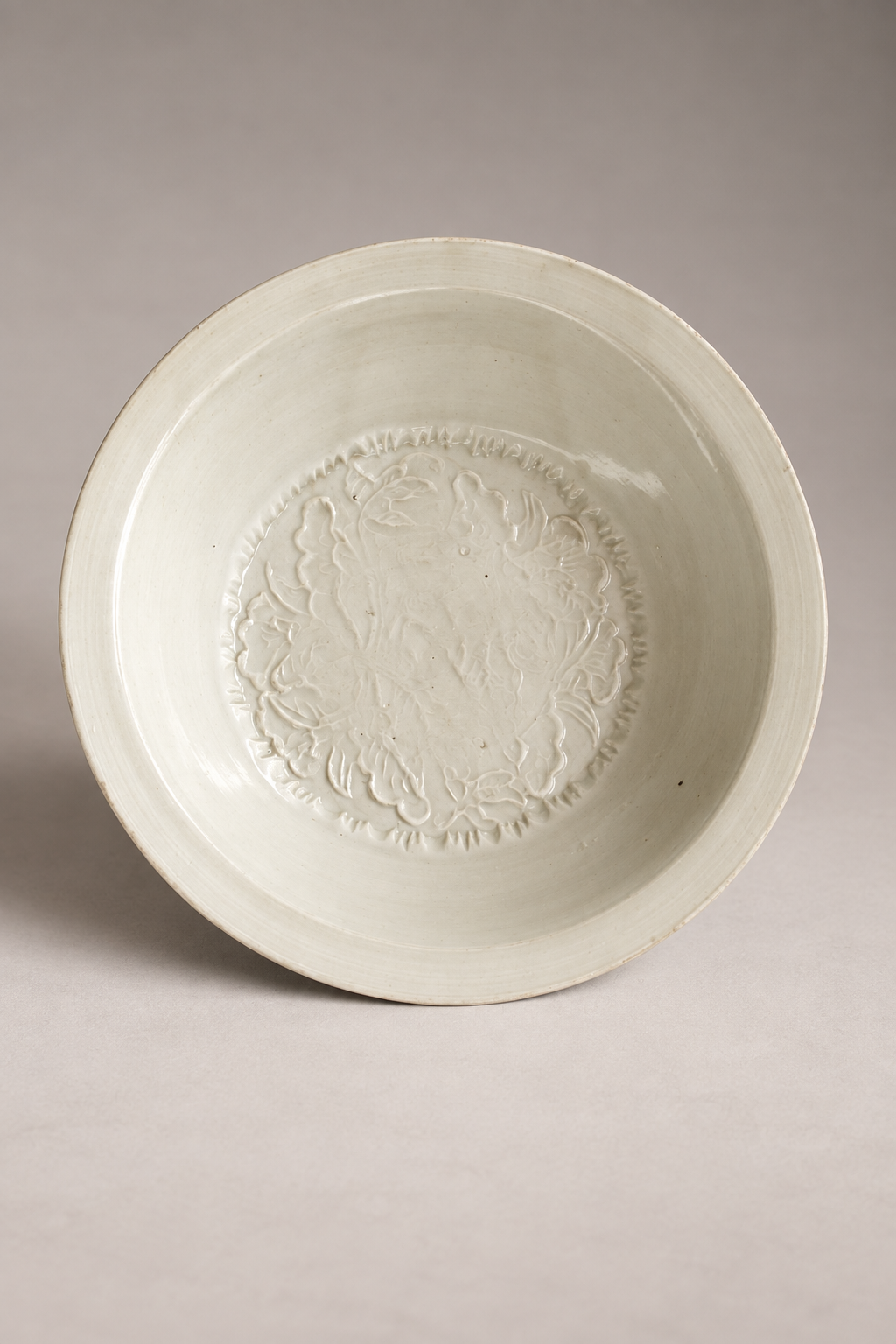
This finely potted porcelain dish was produced during the Song dynasty and is most likely attributable to the Huozhou kilns at Chencun in Shanxi province. The Huozhou kilns produced high-quality white wares that were strongly influenced by the celebrated Ding kilns of neighbouring Hebei, and this dish reflects that close relationship in both its refined potting and restrained decorative treatment.
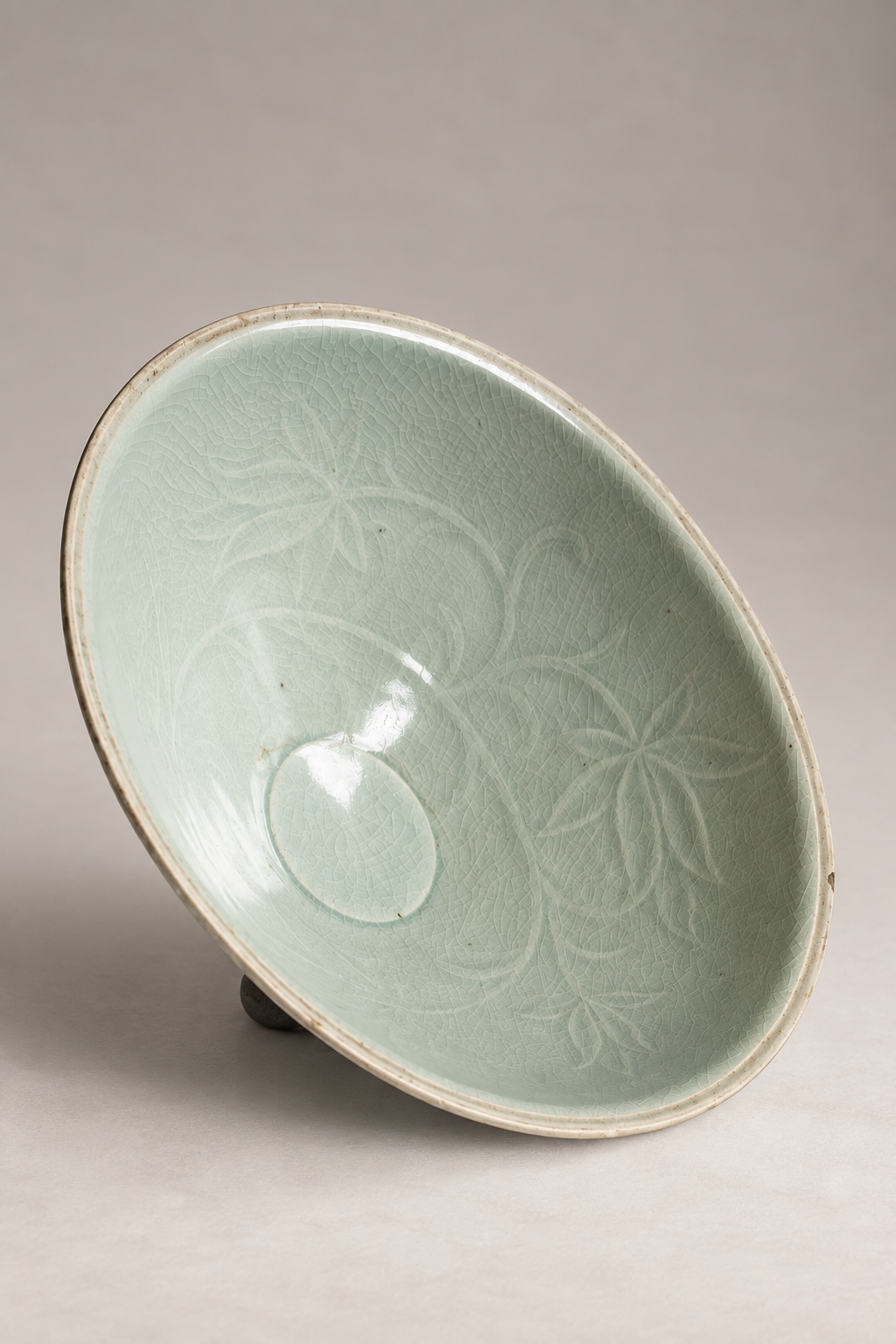
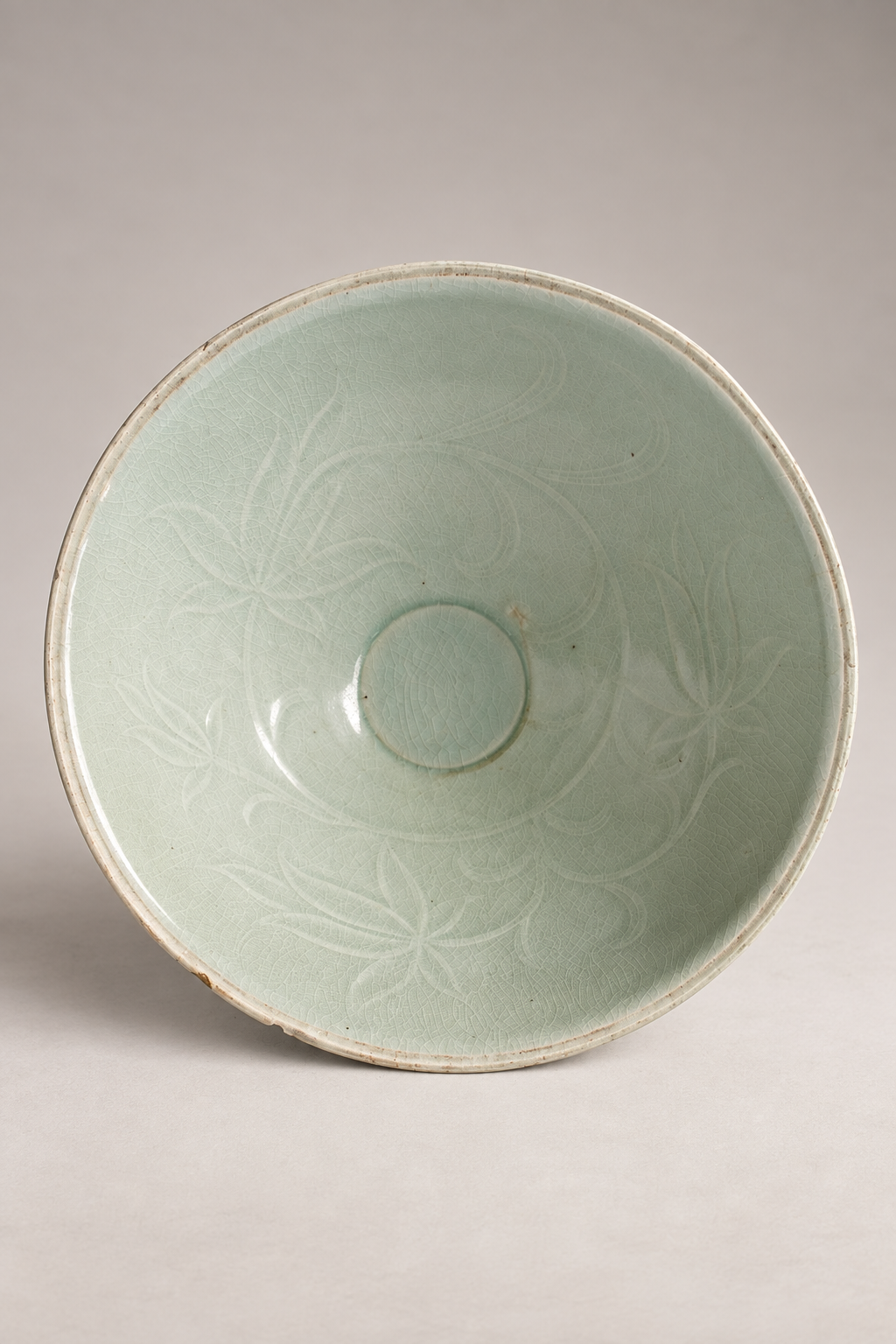
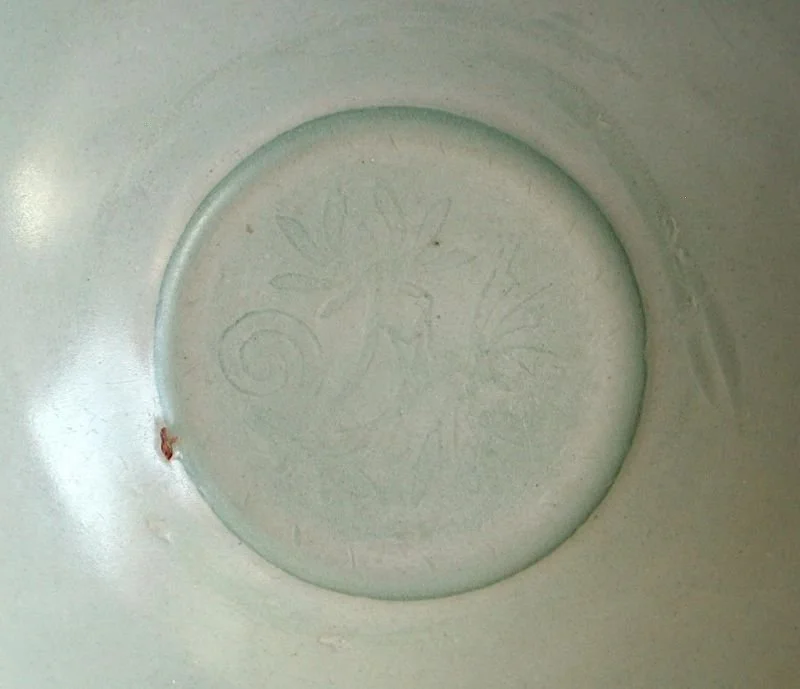
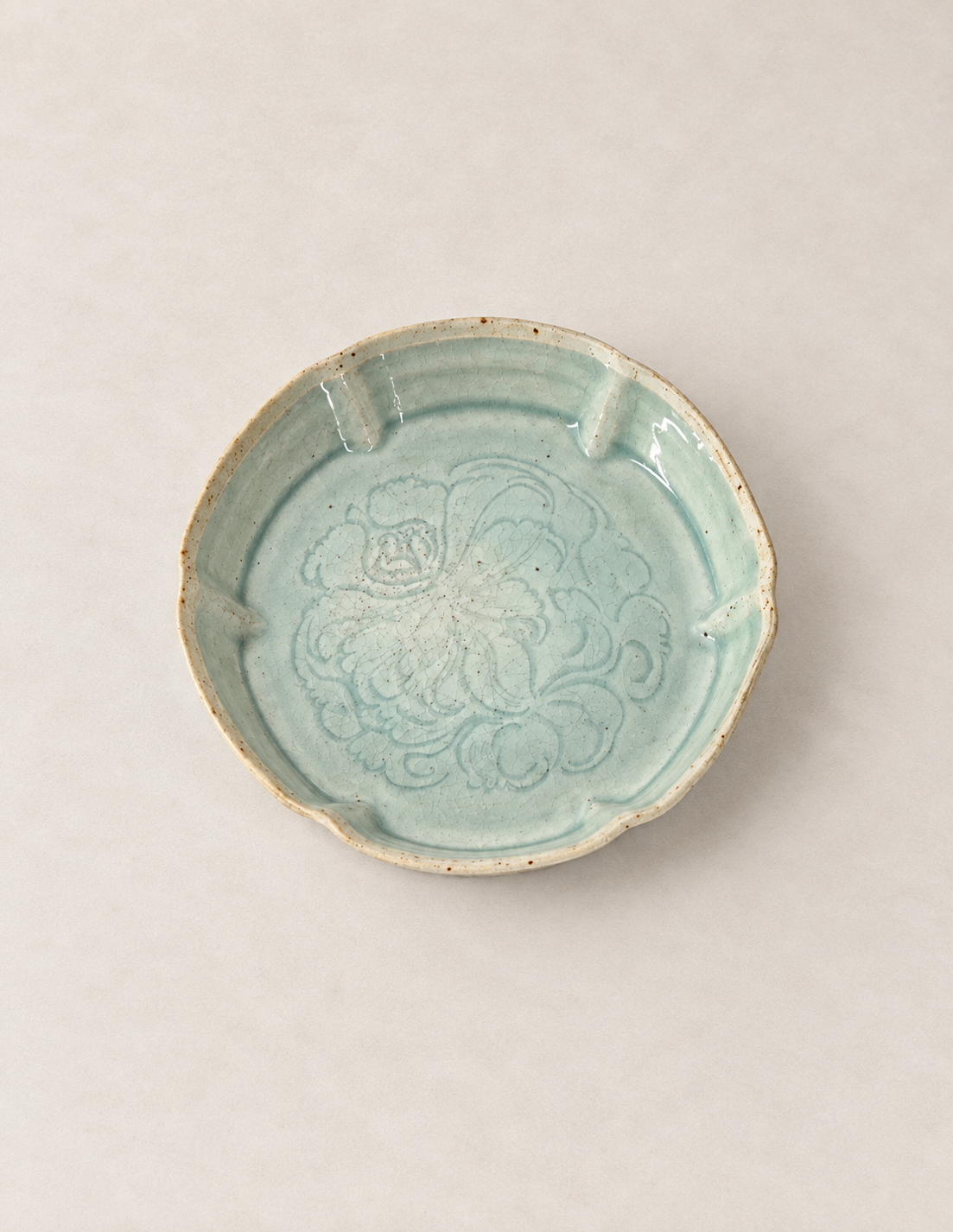
The vessel is relatively thinly potted, with a shallow rounded form and a neatly defined rim. The interior is decorated with a moulded floral design, subtly raised beneath a soft ivory-coloured glaze. The decoration is understated and elegant, relying on the interplay of light across the moulded surface rather than strong colour contrast, an aesthetic closely associated with Song dynasty white wares.
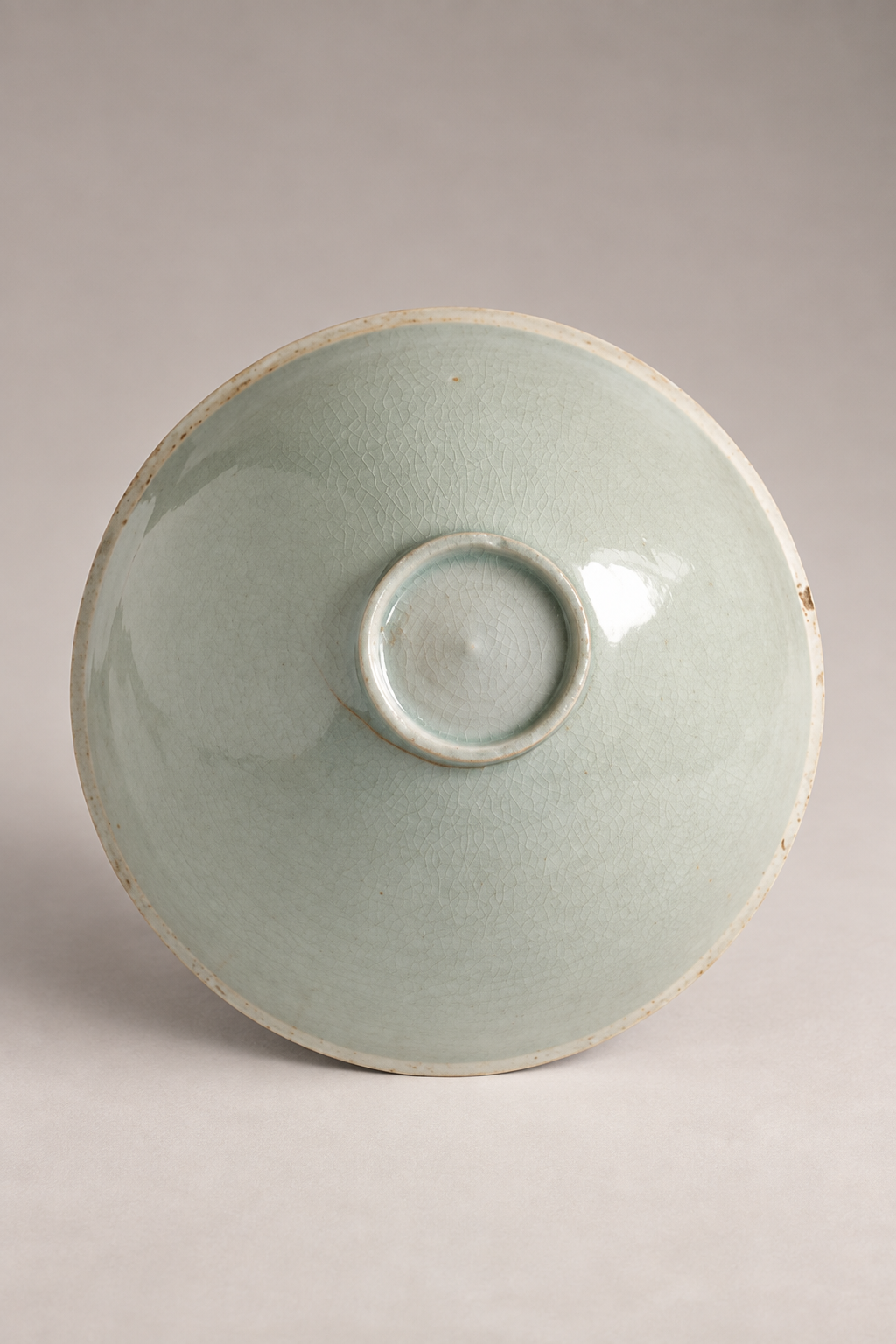
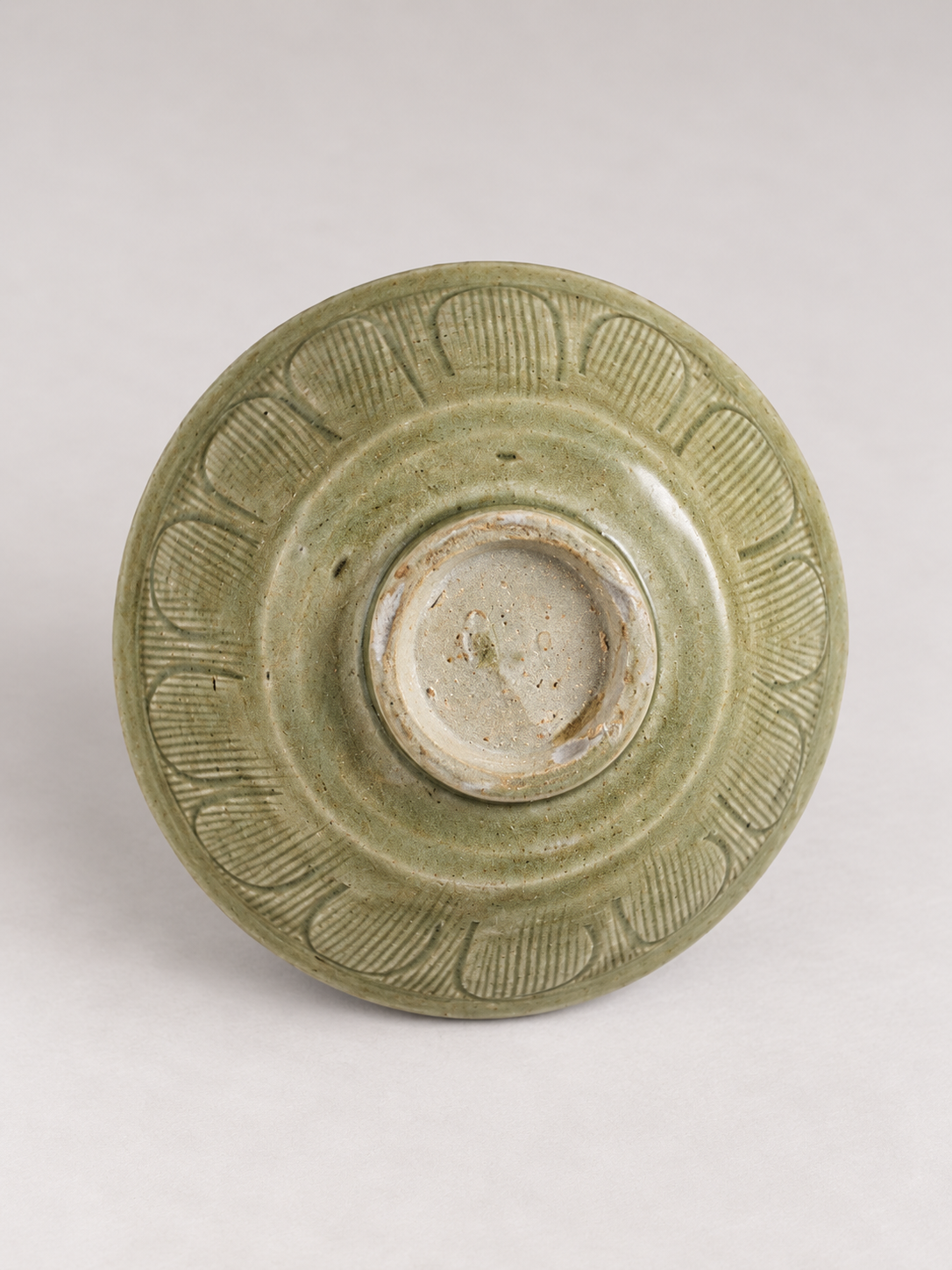
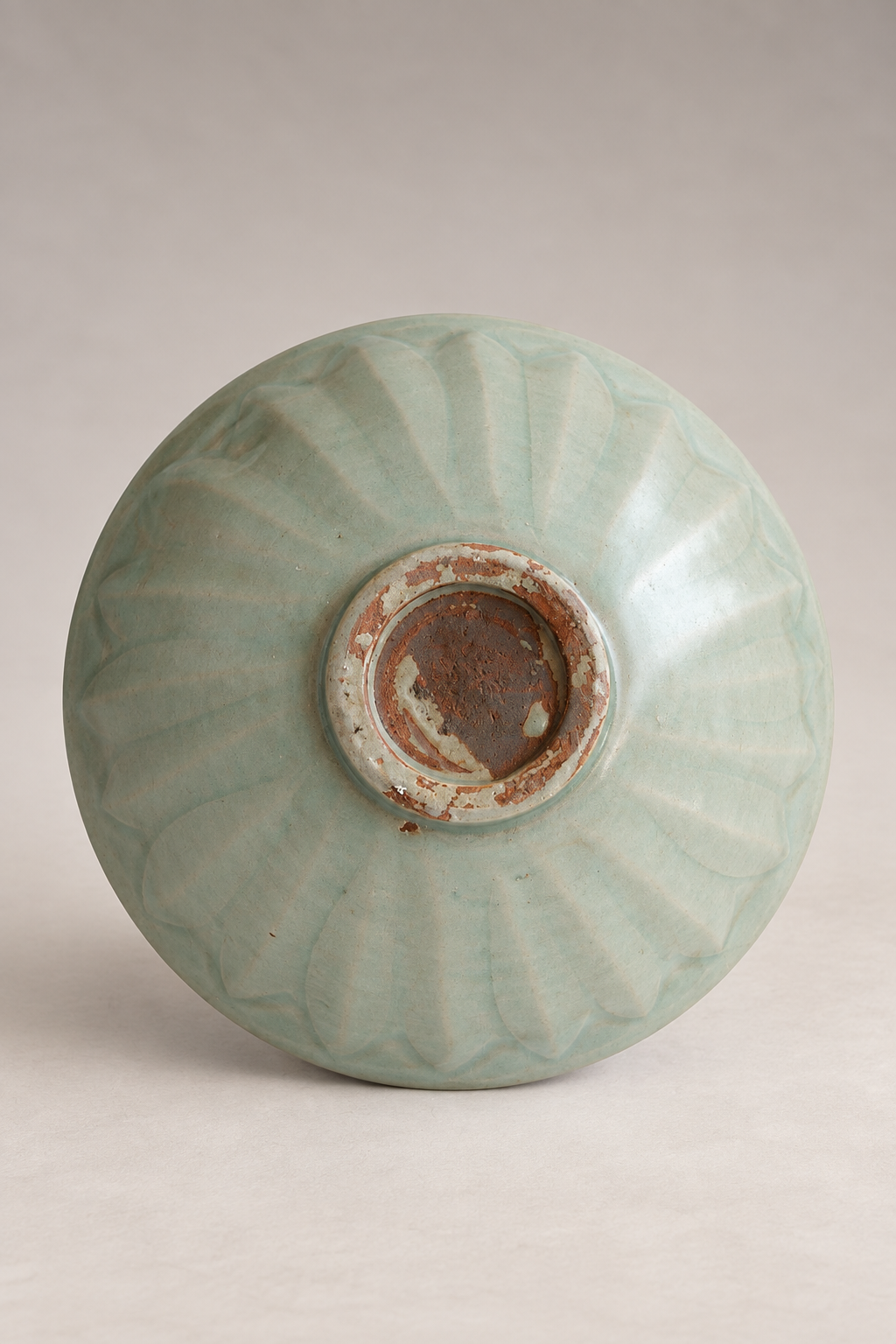
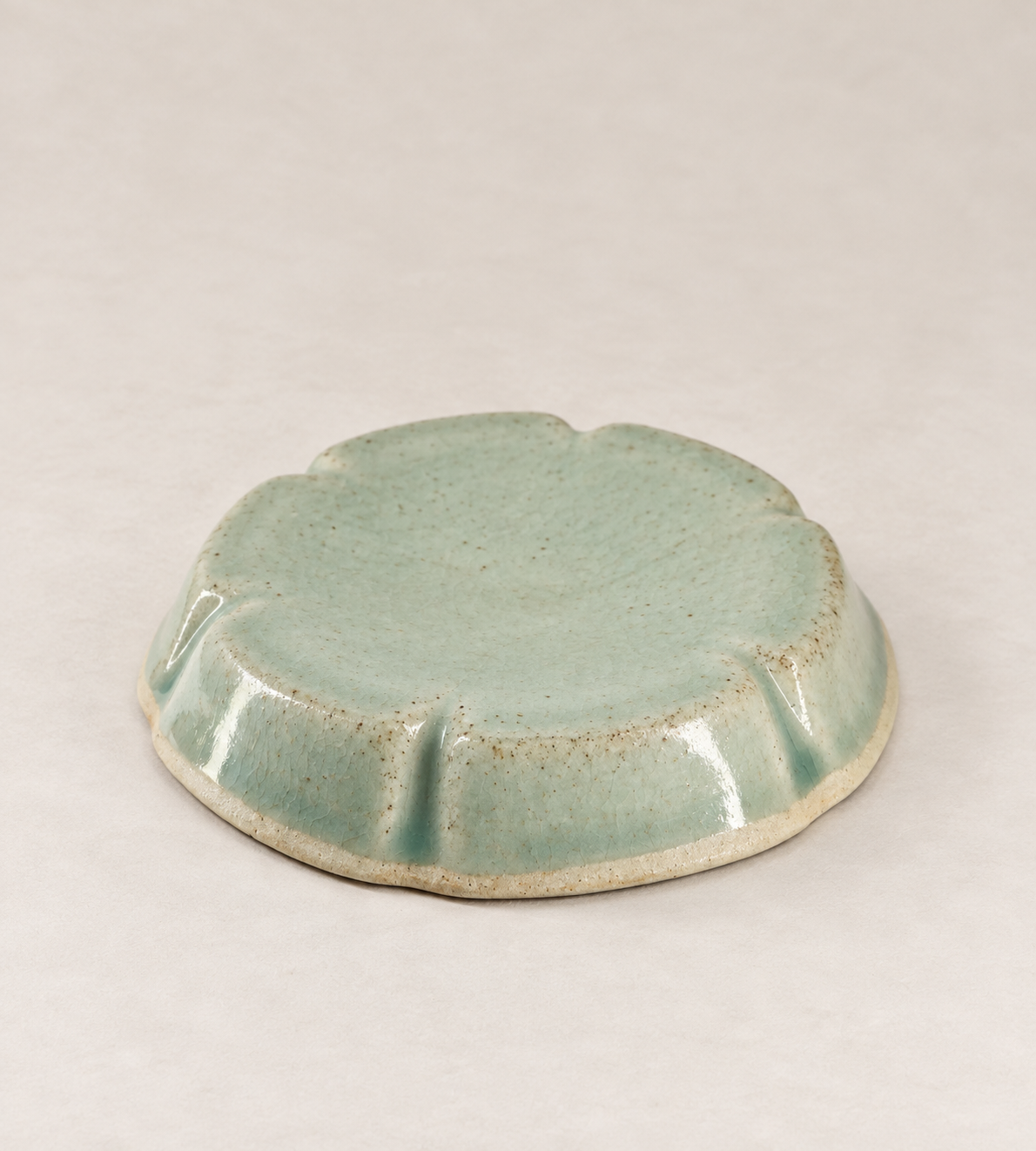
The glaze covers the interior and much of the exterior, while the lower outer wall and area around the foot are left unglazed, revealing the creamy-toned porcelain body beneath. This contrast between the warm ivory glaze and exposed body gives the dish a quiet, tactile quality and helps emphasise the precision of its form.
The recessed base preserves a minor firing fissure, with a further firing-related crack visible around part of the lower outer wall. Importantly, this does not penetrate through to the interior surface. The dish otherwise remains in very good condition, with no restoration or repair and only a tiny fleabite to the rim edge. It produces a clear, high-pitched ring when lightly tapped.
At 12.75 cm in diameter, this is a refined and well-preserved example of Song dynasty Huozhou white ware, demonstrating the sophisticated technical and aesthetic relationship between the Huozhou and Ding ceramic traditions.