 Image 1 of 4
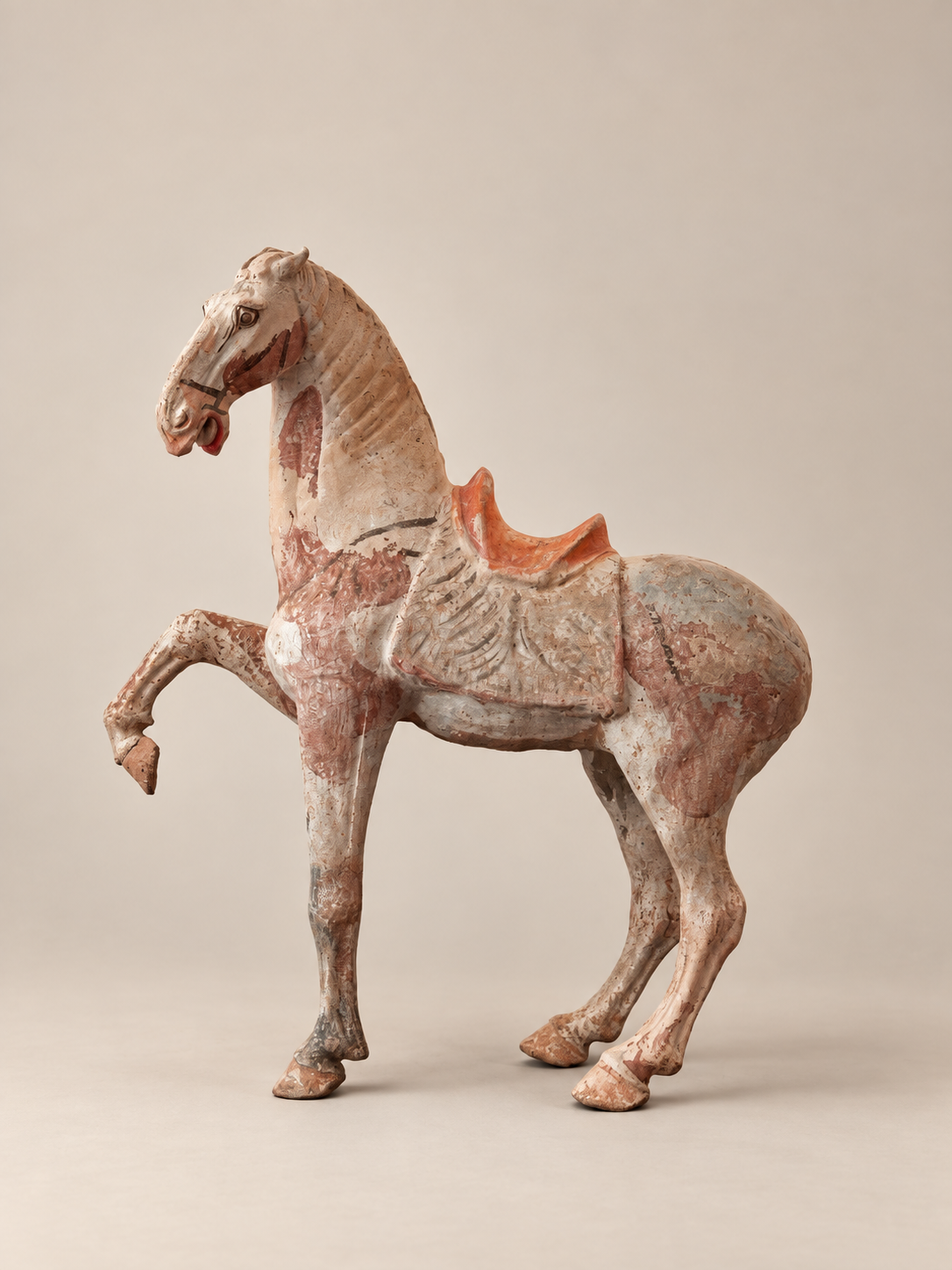 Image 2 of 4
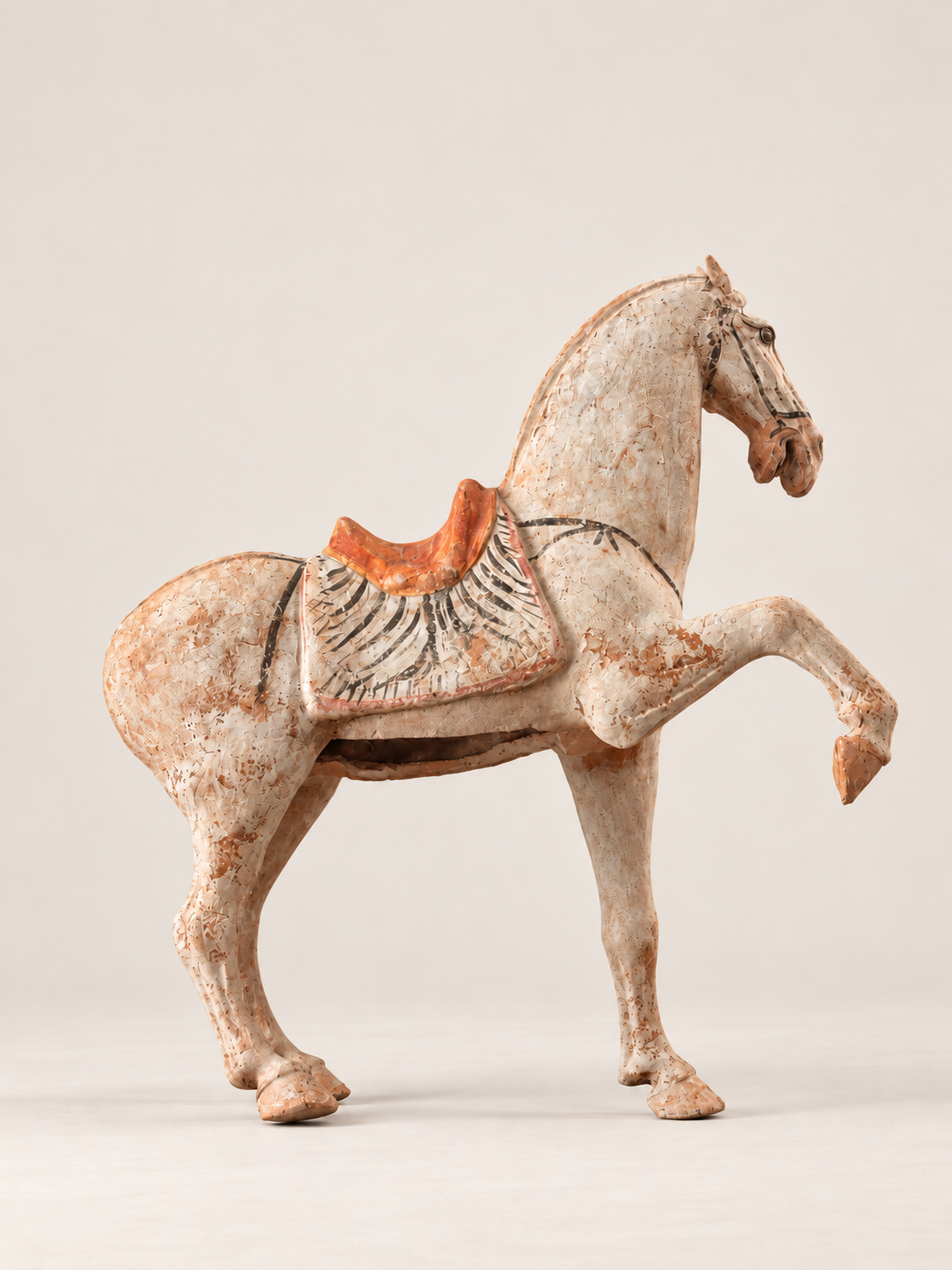 Image 3 of 4
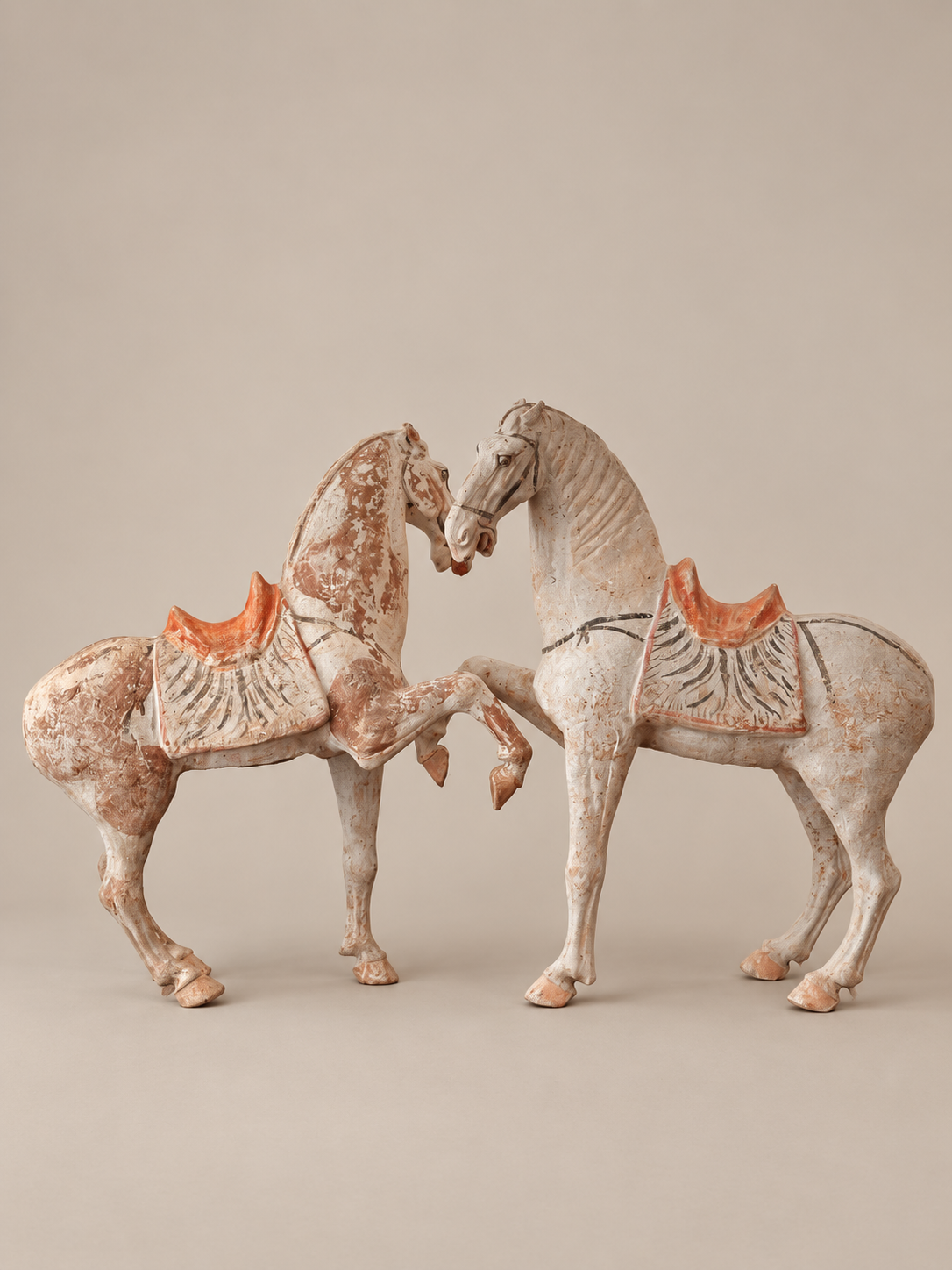 Image 4 of 4
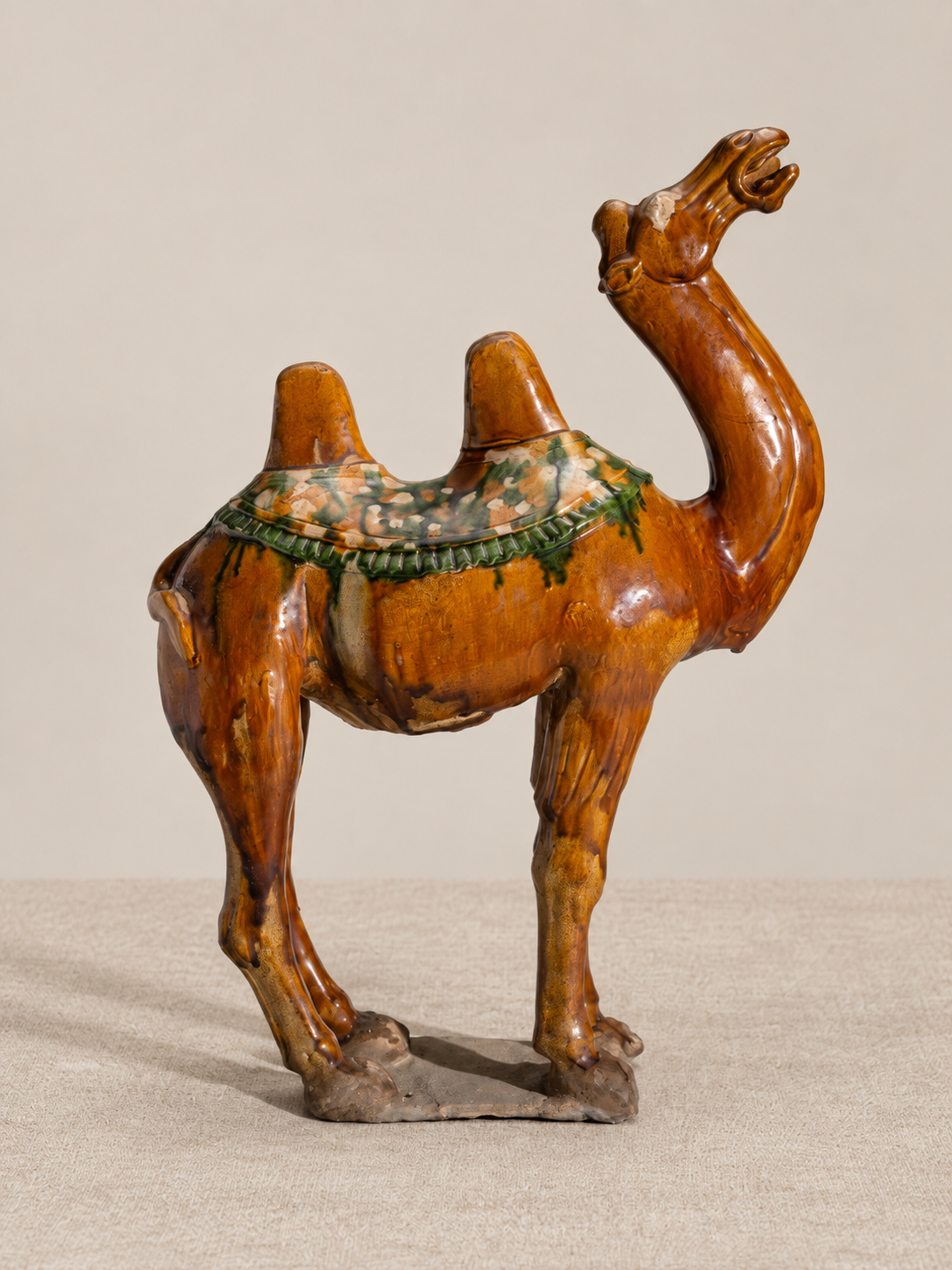
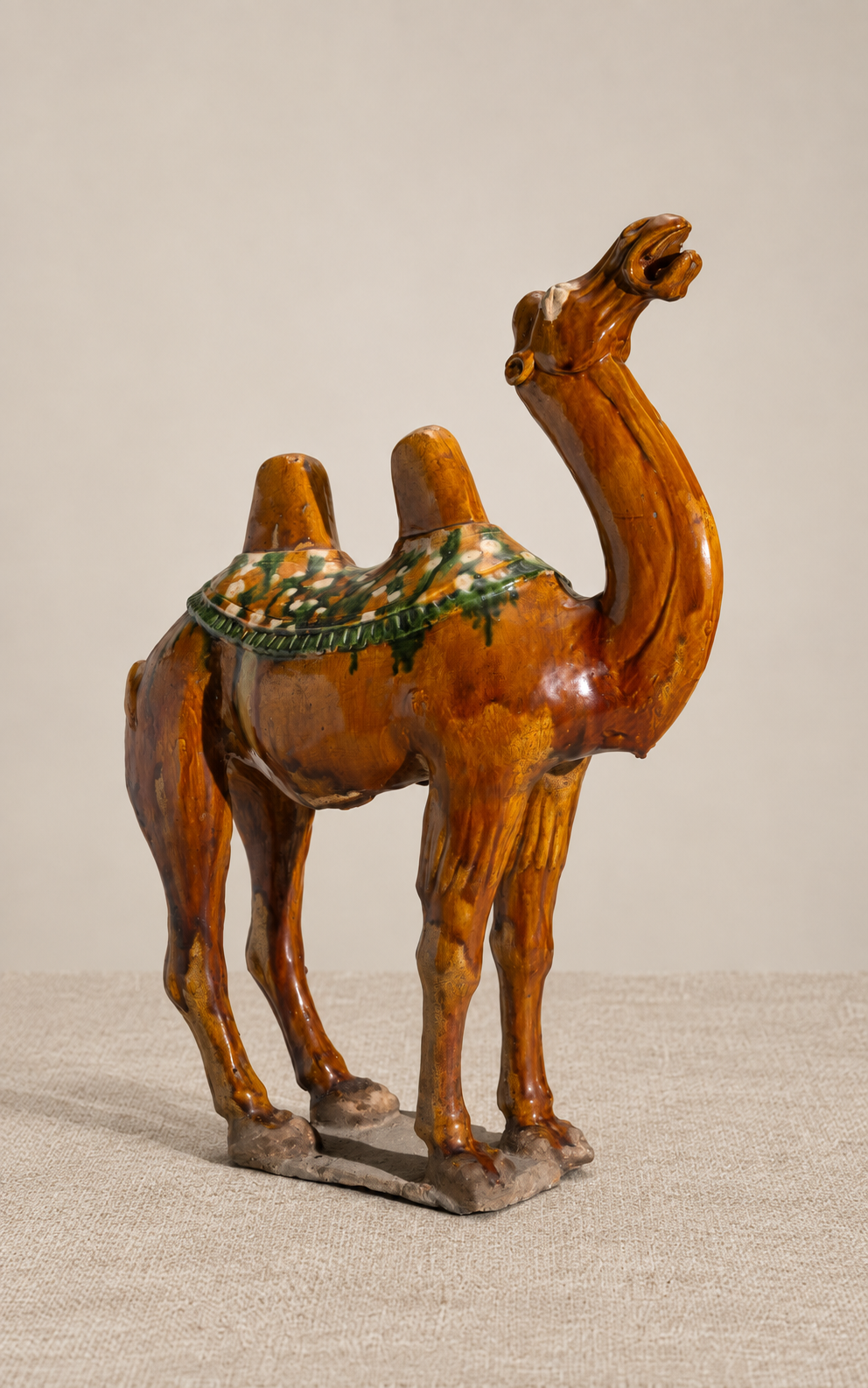
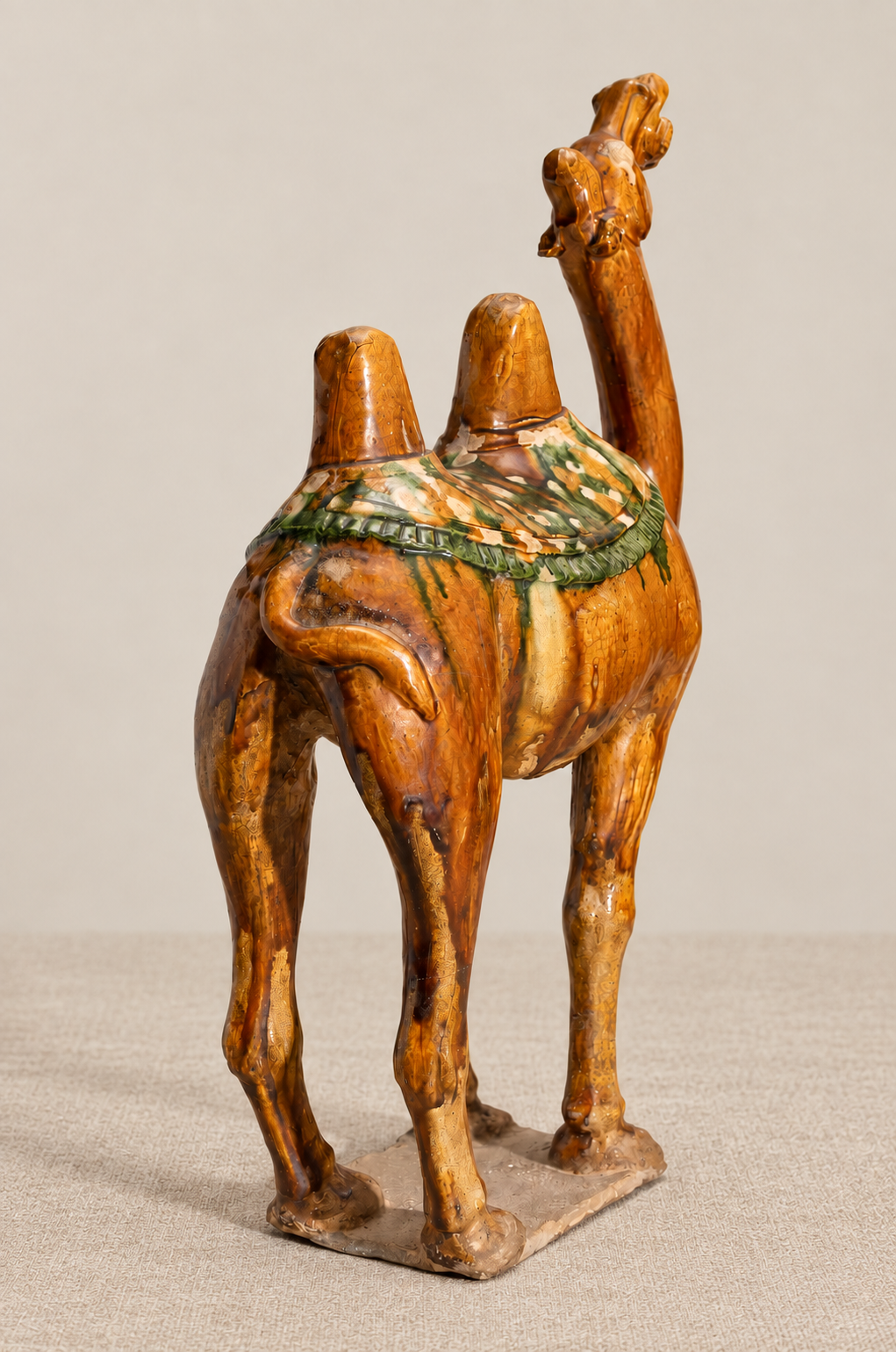
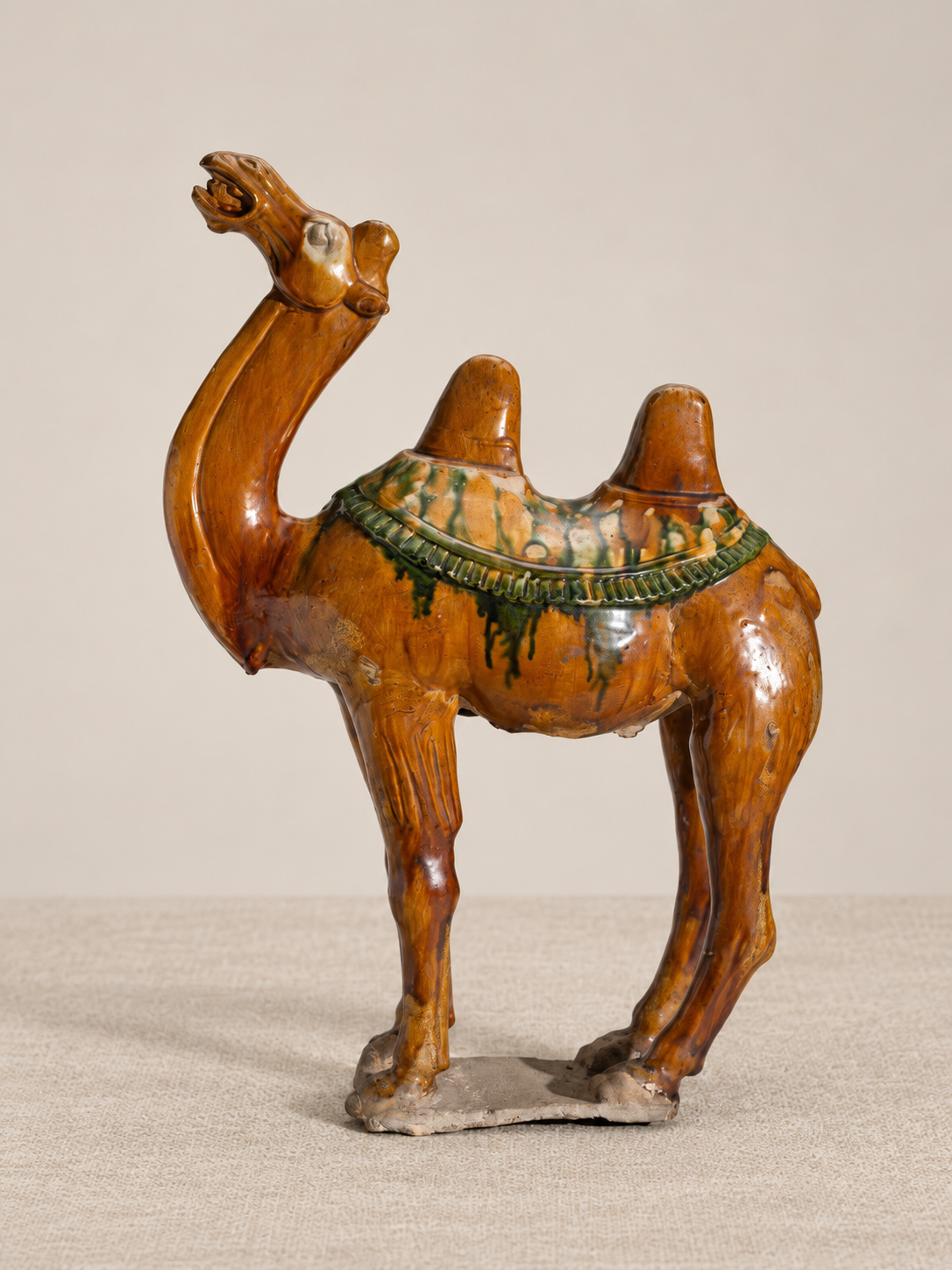
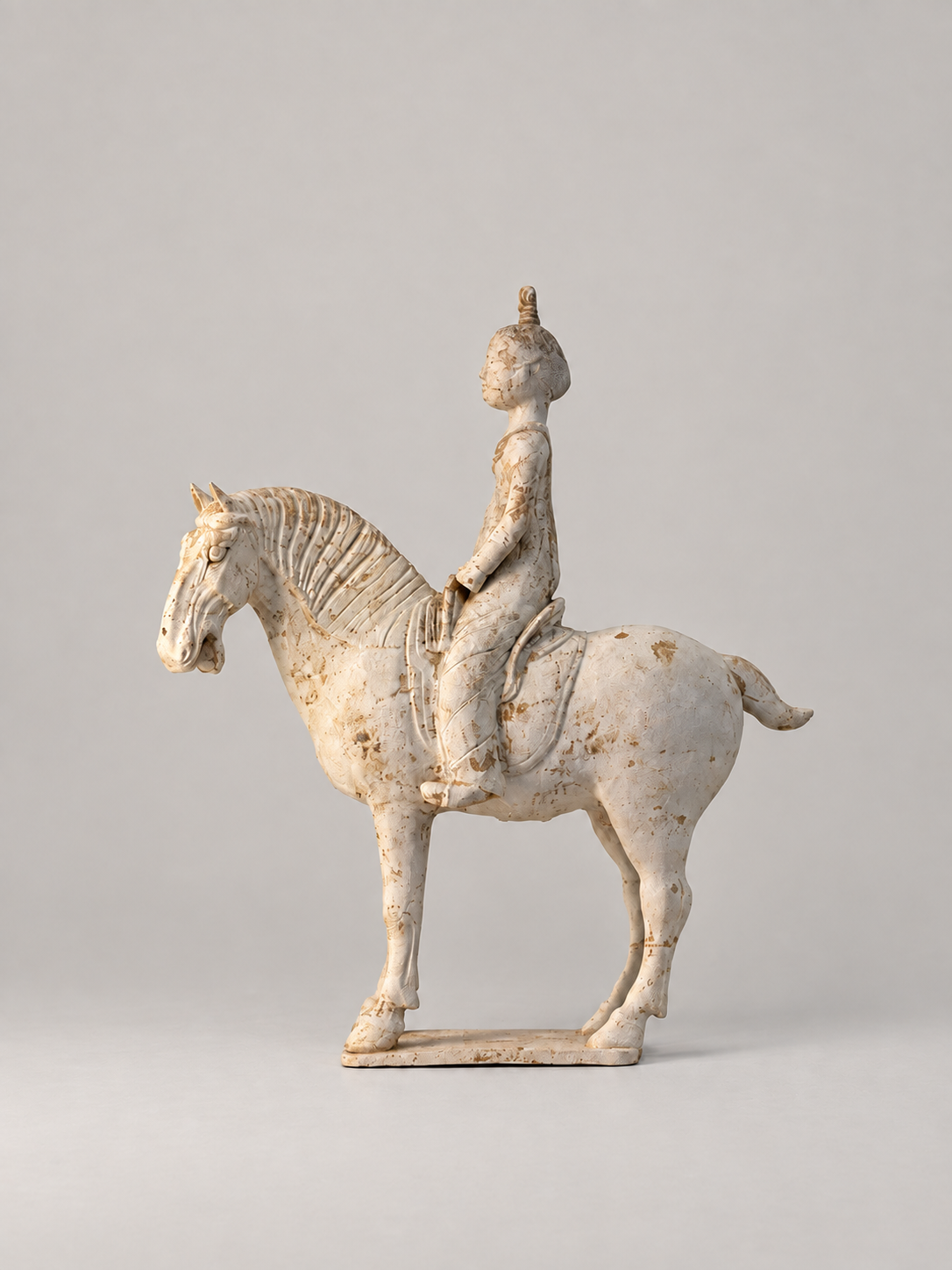
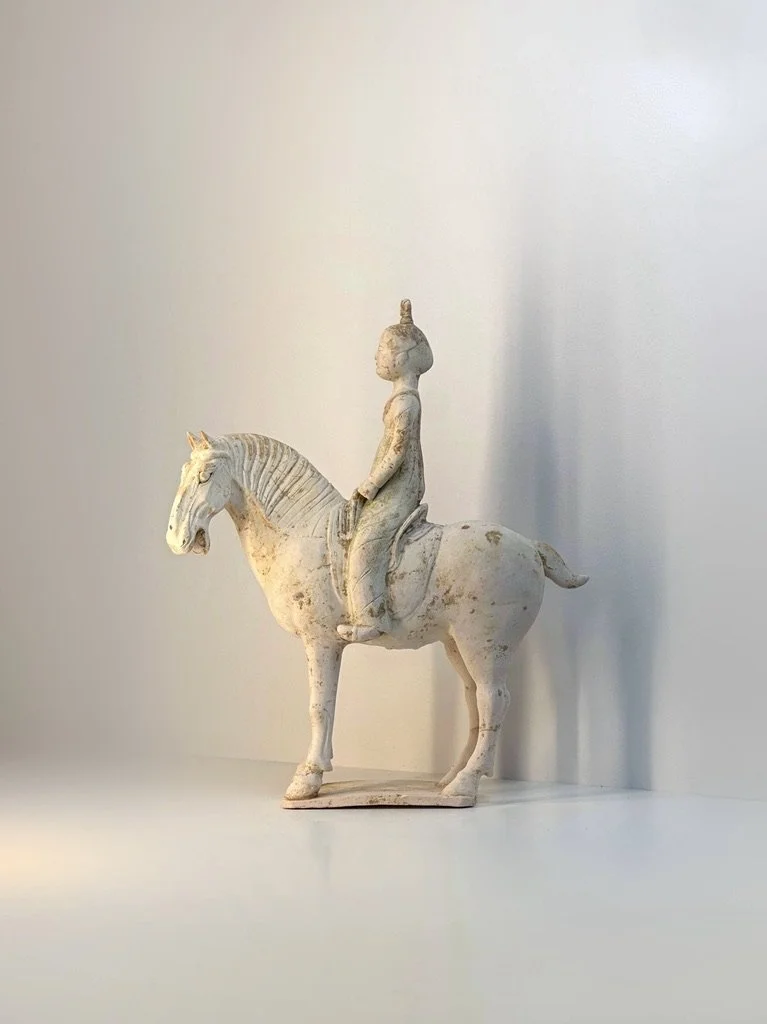
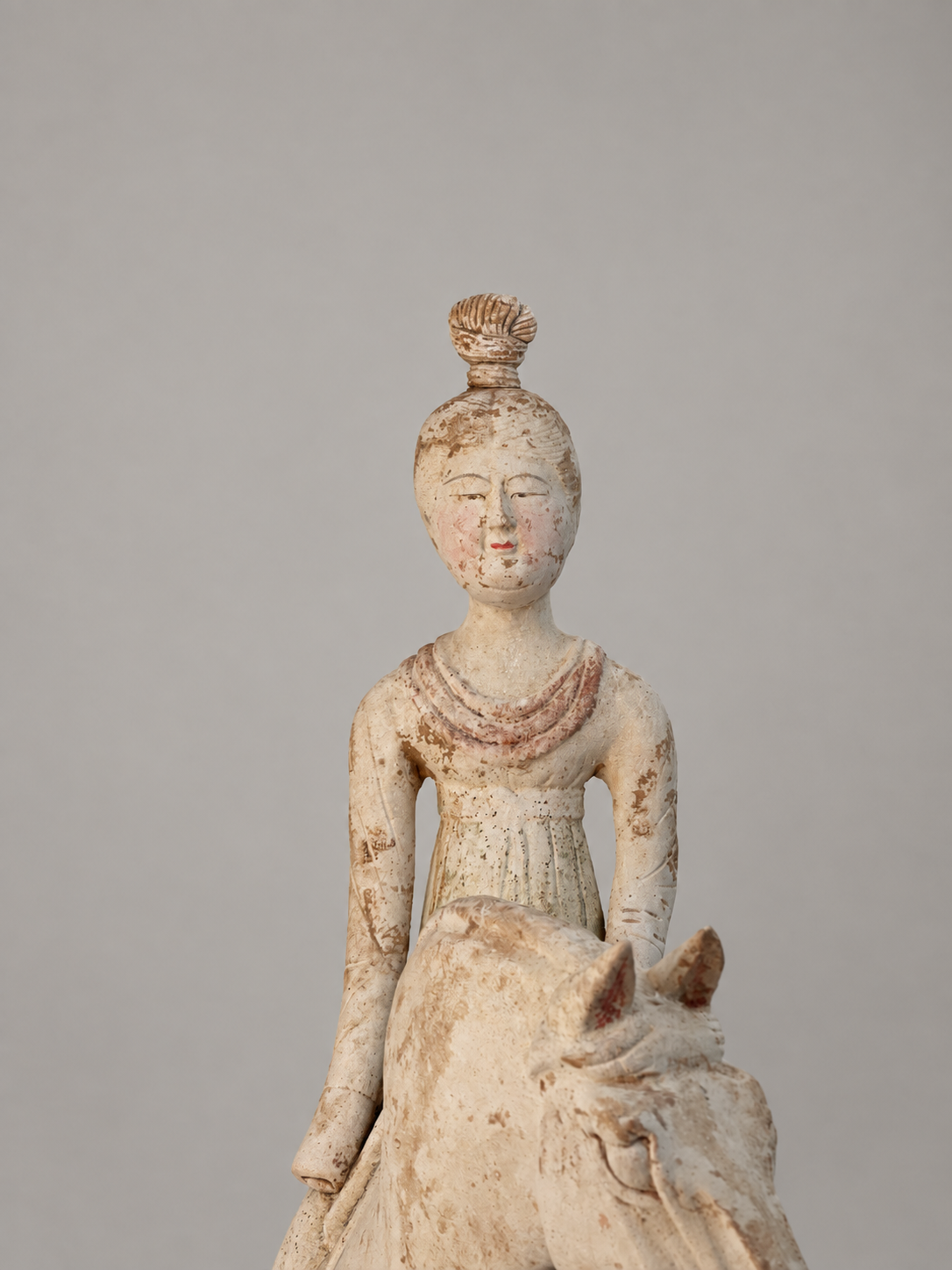
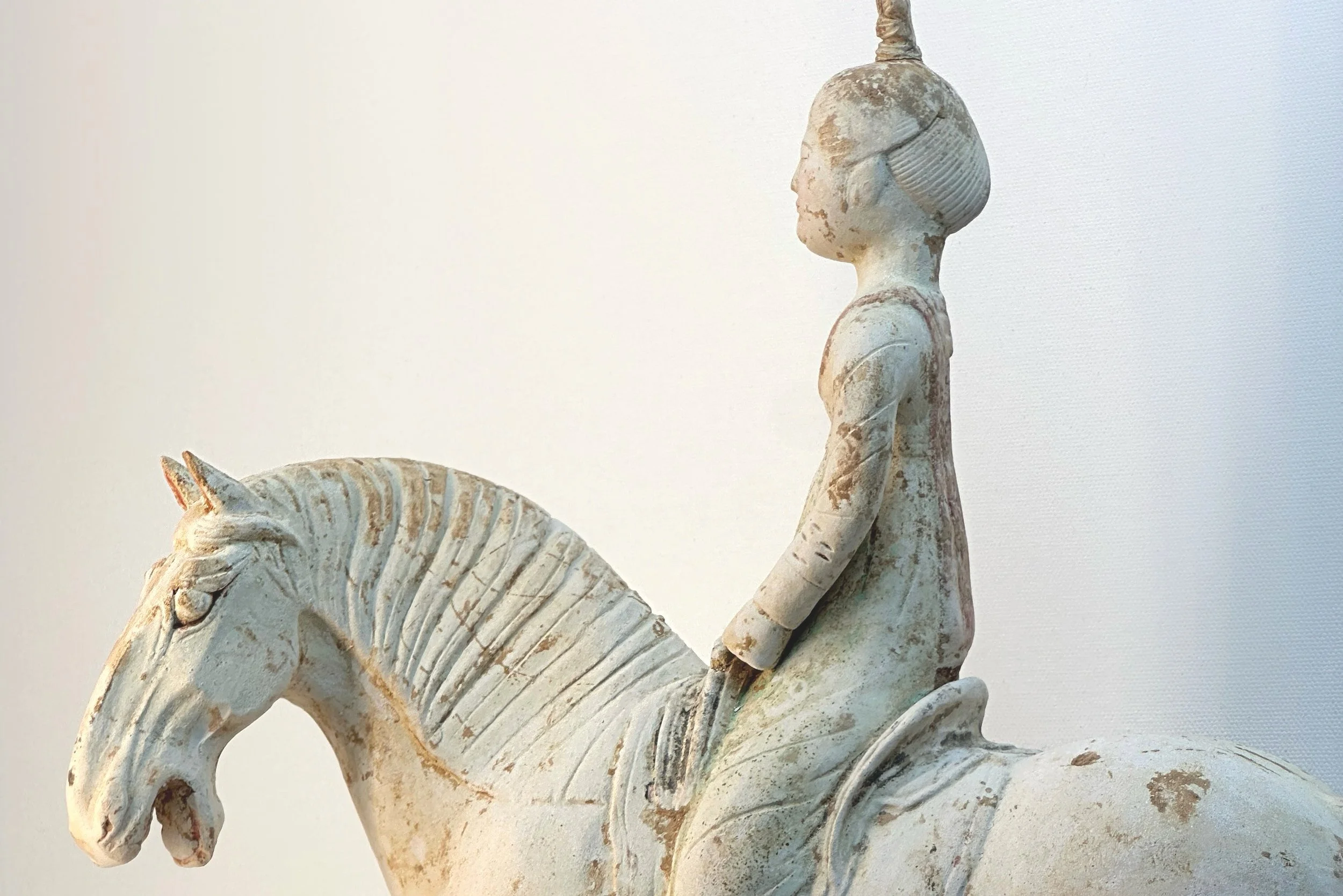
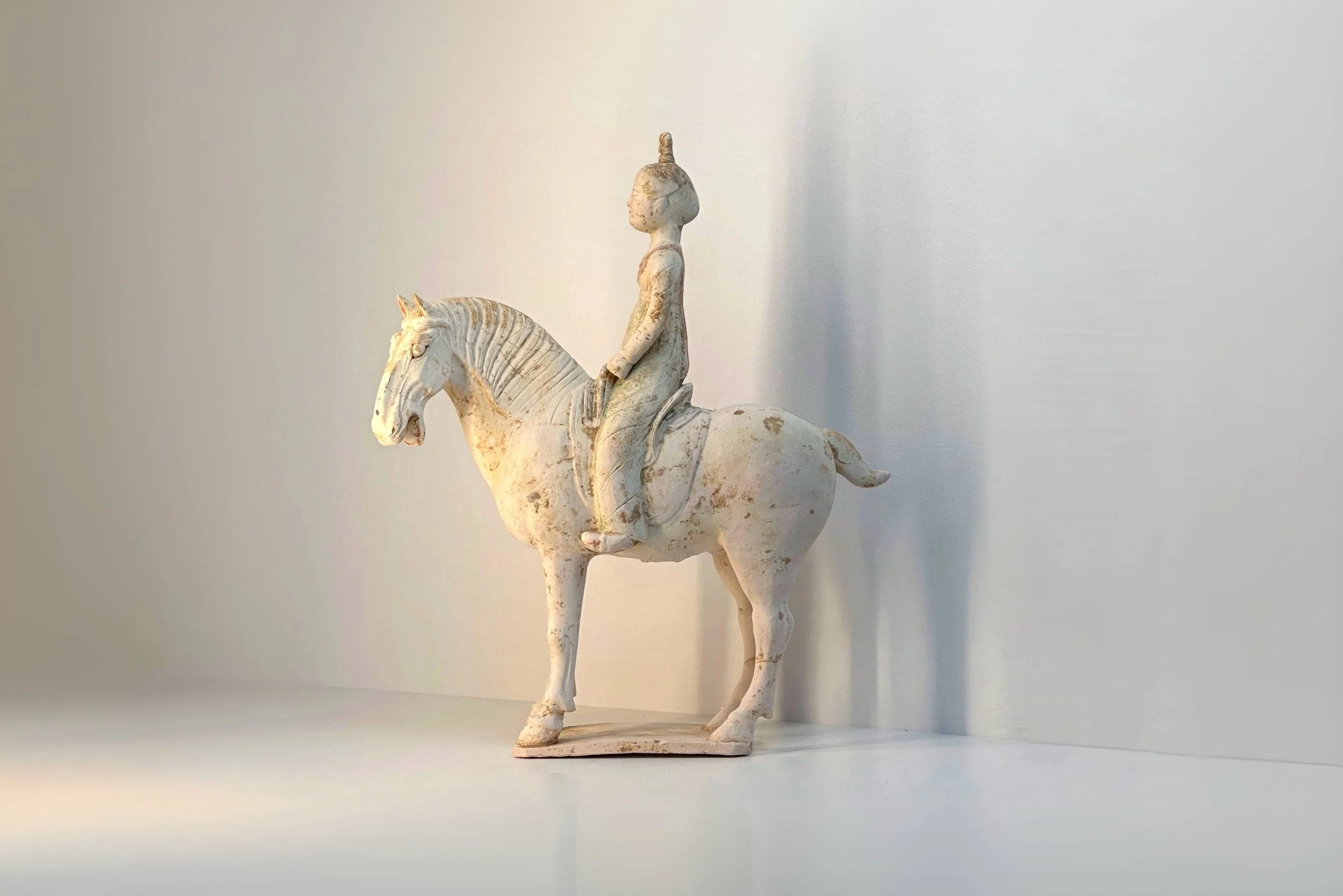
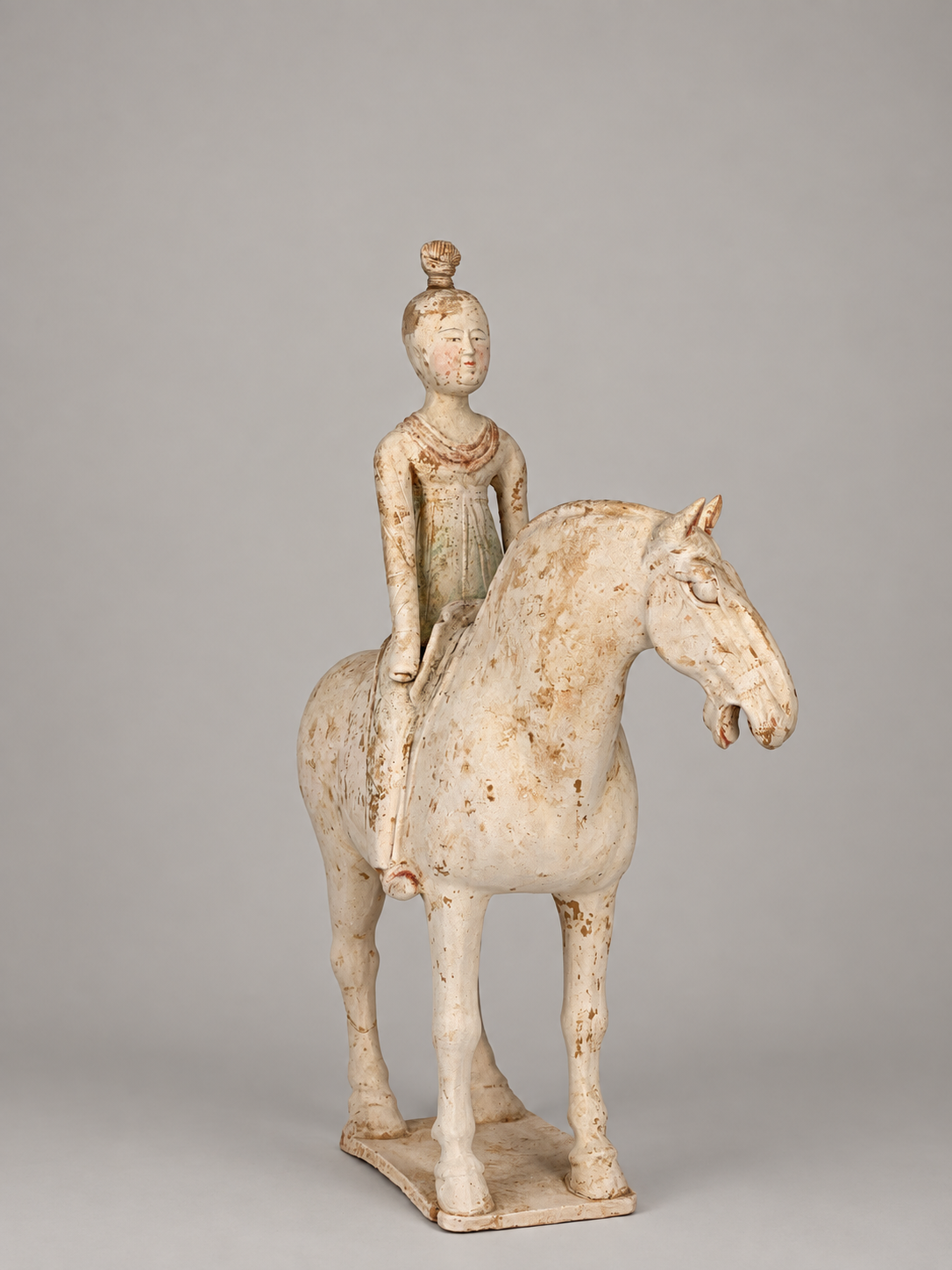
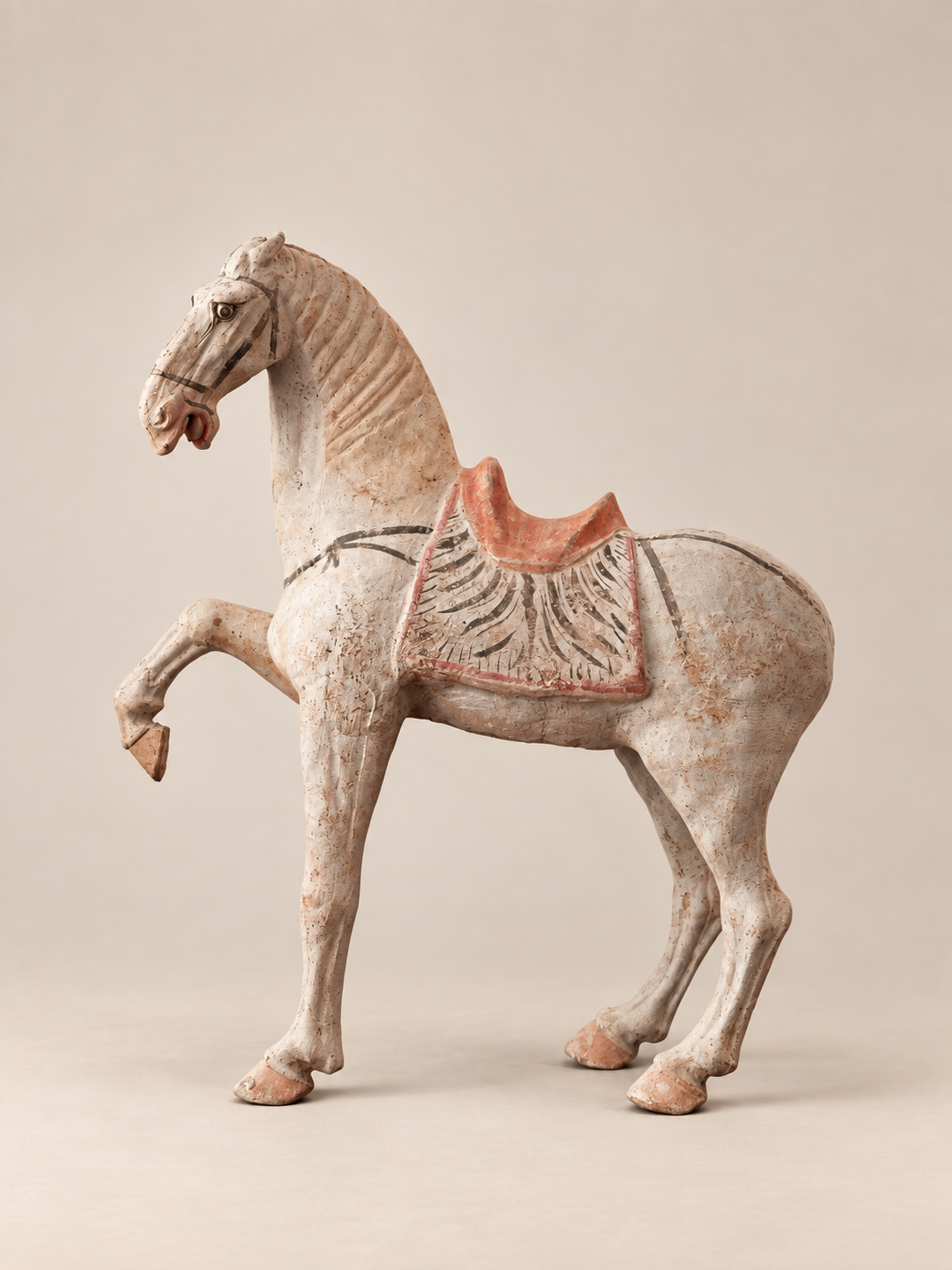
A large and impressive Tang Dynasty pottery horse, standing at 58 cm in height, exemplifying the strength, elegance, and cosmopolitan spirit of the Tang period (AD 618–906).
The horse is robustly modelled with powerful proportions, a slightly arched neck, and an alert, expressive head. One example is shown with a raised foreleg, conveying a sense of movement and vitality, while the other stands in a more grounded yet equally poised stance. Both figures display finely incised detailing to the mane and facial features, capturing the character and nobility associated with Tang horses, symbols of prestige and military power.
The surfaces retain traces of their original cold-painted decoration, with a white slip ground overlaid by red and black pigments. Particularly striking is the saddle, highlighted in a warm reddish tone with simple yet effective painted detailing, adding contrast and visual interest. Areas of natural wear and pigment loss contribute to an authentic, time-softened patina.
As is typical of large Tang earthenware figures, the horses are hollow-formed and constructed in sections, then assembled prior to firing. The overall condition is consistent with age, showing expected surface wear and minor losses, but remaining structurally sound and highly decorative.
A large and impressive Tang Dynasty pottery horse, standing at 58 cm in height, exemplifying the strength, elegance, and cosmopolitan spirit of the Tang period (AD 618–906).
The horse is robustly modelled with powerful proportions, a slightly arched neck, and an alert, expressive head. One example is shown with a raised foreleg, conveying a sense of movement and vitality, while the other stands in a more grounded yet equally poised stance. Both figures display finely incised detailing to the mane and facial features, capturing the character and nobility associated with Tang horses, symbols of prestige and military power.
The surfaces retain traces of their original cold-painted decoration, with a white slip ground overlaid by red and black pigments. Particularly striking is the saddle, highlighted in a warm reddish tone with simple yet effective painted detailing, adding contrast and visual interest. Areas of natural wear and pigment loss contribute to an authentic, time-softened patina.
As is typical of large Tang earthenware figures, the horses are hollow-formed and constructed in sections, then assembled prior to firing. The overall condition is consistent with age, showing expected surface wear and minor losses, but remaining structurally sound and highly decorative.