 Image 1 of 5
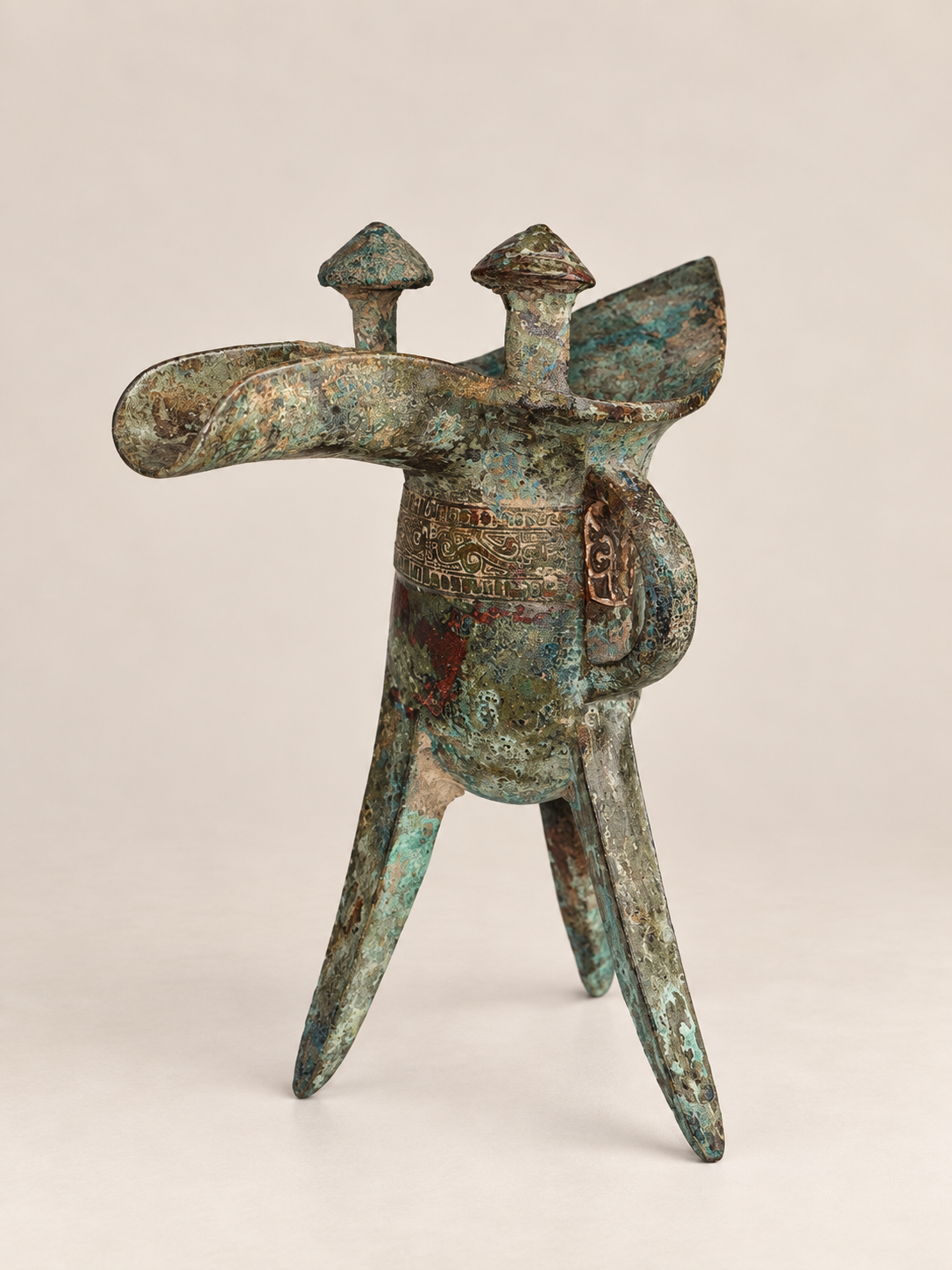 Image 2 of 5
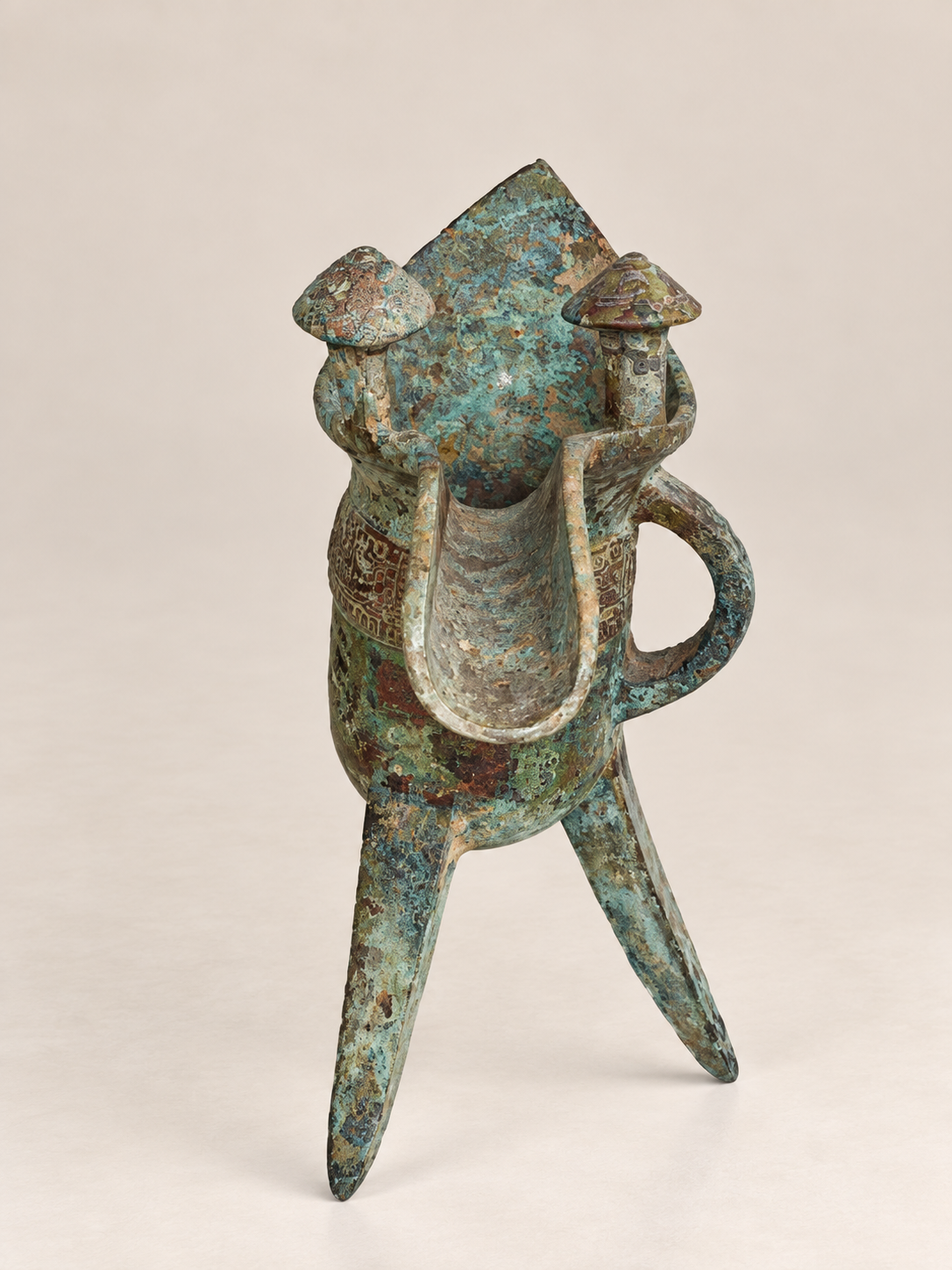 Image 3 of 5
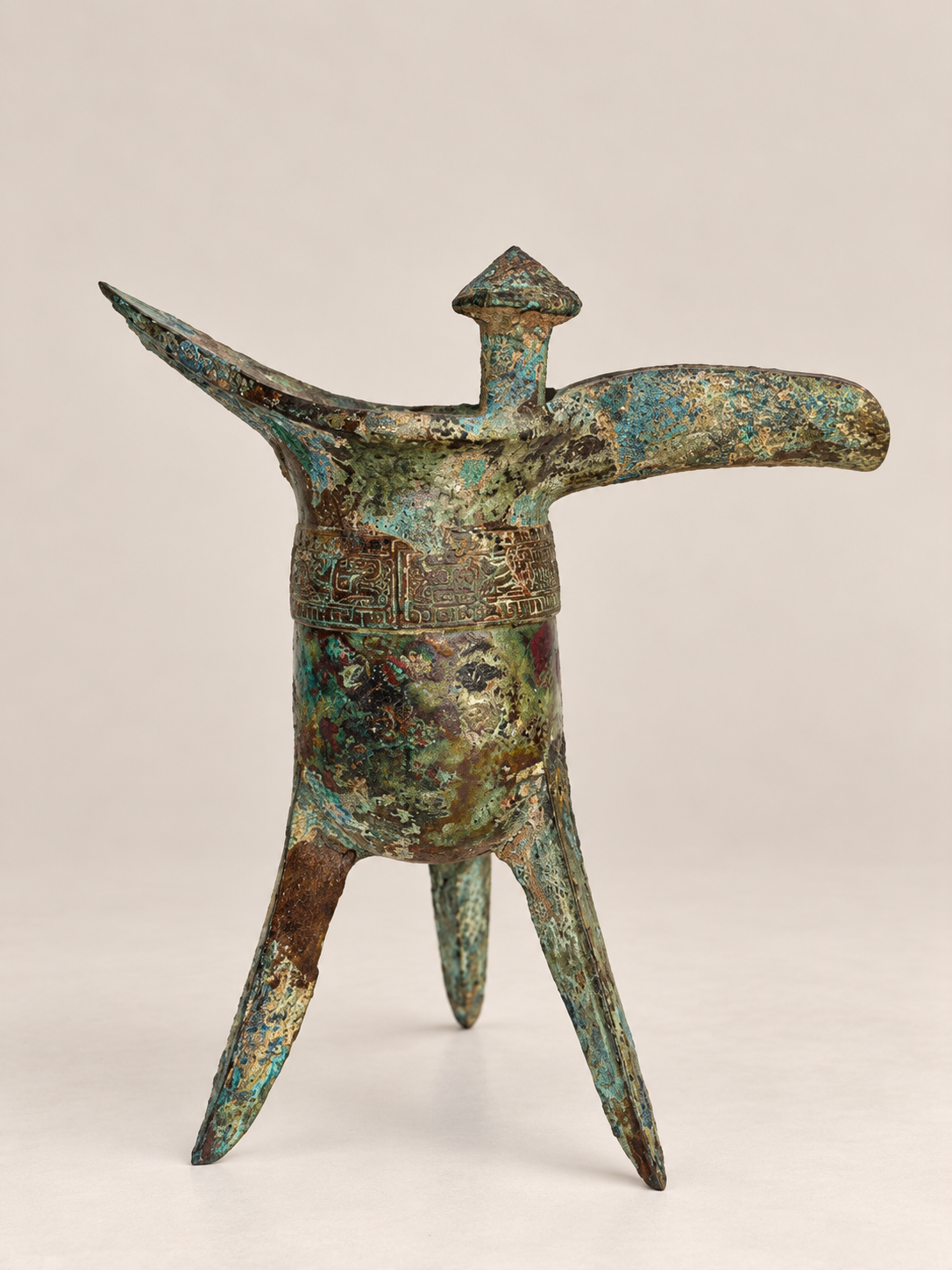 Image 4 of 5
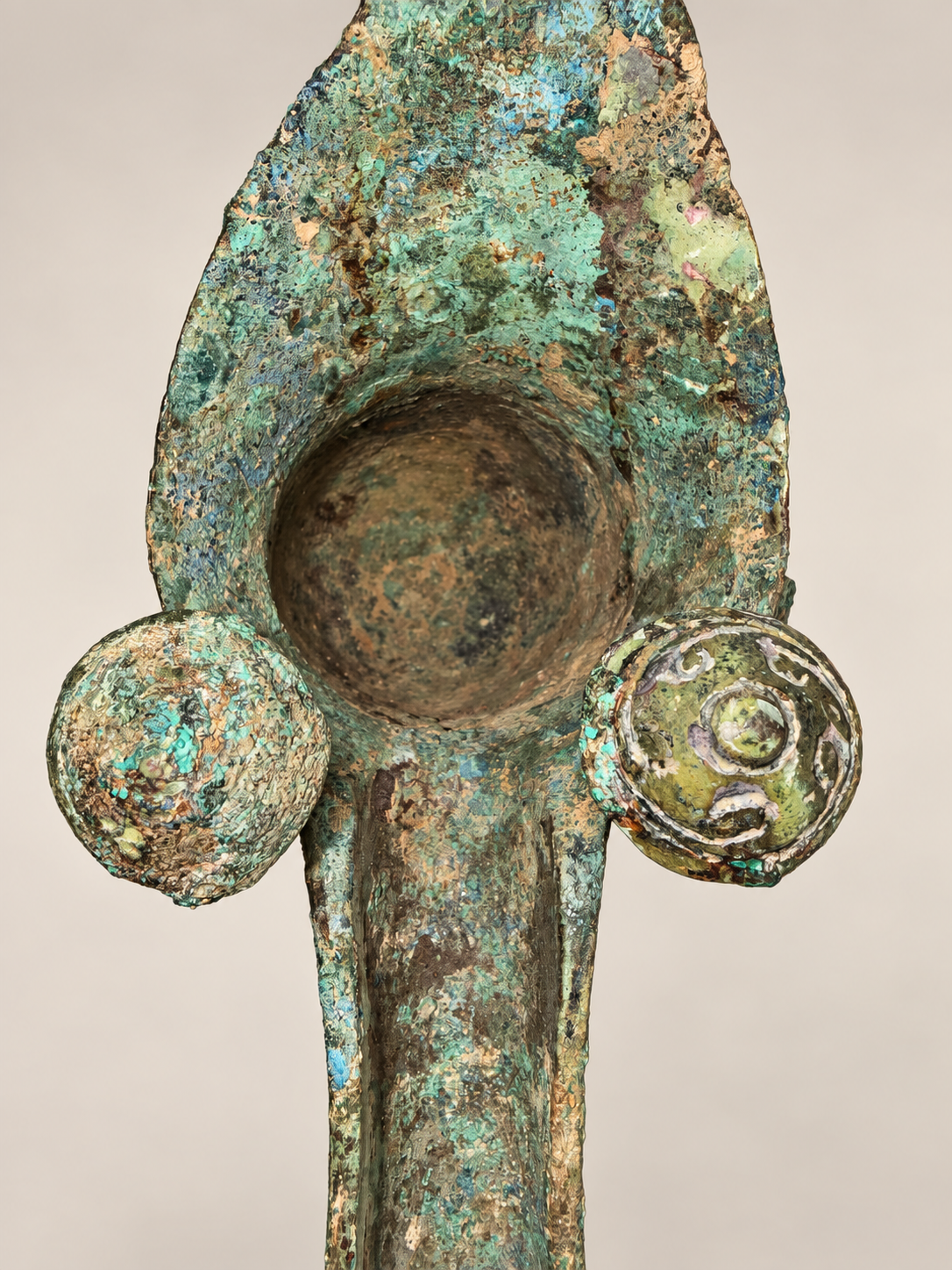 Image 5 of 5
Western Zhou Dynasty (c. 1046–771 BC)
Height: 20 cm (7 7/8 in.)
Provenance: Poon Collection, Hong Kong, 1996
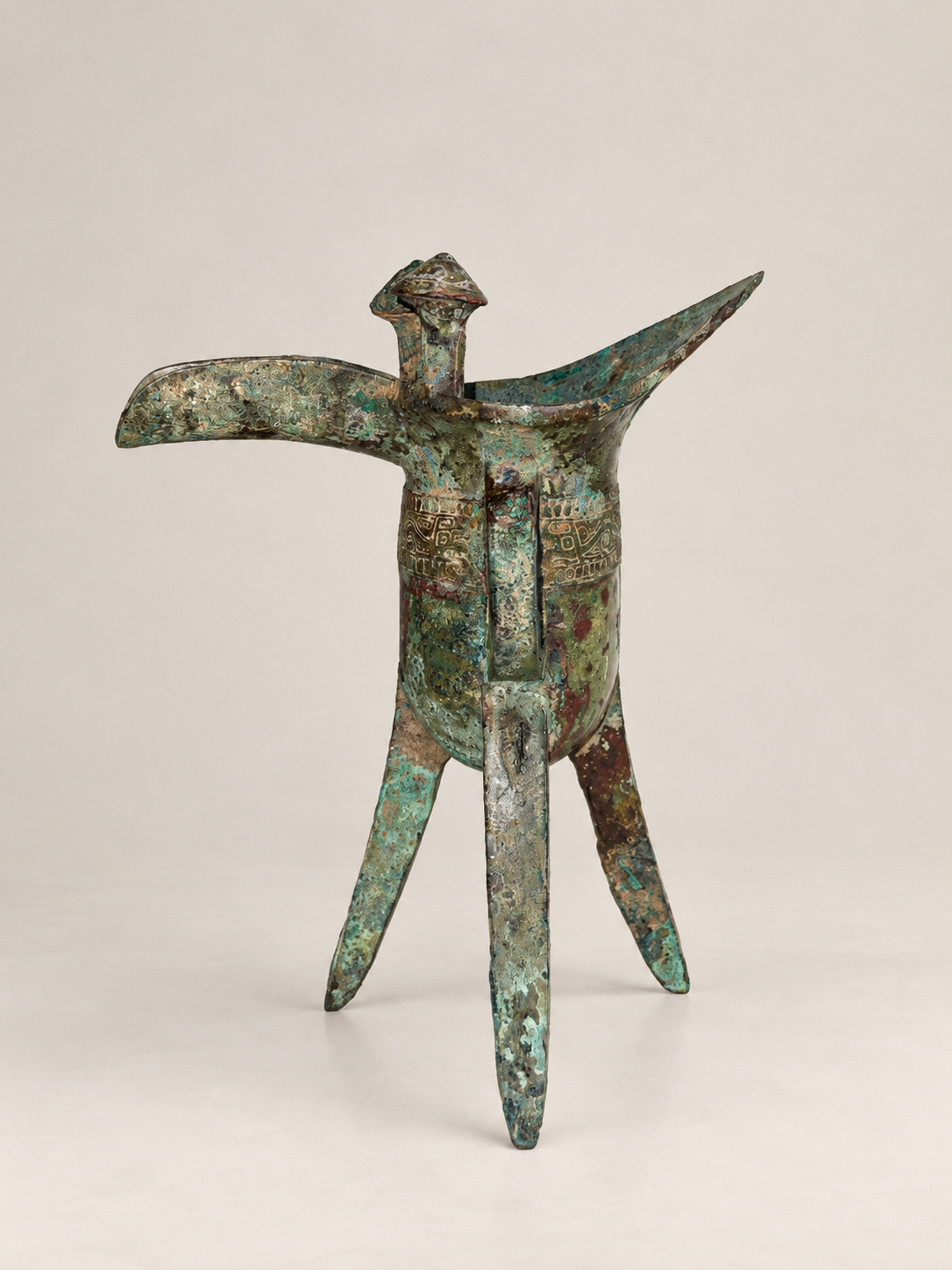
This archaic bronze jue is a finely proportioned example of one of the most distinctive ritual wine vessel forms of early China. Raised on three slender, splayed legs, the vessel is modelled with a deep rounded body, elongated pouring spout and opposing tail, creating the elegant and highly recognisable silhouette associated with the jue form.
Two capped posts rise from the rim, while a loop handle is set to one side of the body. Around the upper section runs a band of archaic geometric and stylised zoomorphic decoration, adding visual complexity while retaining the restrained monumentality characteristic of Western Zhou bronze casting.
The surface displays a richly varied patina of green, turquoise, brown and darker bronze tones, with areas of natural oxidation and encrustation developed over time. These layered surface colours accentuate the casting details and give the vessel considerable sculptural presence.
The jue was traditionally used as a ritual wine vessel and continued a bronze form already established during the Shang dynasty. By the Western Zhou period, such vessels remained closely associated with ceremonial practices and the broader ritual culture of the aristocratic elite.
With its elegant proportions, surviving decorative detail and complex ancient patina, this bronze jue is a strong example of early Chinese ritual bronze craftsmanship.
Provenance: Poon Collection, Hong Kong, 1993
Western Zhou Dynasty (c. 1046–771 BC)
Height: 20 cm (7 7/8 in.)
Provenance: Poon Collection, Hong Kong, 1996
This archaic bronze jue is a finely proportioned example of one of the most distinctive ritual wine vessel forms of early China. Raised on three slender, splayed legs, the vessel is modelled with a deep rounded body, elongated pouring spout and opposing tail, creating the elegant and highly recognisable silhouette associated with the jue form.
Two capped posts rise from the rim, while a loop handle is set to one side of the body. Around the upper section runs a band of archaic geometric and stylised zoomorphic decoration, adding visual complexity while retaining the restrained monumentality characteristic of Western Zhou bronze casting.
The surface displays a richly varied patina of green, turquoise, brown and darker bronze tones, with areas of natural oxidation and encrustation developed over time. These layered surface colours accentuate the casting details and give the vessel considerable sculptural presence.
The jue was traditionally used as a ritual wine vessel and continued a bronze form already established during the Shang dynasty. By the Western Zhou period, such vessels remained closely associated with ceremonial practices and the broader ritual culture of the aristocratic elite.
With its elegant proportions, surviving decorative detail and complex ancient patina, this bronze jue is a strong example of early Chinese ritual bronze craftsmanship.
Provenance: Poon Collection, Hong Kong, 1993