Suigong Xu 遂公盨 — When Bronze Preserved the Story of Yu the Great
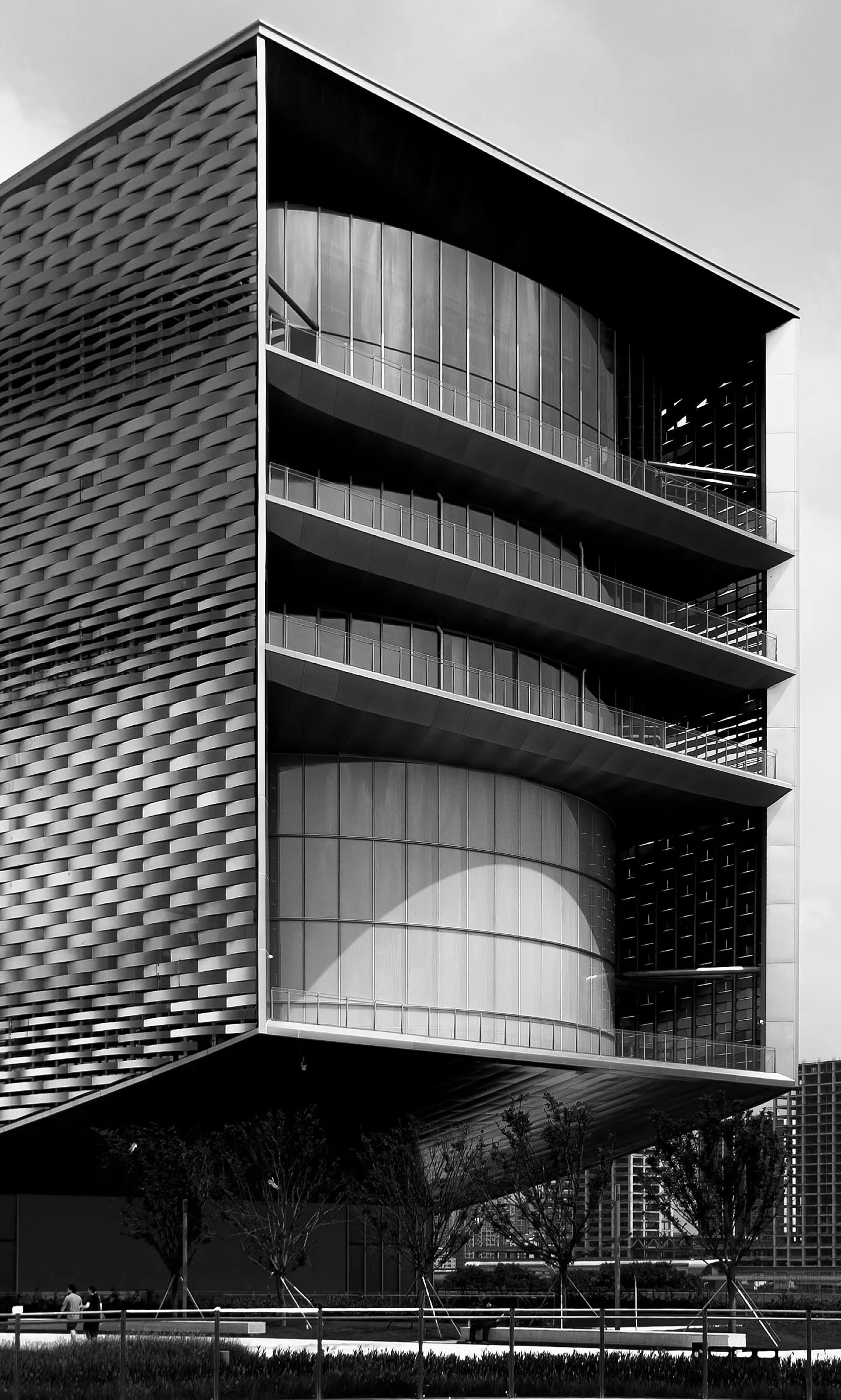
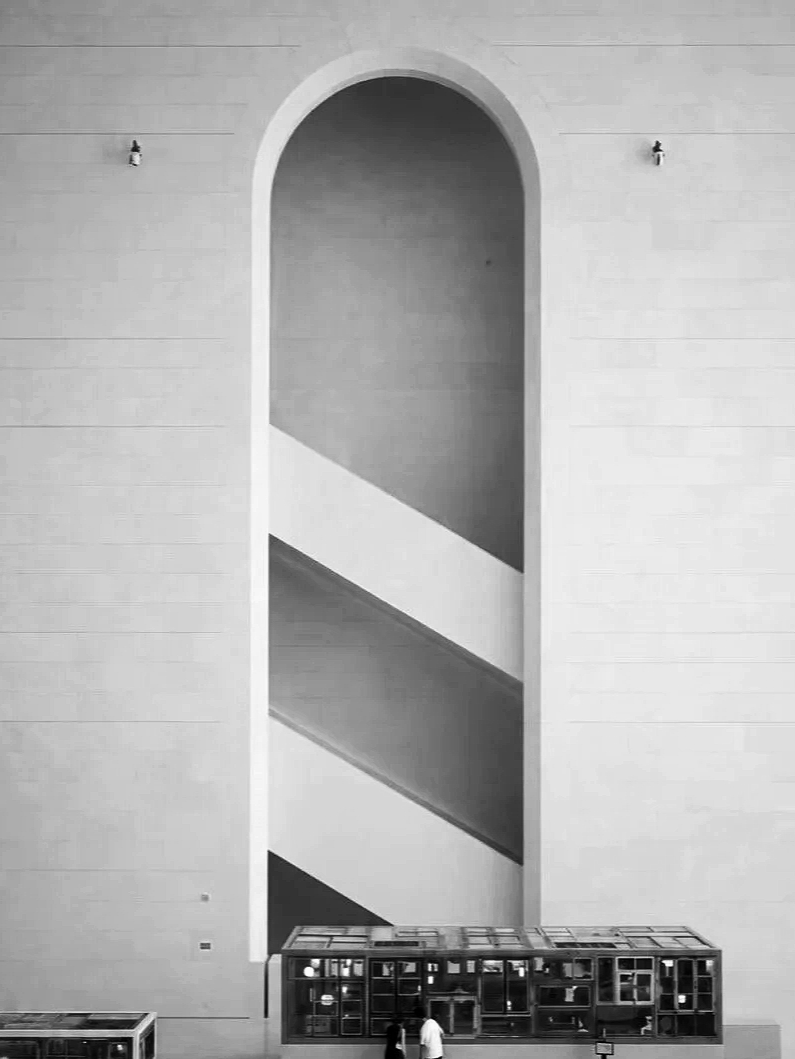
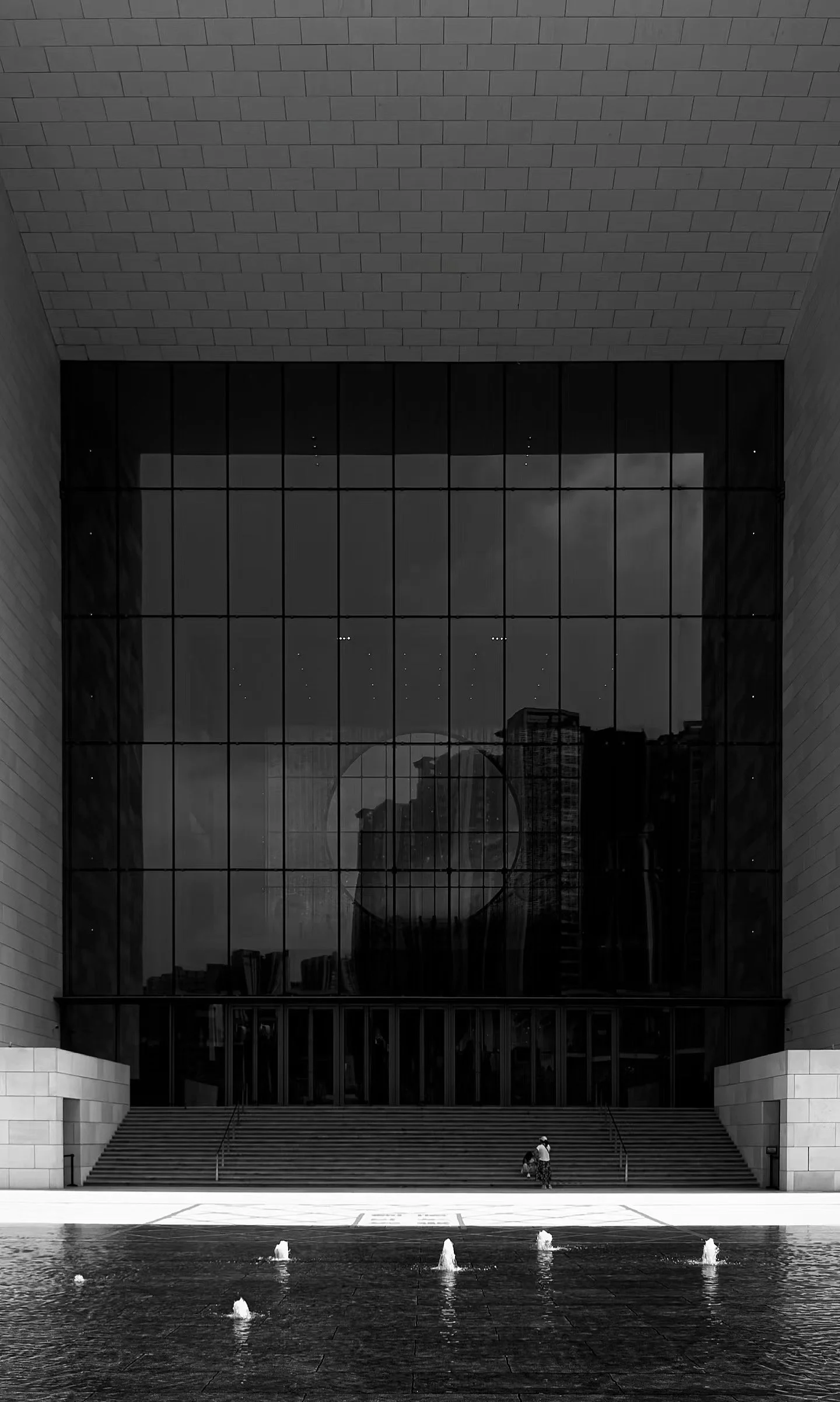
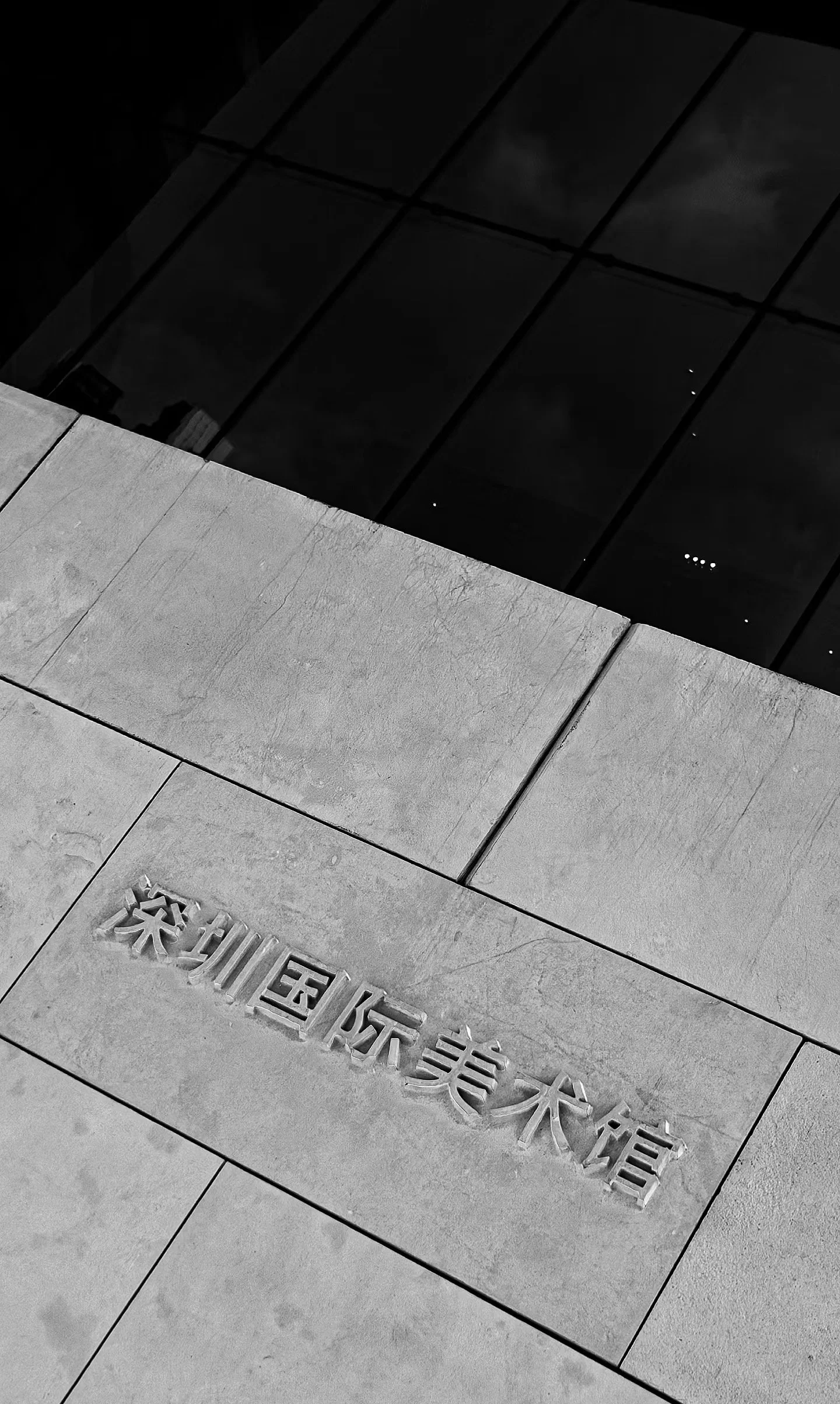
Currently exhibited at ShenZhen International Museum of Art (SIMoA) 深圳國際美術館, the 遂公盨 (Suigong Xu) is an object whose importance lies not only in its form, but in the extraordinary story cast into its bronze.
Dating to the later Middle Western Zhou dynasty, approximately 2,900 years ago, the vessel belongs to a type known as a 盨 (xǔ), a ritual food container developed from the earlier gui form. Rectangular with softly rounded corners, it has a slightly swelling body, ring foot and animal-mask handles. Its decoration is restrained: a band of bird motifs beneath the rim and broad ribbing across the body.
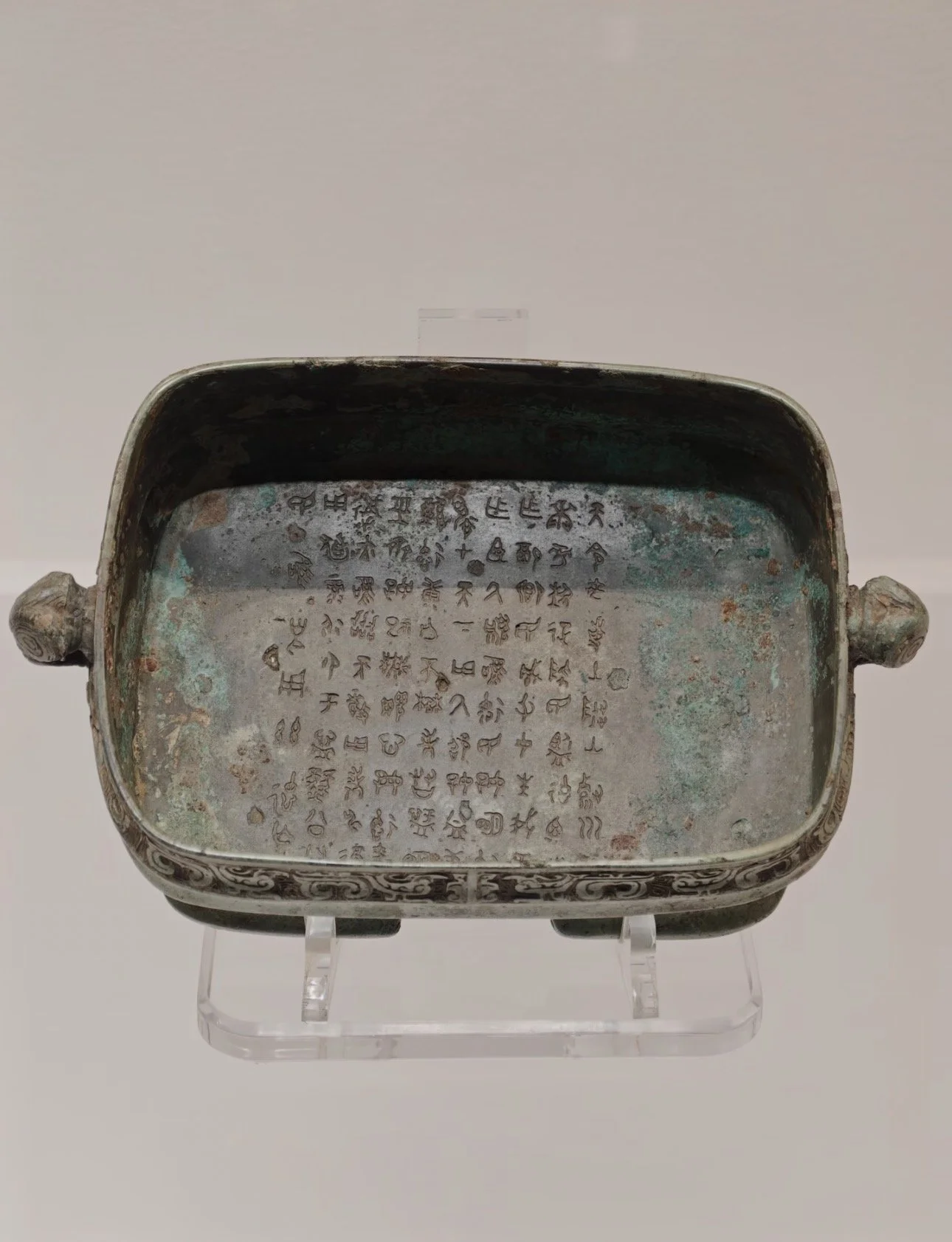
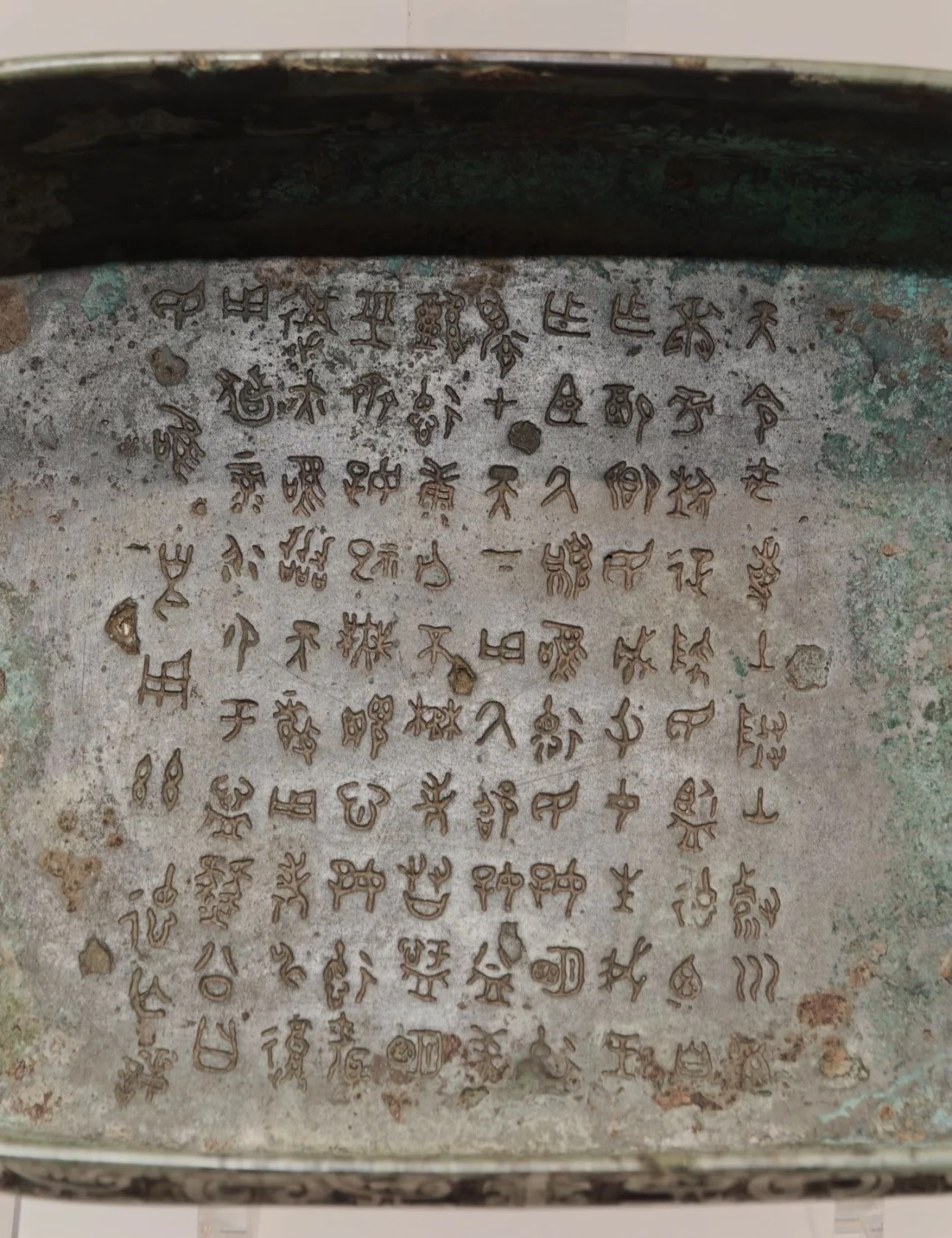
Yet the most remarkable part of the vessel is hidden inside.
Across its interior is an inscription of ten lines and approximately 98 characters. Its opening words immediately transport us to one of the foundational stories of early Chinese civilisation:
遂公盨銘文 — 李學勤釋文
天命禹敷土,隨山浚川,迺
差地設征,降民監德,迺自
作配鄉(享)民,成父母。生我王
作臣,厥沬(貴)唯德,民好明德,
寡(顧)在天下。用厥邵(紹)好,益干(?)
懿德,康亡不懋。孝友,訏明
經齊,好祀無〔𧶠〕(廢)。心好德,婚
媾亦唯協。天釐用考,神復
用祓祿,永御於寧。遂公曰:
民唯克用茲德,亡誨(侮)。
“Heaven commanded Yu to order the lands. Following the mountains, he dredged the rivers. He then distinguished the lands and established their levies. He caused the people to take virtue as their guide. He himself became worthy of serving and nourishing the people, becoming as father and mother to them.
Our kings brought forth and appointed their ministers; what they esteemed above all was virtue. The people cherished illustrious virtue, regarding it throughout All Under Heaven. Thus they continued in what was good, increasing and cultivating excellent virtue, and in times of peace they did not cease their efforts.
They were filial toward their parents and fraternal toward their brothers; they clearly understood the established principles and ordinances. They were devoted to sacrifices and did not neglect them. In their hearts they cherished virtue, and in their marriage alliances they likewise sought harmony.
Heaven therefore bestowed blessings and long life upon them; the spirits in turn granted purification and good fortune, so that they might long dwell in tranquillity.
The Duke of Sui said: ‘If the people are truly able to practise these virtues, there will be no disgrace.’”
Translation adapted from Xing Wen and Chen Shu, “The Suigong Xu 遂公盨 Calligraphy and Inscription: A Contextual Reconstruction and Translation,” Early China.
The Story of Yu the Great
According to ancient tradition, China was once overwhelmed by catastrophic floods. Yu, later remembered as 大禹 (Yu the Great) succeeded where others had failed.
Rather than simply attempting to block the waters, Yu was remembered as working with the landscape: surveying the land, following mountains and opening channels so that the waters could flow towards the rivers and sea.
The xǔ 遂公盨 condenses this enormous story into only a few words. Yu orders the land, opens the waterways and establishes a system through which the territory and its people can once again be organised.
But the inscription does something even more interesting.
It moves from water to morality.
Yu’s achievement is presented not merely as an engineering triumph, but as evidence of virtue. The inscription proceeds from the ordering of mountains and rivers to the proper ordering of human society. Good government, familial harmony, ritual observance and moral conduct all become part of the same idea.
To the person who commissioned this bronze, controlling the landscape and governing people were connected by the same principle: order had to begin with virtue.
A Story Already Ancient 2,900 Years Ago
This is what makes the xǔ so extraordinary.
The bronze itself dates to the Western Zhou. Yet when its inscription was cast nearly three millennia ago, Yu was already being remembered as a figure belonging to a much more distant past.
The vessel therefore gives us something exceptionally rare: evidence of how people in the Western Zhou understood their own antiquity.
Long before the surviving versions of texts such as the Shangshu and Shiji were written down in the forms familiar to us today, the story of Yu was already circulating and important enough to be permanently cast into ritual bronze.
The opening language of the inscription is particularly striking because it closely anticipates passages associated with the later textual tradition of the Yu Gong 禹貢.
The xǔ therefore does not simply illustrate a famous legend. It demonstrates that the cultural memory surrounding Yu and the ordering of the waters was already established during the Western Zhou.
From the Lost Past to the Modern World
The modern history of the xǔ is almost as remarkable.
Unlike many celebrated ancient Chinese bronzes, it was not recovered through a documented archaeological excavation. The vessel appeared on the overseas art market and was recognised by specialists from the Beijing Poly Art Museum in 2002.
Its cover had already been lost, and much of its surface remained obscured by earth and corrosion. After conservation and examination, however, the inscription inside became clear.
Scholar Li Xueqin subsequently studied the vessel and recognised the significance of its opening passage concerning Yu.
Suddenly, a bronze food vessel had become an important document for the study of China’s earliest historical traditions.
When Bronze Becomes a Document
We often look at Chinese bronzes first as works of art: their silhouettes, patinas, casting and decoration.
The xǔ asks us to look deeper.
Here, bronze becomes a historical document.
Its inscription preserves a chain of memory stretching across thousands of years: from the legendary age of Yu, to the Western Zhou ruler who invoked his example, to the rediscovery of the vessel in the twenty-first century.
Whether every element of the later story of Yu should be read literally remains a matter for historical and archaeological study. What the xǔ establishes far more securely is something equally fascinating: by the Western Zhou, Yu’s transformation of the flooded landscape had already become part of China’s shared understanding of its ancient past.
And perhaps that is the most powerful aspect of seeing the xǔ today at SIMoA.
We are not simply standing before a bronze vessel made nearly 2,900 years ago.
We are standing before a 2,900-year-old memory of an age that was already ancient to the people who made it.
