 Image 1 of 3
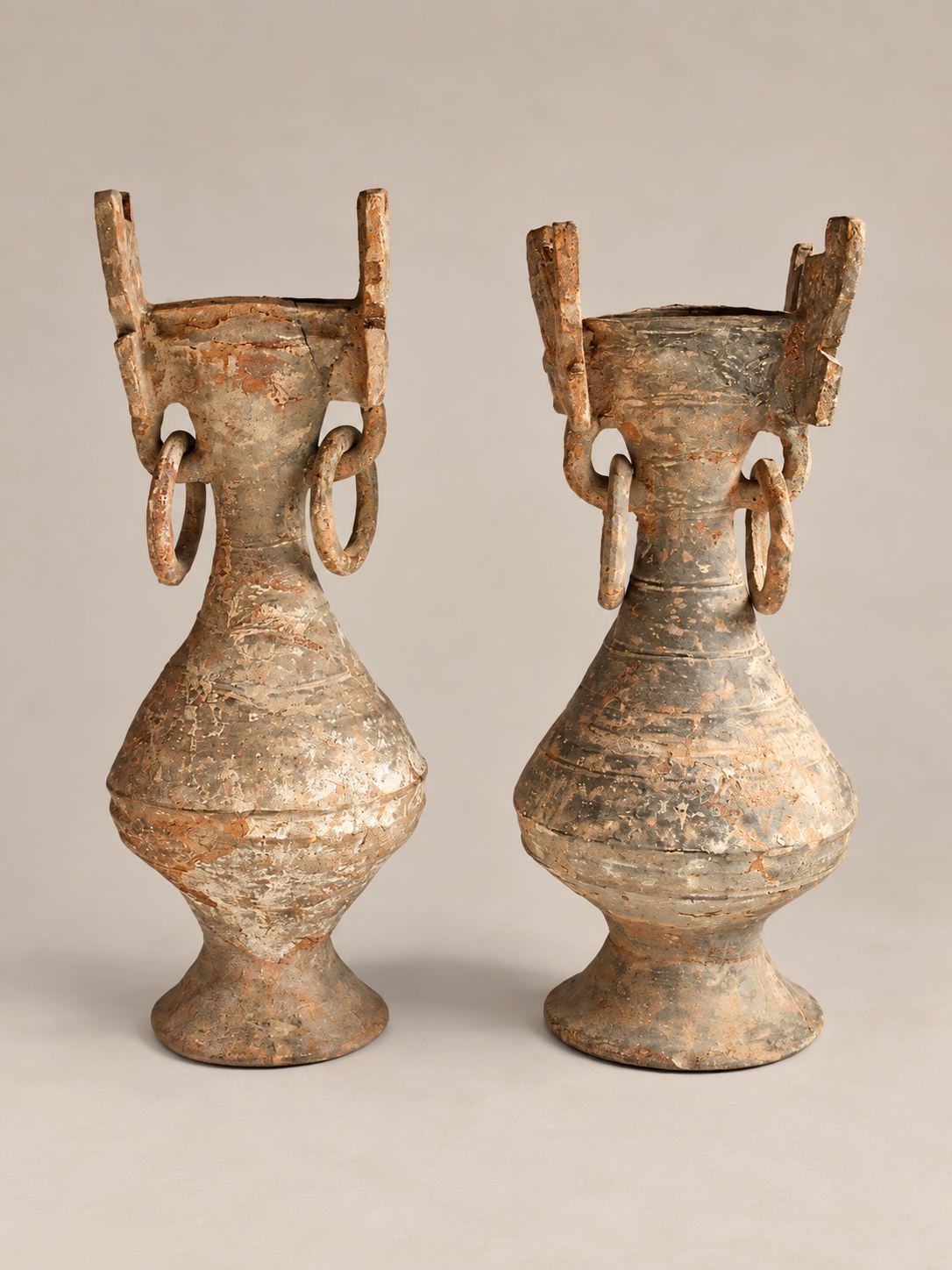 Image 2 of 3
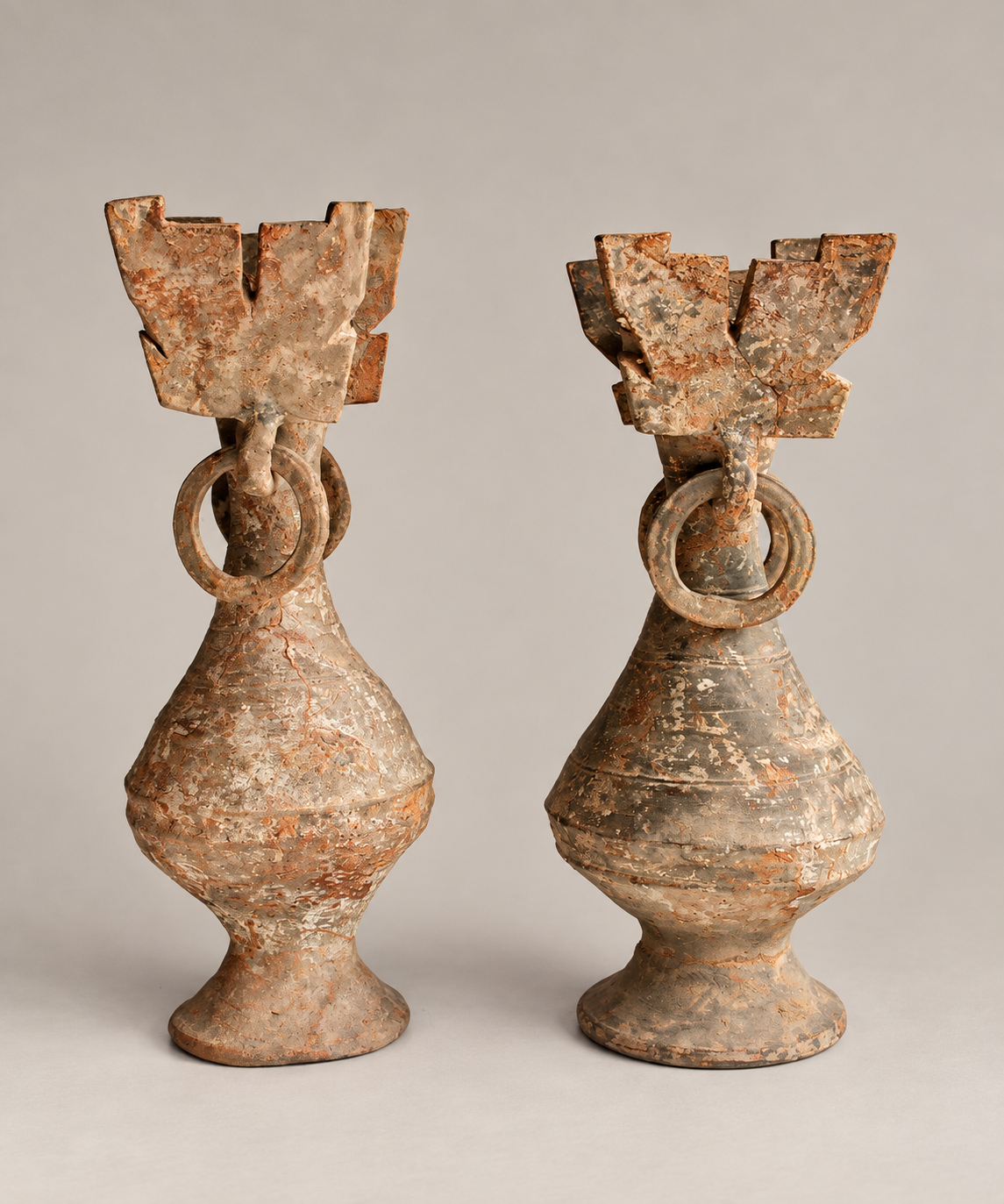 Image 3 of 3
Explore More
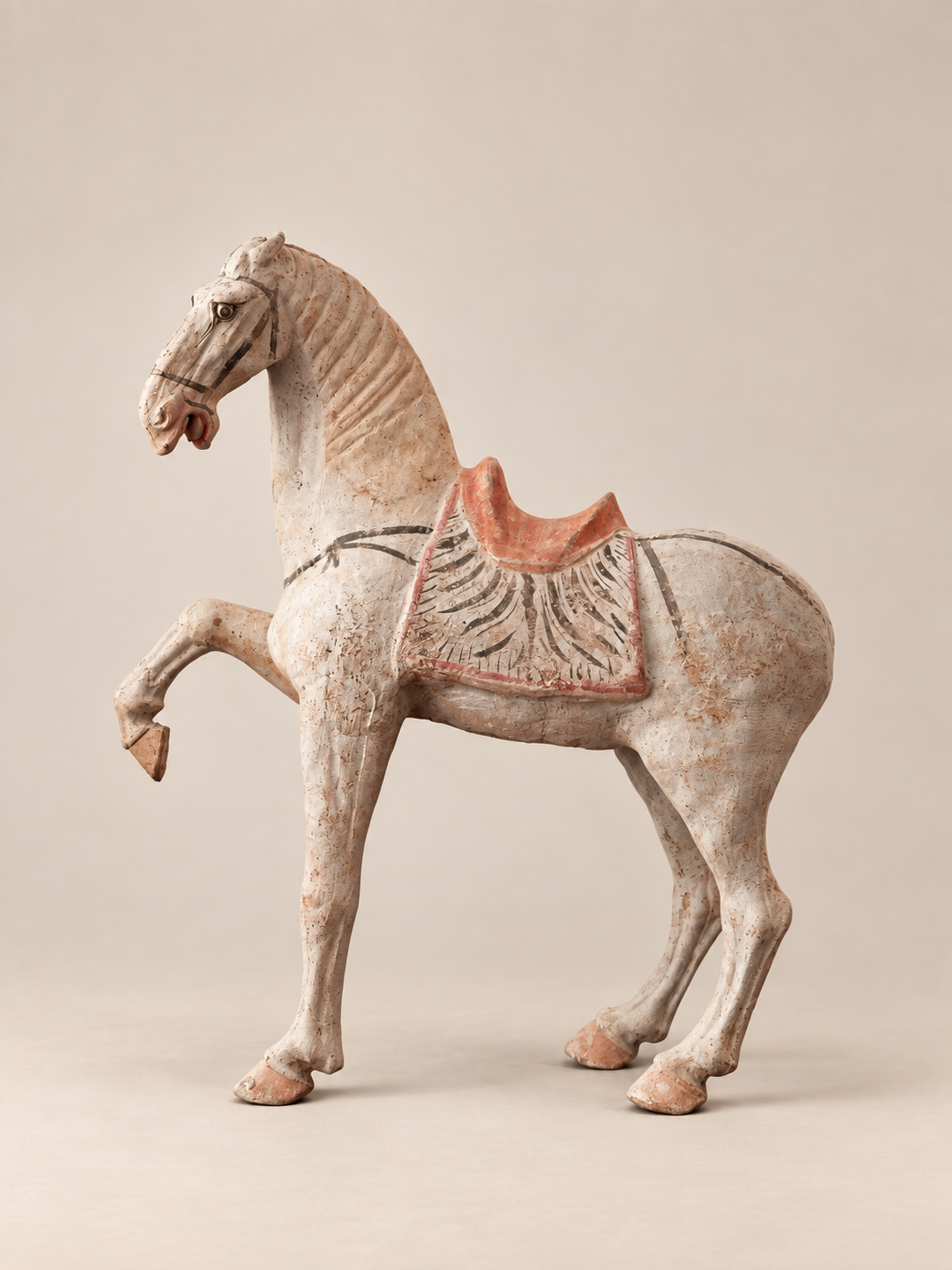
A large and impressive Tang Dynasty pottery horse, standing at 58 cm in height, exemplifying the strength, elegance, and cosmopolitan spirit of the Tang period (AD 618–906).
The horse is robustly modelled with powerful proportions, a slightly arched neck, and an alert, expressive head. One example is shown with a raised foreleg, conveying a sense of movement and vitality, while the other stands in a more grounded yet equally poised stance. Both figures display finely incised detailing to the mane and facial features, capturing the character and nobility associated with Tang horses, symbols of prestige and military power.
The surfaces retain traces of their original cold-painted decoration, with a white slip ground overlaid by red and black pigments. Particularly striking is the saddle, highlighted in a warm reddish tone with simple yet effective painted detailing, adding contrast and visual interest. Areas of natural wear and pigment loss contribute to an authentic, time-softened patina.
As is typical of large Tang earthenware figures, the horses are hollow-formed and constructed in sections, then assembled prior to firing. The overall condition is consistent with age, showing expected surface wear and minor losses, but remaining structurally sound and highly decorative.
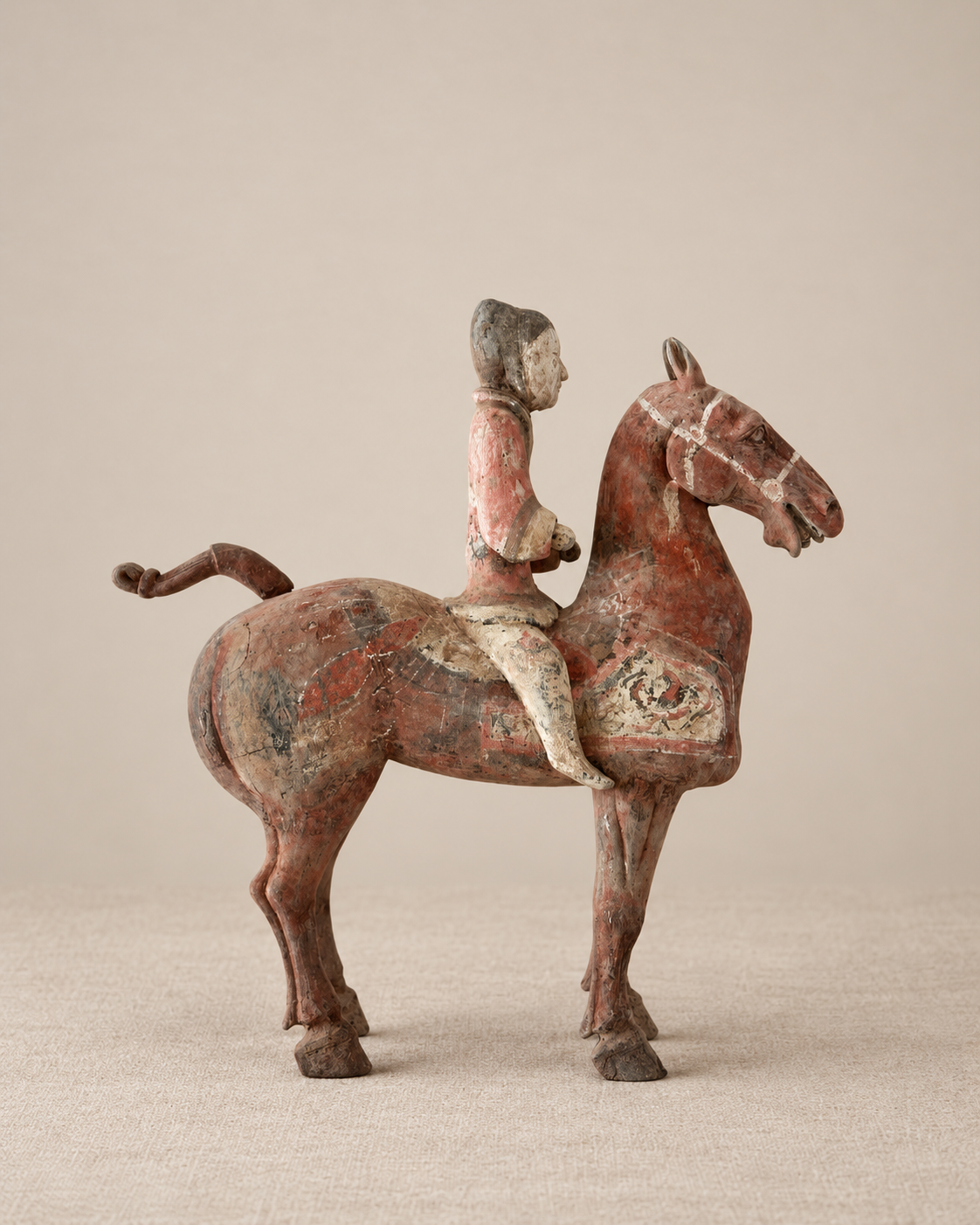
This finely sculpted Han Dynasty pottery horse and rider dates back over 2,000 years, to China’s Han period (206 BC – AD 220). The horse stands tall and alert, with muscular legs and well-defined features, while the rider sits upright in a commanding posture, arms bent as if holding invisible reins. The figure is made of grey pottery and retains traces of its original mineral-based pigments in red, black, and white, which were applied in the ancient "cold-painted" technique.
Such ceramic figures offer insight into Han-era craftsmanship and reflect the cultural value placed on horses and mounted figures during this prosperous imperial period.
Height : 52cm
Provenance : Private Collection from London
這件漢代彩繪陶馬與騎士塑像距今已有兩千多年,製於中國漢朝時期(公元前206年至公元220年)。陶馬四蹄穩健,姿態挺拔,騎士正襟危坐,雙臂自然彎曲,似正持韁控馬。整體以灰陶塑成,表面保留紅、黑、白等礦物顏料的彩繪痕跡,為古代「冷繪」技法之遺存。
此類陶俑彰顯漢代對馬匹與騎兵的重視,也體現當時陶藝技術與審美理念。
高:約52公分
來源 : 倫敦私人舊藏
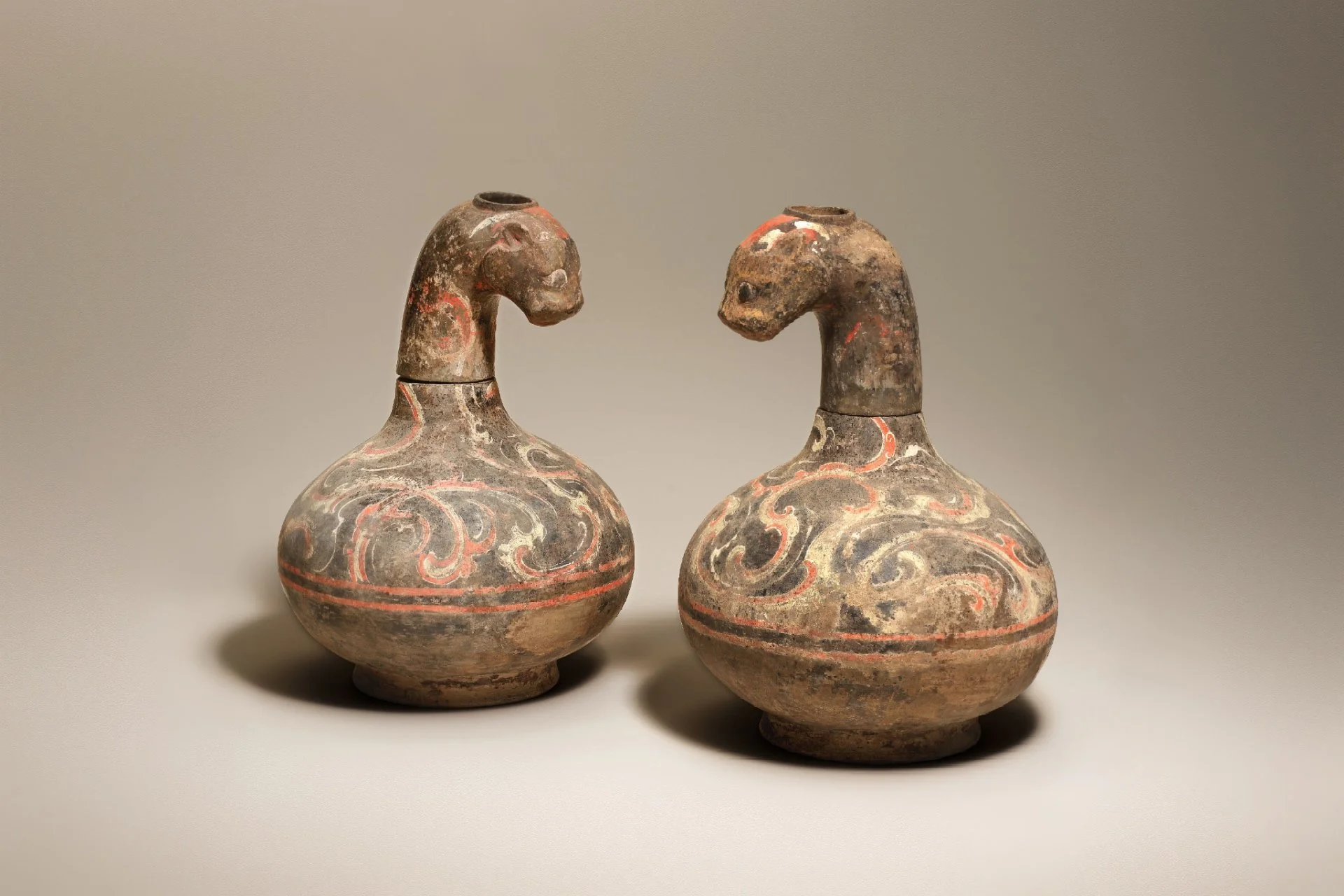
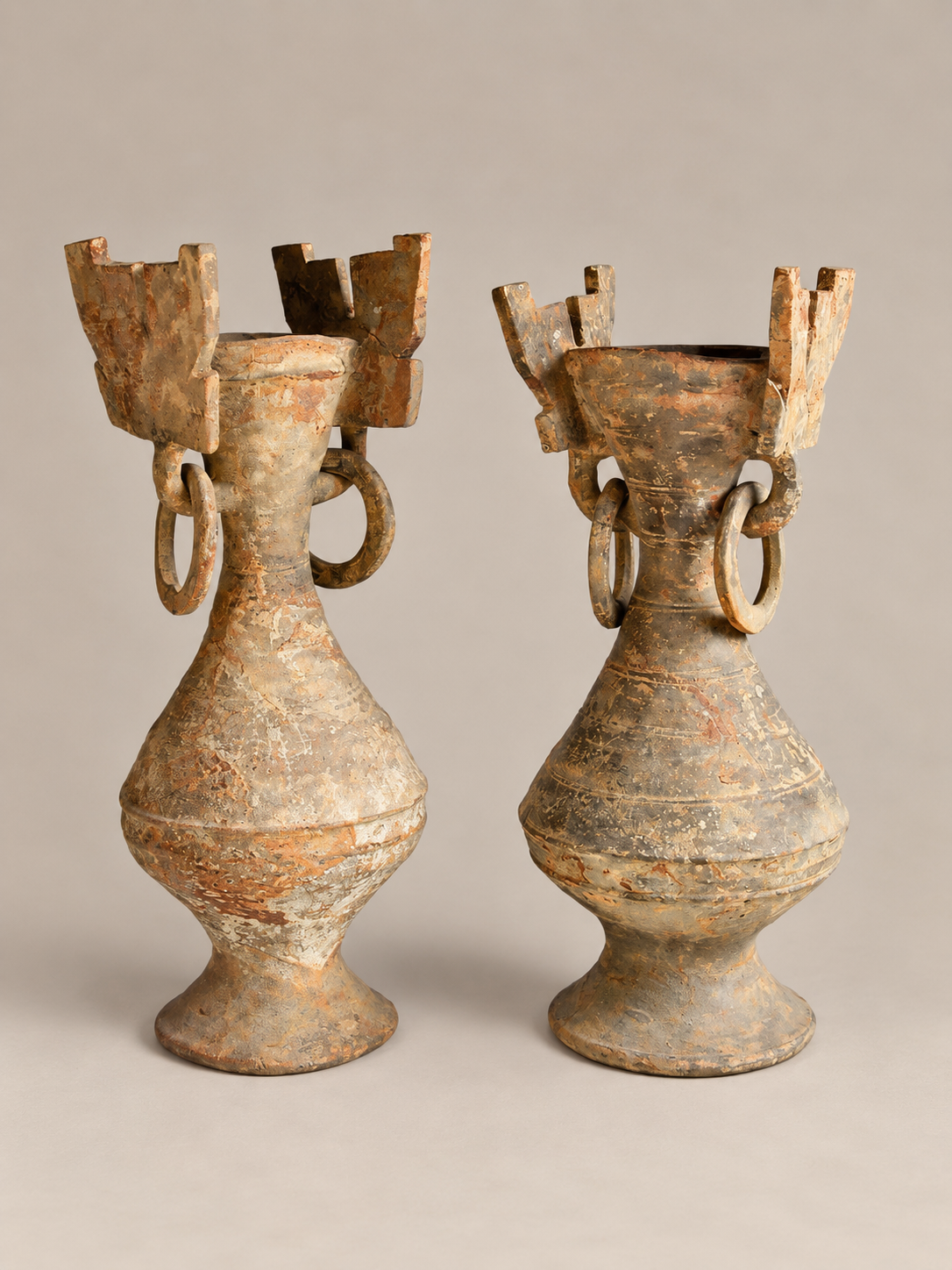
In Western Han pottery, animal-headed vessels follow a near convention: ducks, geese, and waterfowl, something gentle, familiar, and easily identified.
These painted ceramic vessels, however, adopts an image that is exceptionally rare.
Short, upright pointed ears; wide, staring eyes; a mouth with a hint of menace, is this truly a feline? Or could it represent a tamed leopard?
Or is it simply a misreading imposed by modern taxonomic categories?
In the visual world of the Western Han, this head may not have belonged to any animal we recognise today, but rather to a liminal, mythic creature, poised between the domestic and the wild, between protection and intimidation.
40.5cm (16in)
Provenance
Priestley & Ferraro, Animals for the Afterlife, London, November 2002, no.22
Priestley & Ferraro, Timeless Creatures: Animals in Early Chinese Pottery and 20th Century Ink Paintings, London, Summer 2024, no.6
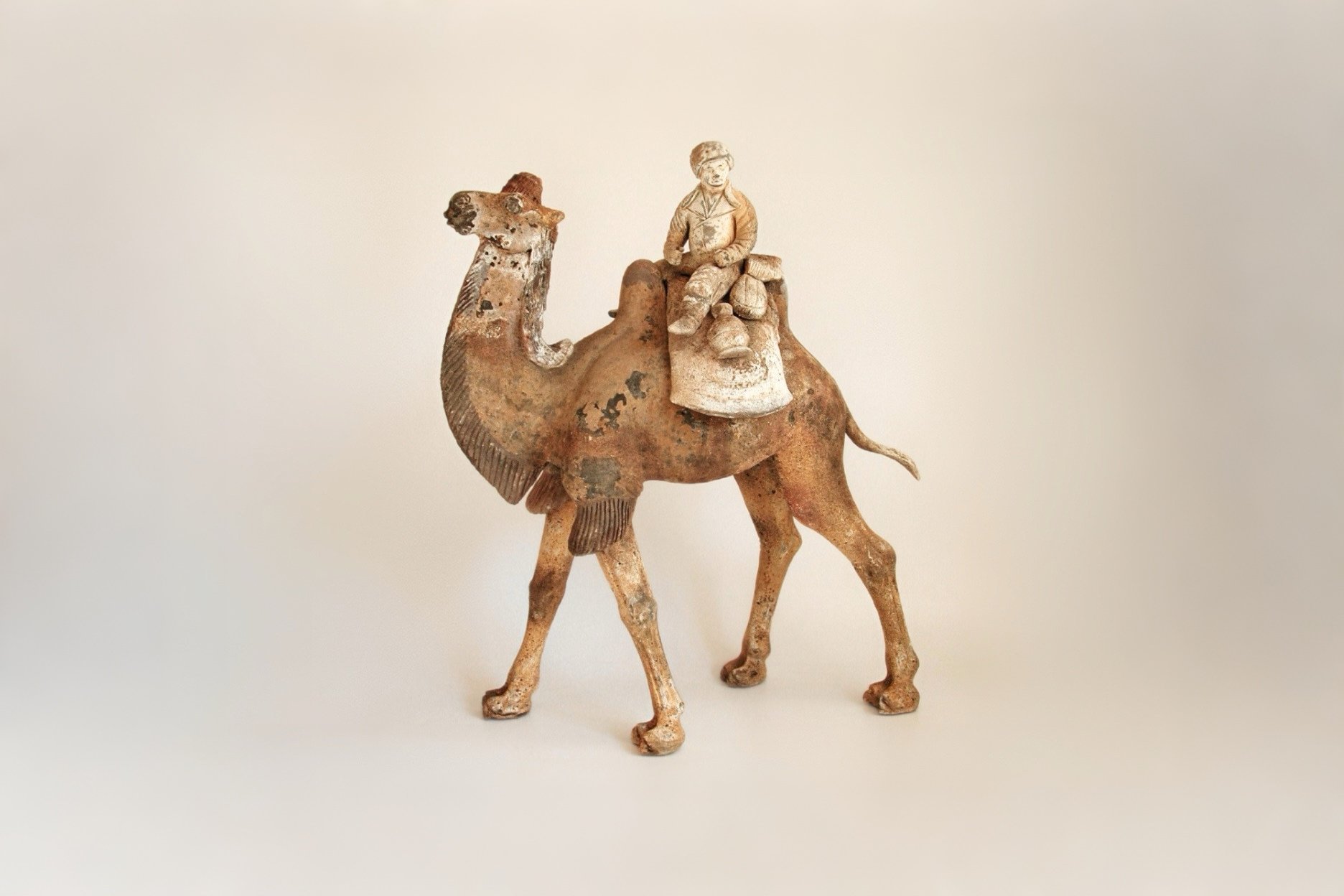
This impressive Tang dynasty pottery camel and rider stands as a vivid testament to the cosmopolitan spirit of the Tang Empire and the flourishing trade networks of the Silk Road. Measuring an imposing 53 cm in height, the sculpture depicts a Bactrian camel striding forward with confident movement, carrying a foreign merchant seated atop a draped saddle laden with travel provisions and goods.
The camel is powerfully modelled with a long arched neck, alert expression, and well-defined mane and chest hair rendered in finely incised ridges. Its dynamic stance, with one leg advanced, conveys a strong sense of motion and vitality. The rider, dressed in Central Asian attire with a distinctive cap and heavy coat, reflects the diverse communities of merchants, traders, and travellers who journeyed between China, Central Asia, and the Middle East during the Tang period.
Traces of the original white slip and pigments remain visible on both the rider and camel, preserving elements of the sculpture’s original appearance. The naturalistic modelling and lively characterisation demonstrate the remarkable sculptural achievements of Tang ceramic workshops, whose figures are celebrated for their realism and expressive energy.
Camel figures of this scale and quality rank among the most iconic images of Tang dynasty art. More than representations of transport animals, they embody the cultural exchange, commercial prosperity, and international outlook that made the Tang dynasty one of the great cosmopolitan civilizations of the medieval world.
Height: 53 cm