 Image 1 of 4
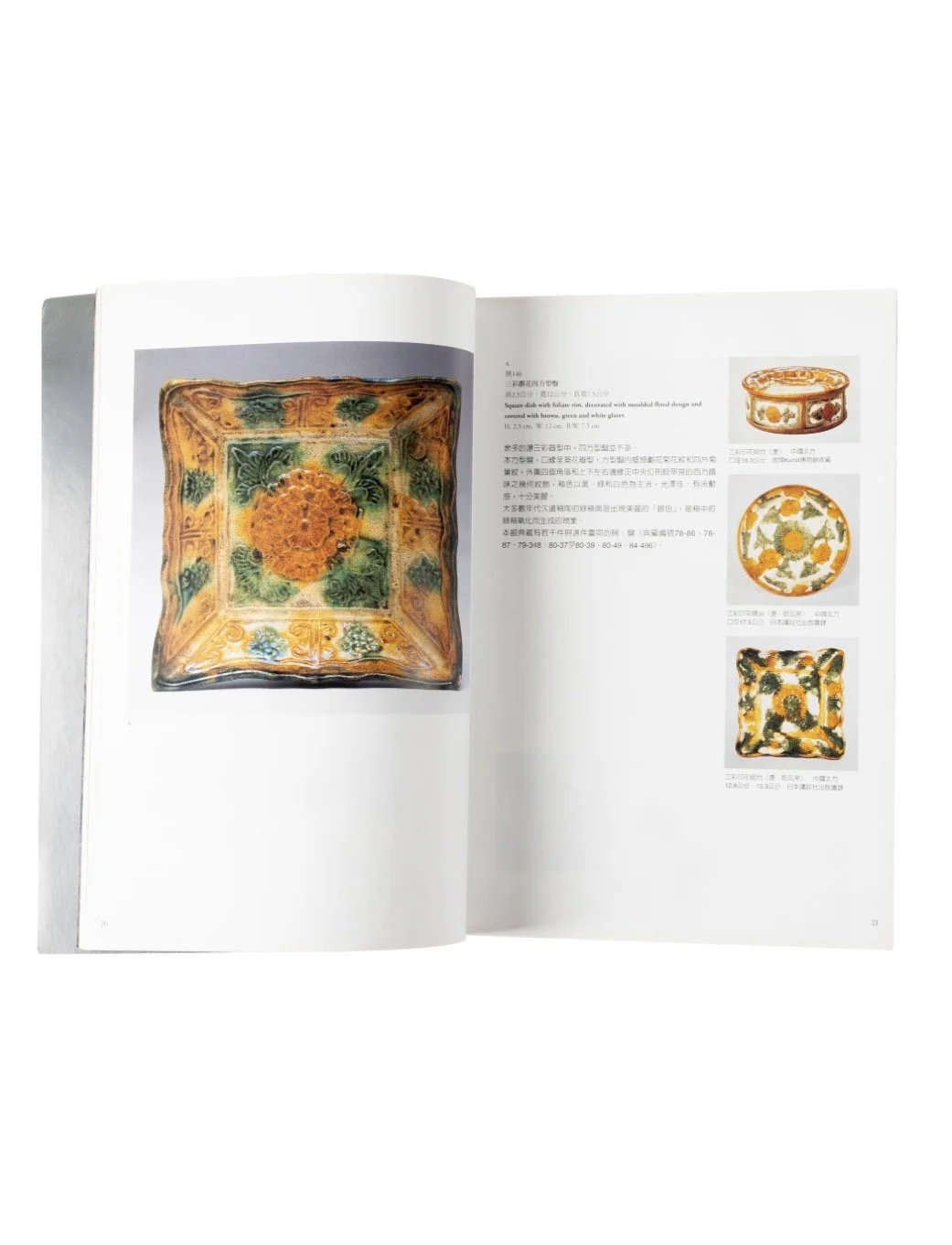 Image 2 of 4
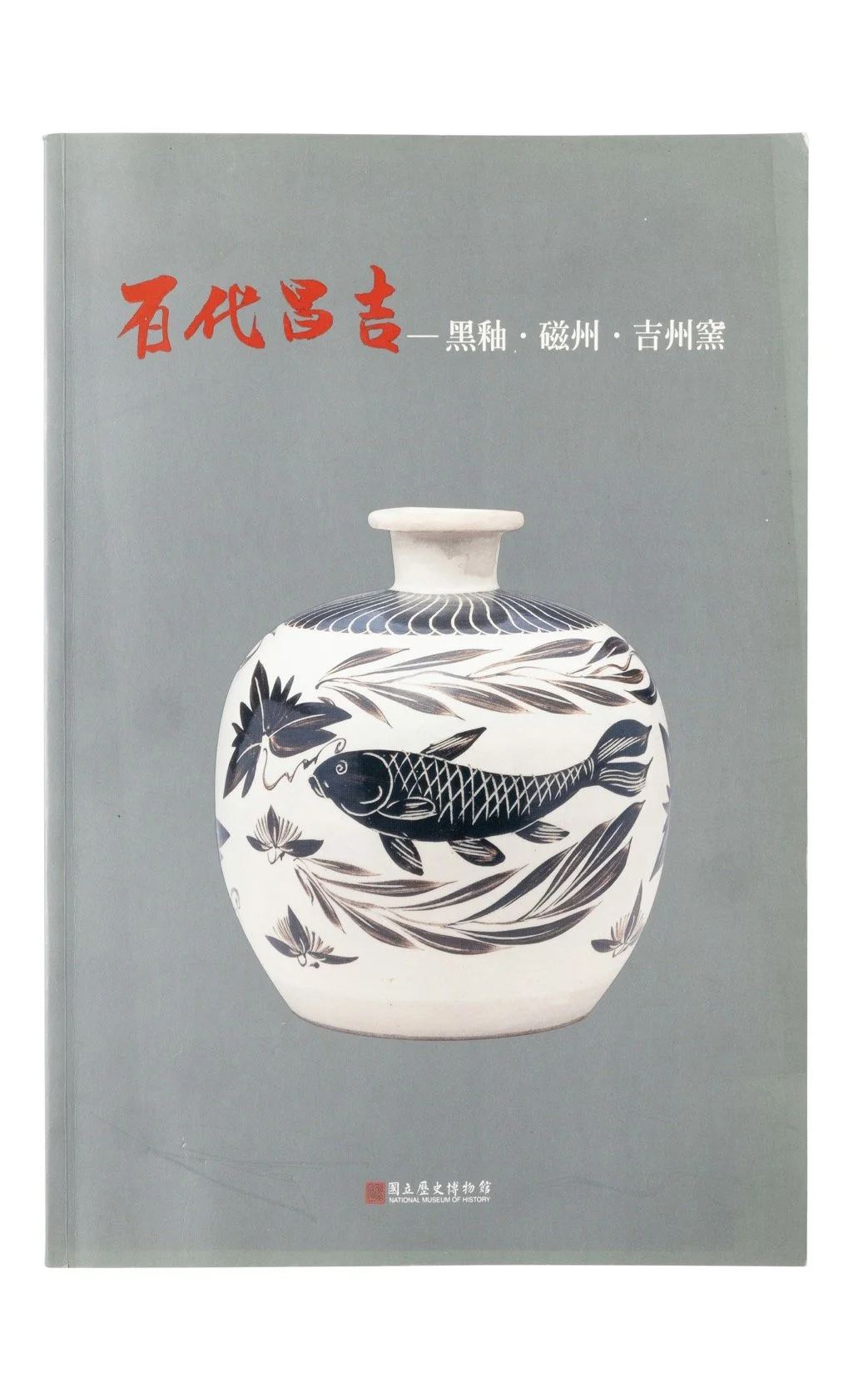 Image 3 of 4
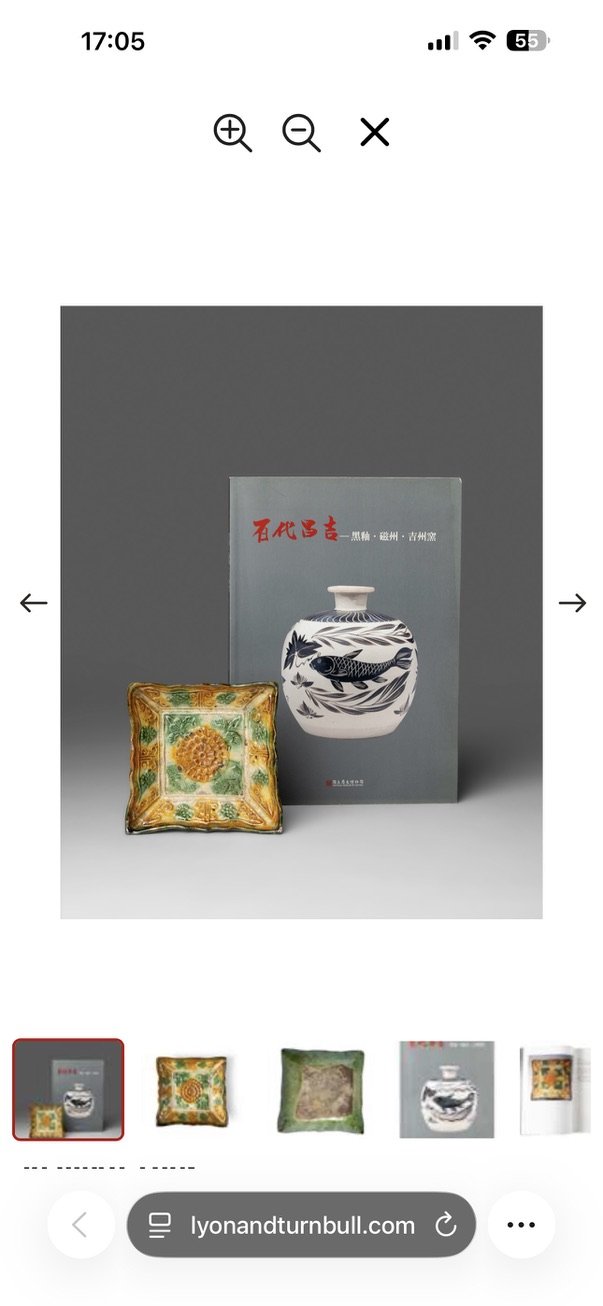 Image 4 of 4
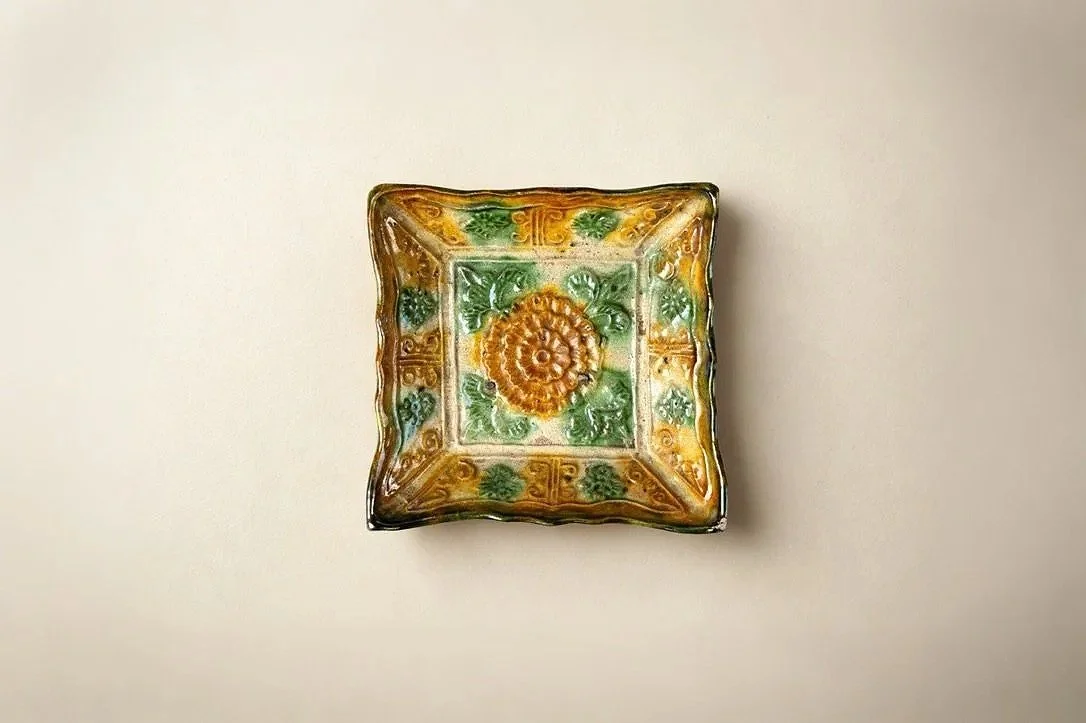
This finely moulded Liao dynasty sancai-glazed dish is a rare and elegant example of northern Chinese ceramic production during the Khitan Liao period. Of square form with gently barbed sides, the dish is richly decorated in amber, green, and cream sancai glazes, the luminous colours pooling attractively within the moulded contours of the design.
At the centre is a raised floral medallion surrounded by stylised foliate motifs framed within geometric compartments, all rendered in high relief with remarkable clarity and vitality. The softly undulating rim further enhances the sculptural quality of the piece, while the contrasting sancai glazes create a vivid interplay of colour and texture characteristic of Liao ceramic aesthetics.
The dish reflects the continued development of Tang sancai traditions in northern China, interpreted through the bold decorative vocabulary and robust modelling associated with Liao dynasty ceramics. Pieces of this type are admired for their lively glazing effects, architectural symmetry, and strong ornamental presence.
Width: 12.6 cm.
Provenance:
Private Taiwanese collection.
Exhibited:
Good Fortune Throughout History: Black Glaze and Porcelain from Tzu-chou and Ji-chou Kilns, National Museum of History, Taipei, 2004, exhibition no. Zhan 146.
Published:
Cheng Qiren, Good Fortune Throughout History: Black Glaze and Porcelain from Tzu-chou and Ji-chou Kilns, Taipei: National Museum of History, 2004, catalogue no. 146, p. 21.
This finely moulded Liao dynasty sancai-glazed dish is a rare and elegant example of northern Chinese ceramic production during the Khitan Liao period. Of square form with gently barbed sides, the dish is richly decorated in amber, green, and cream sancai glazes, the luminous colours pooling attractively within the moulded contours of the design.
At the centre is a raised floral medallion surrounded by stylised foliate motifs framed within geometric compartments, all rendered in high relief with remarkable clarity and vitality. The softly undulating rim further enhances the sculptural quality of the piece, while the contrasting sancai glazes create a vivid interplay of colour and texture characteristic of Liao ceramic aesthetics.
The dish reflects the continued development of Tang sancai traditions in northern China, interpreted through the bold decorative vocabulary and robust modelling associated with Liao dynasty ceramics. Pieces of this type are admired for their lively glazing effects, architectural symmetry, and strong ornamental presence.
Width: 12.6 cm.
Provenance:
Private Taiwanese collection.
Exhibited:
Good Fortune Throughout History: Black Glaze and Porcelain from Tzu-chou and Ji-chou Kilns, National Museum of History, Taipei, 2004, exhibition no. Zhan 146.
Published:
Cheng Qiren, Good Fortune Throughout History: Black Glaze and Porcelain from Tzu-chou and Ji-chou Kilns, Taipei: National Museum of History, 2004, catalogue no. 146, p. 21.