 Image 1 of 2
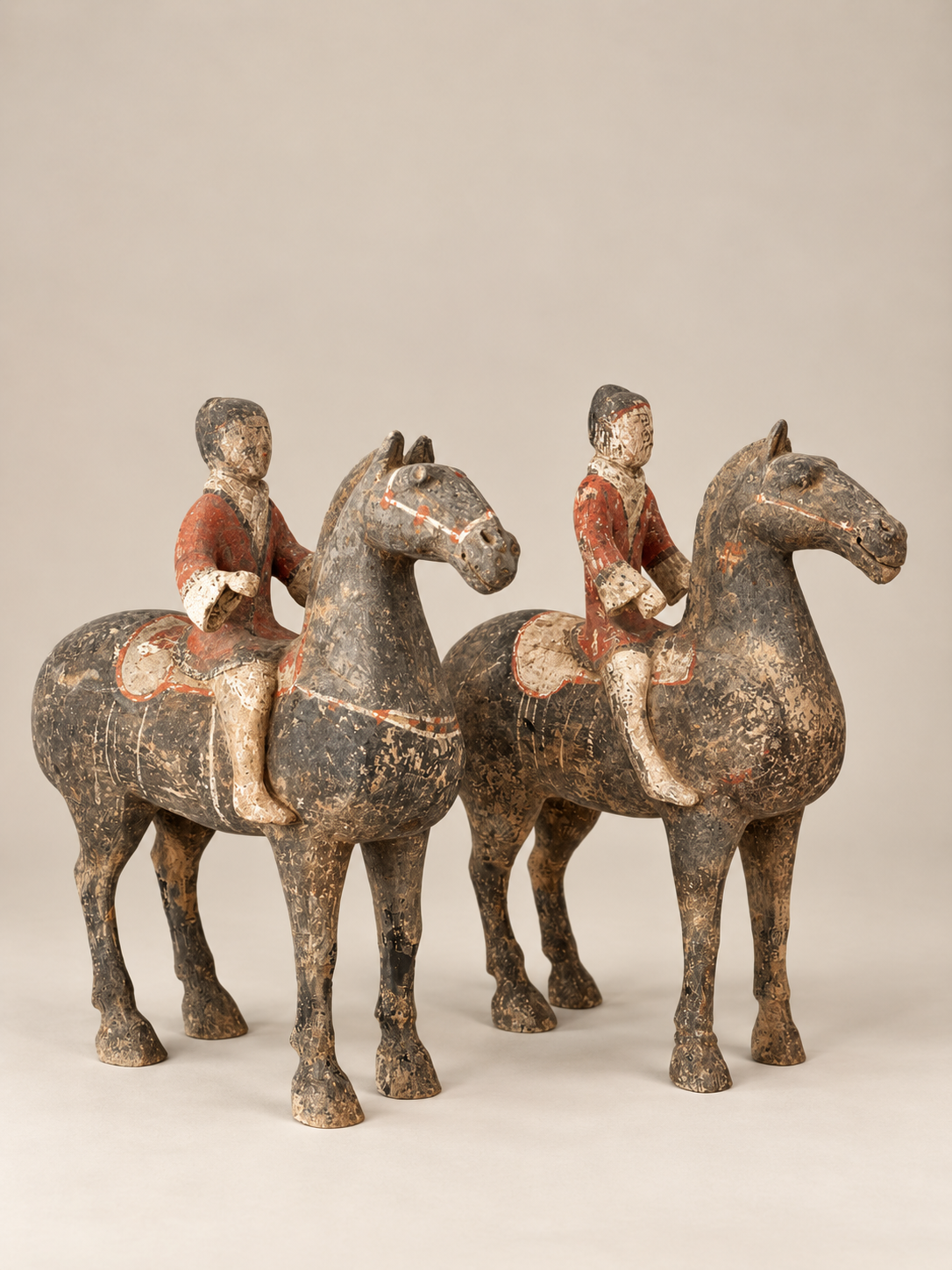 Image 2 of 2
Han dynasty (206 BC–220 AD)
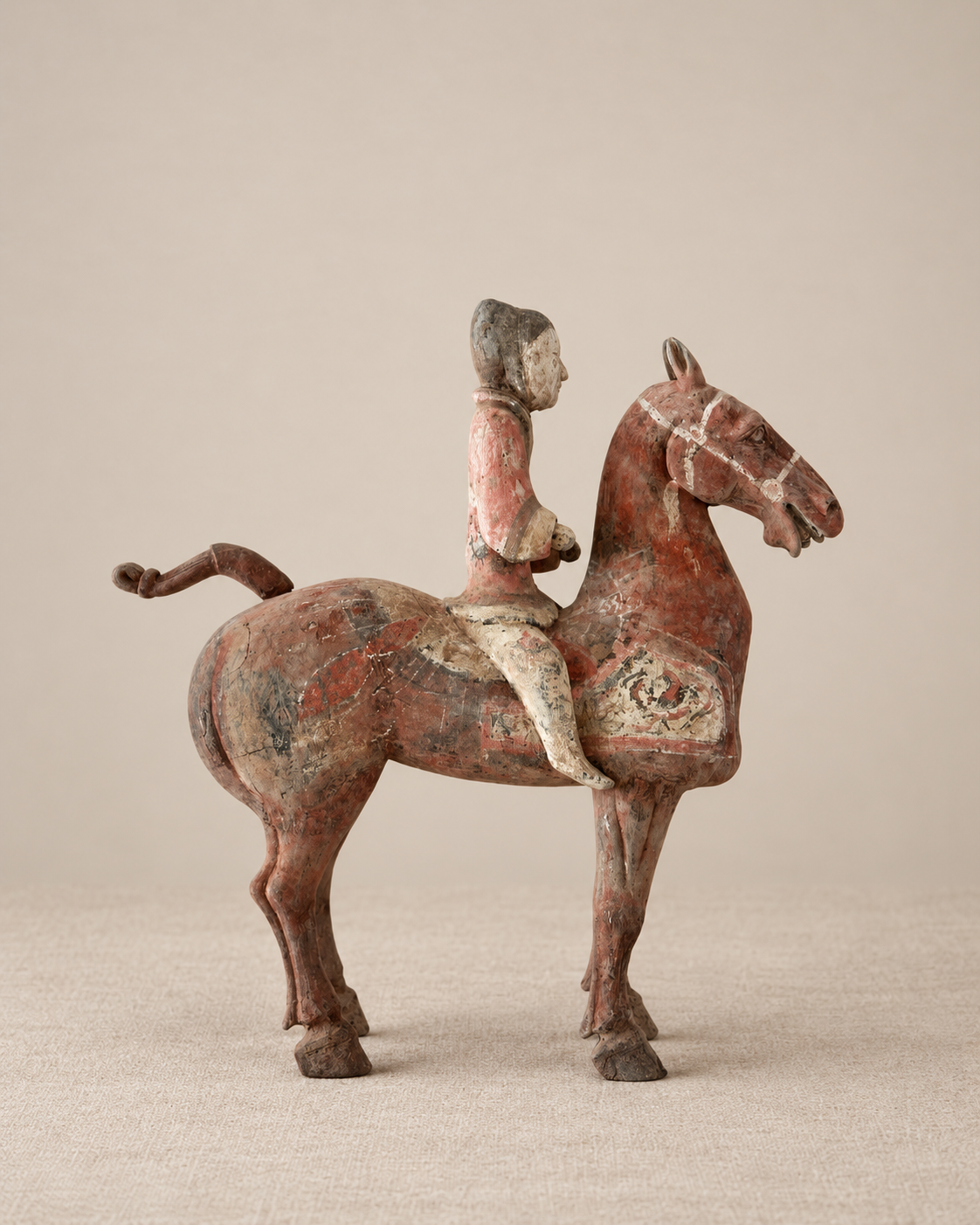
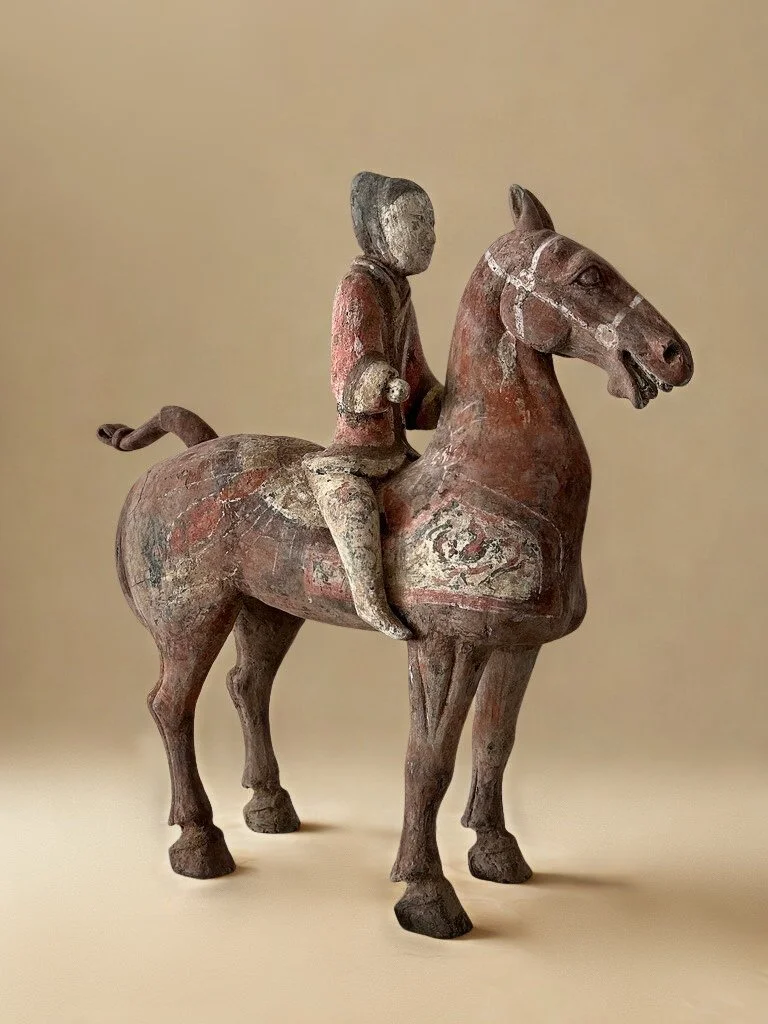
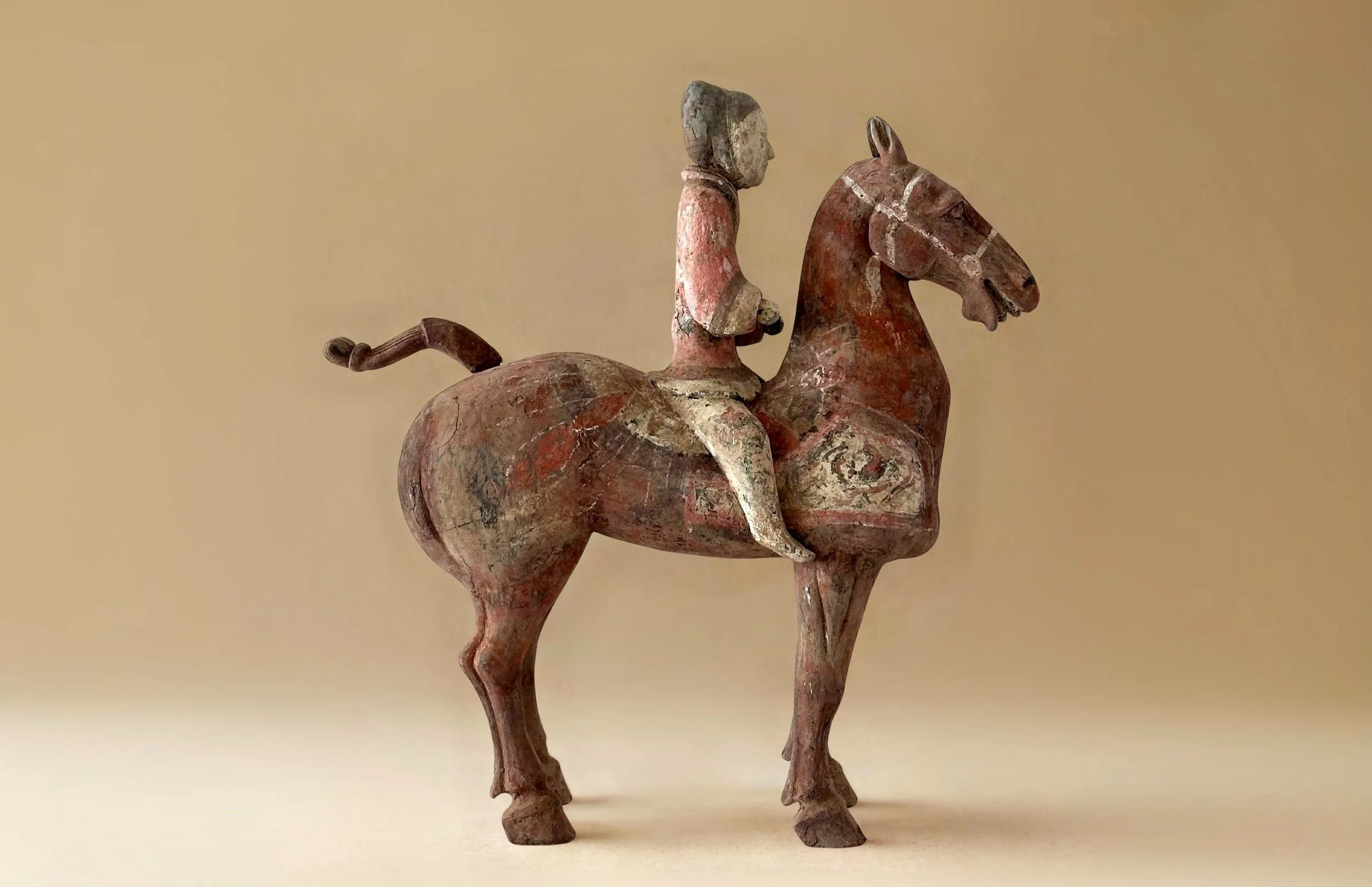
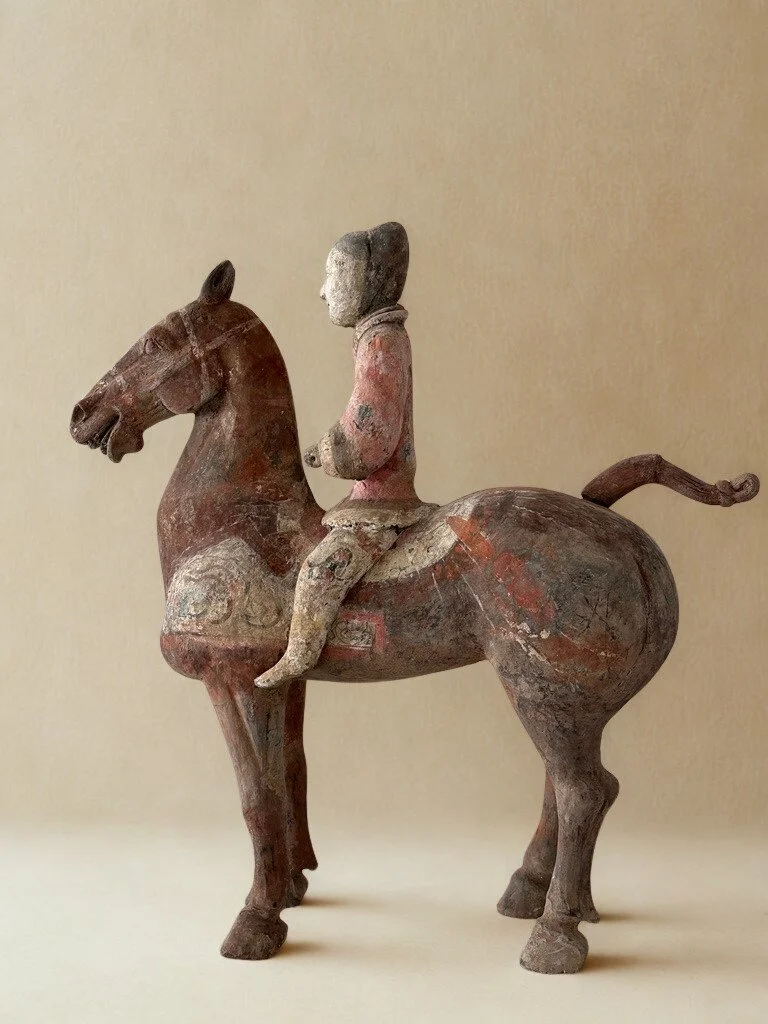
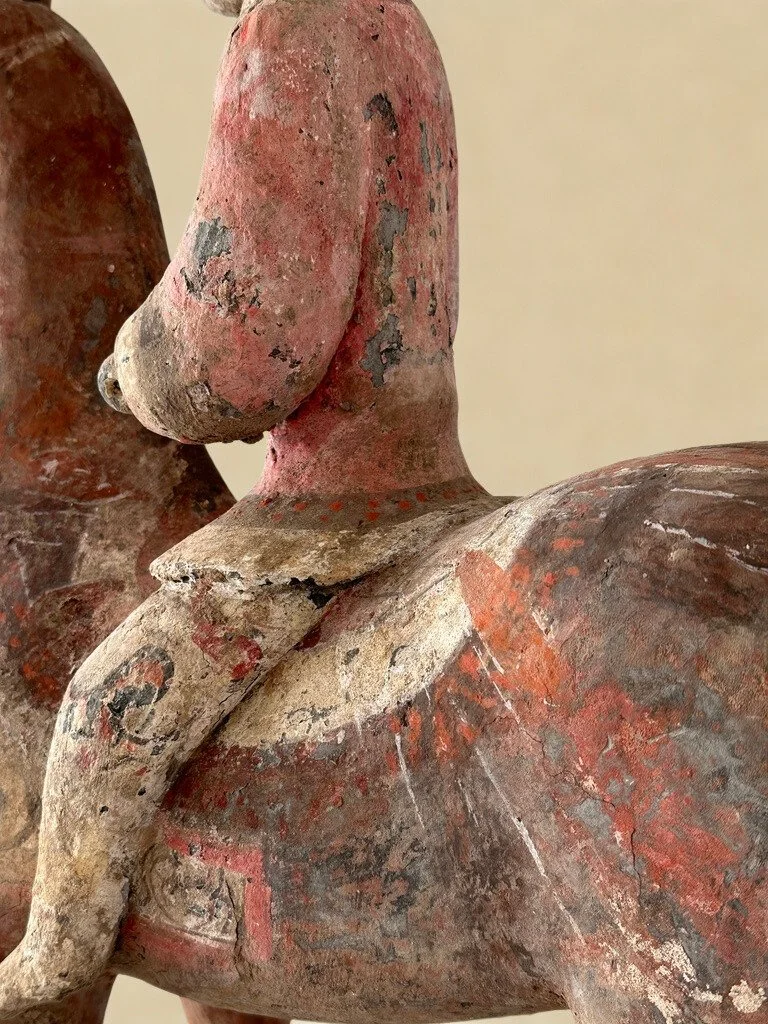
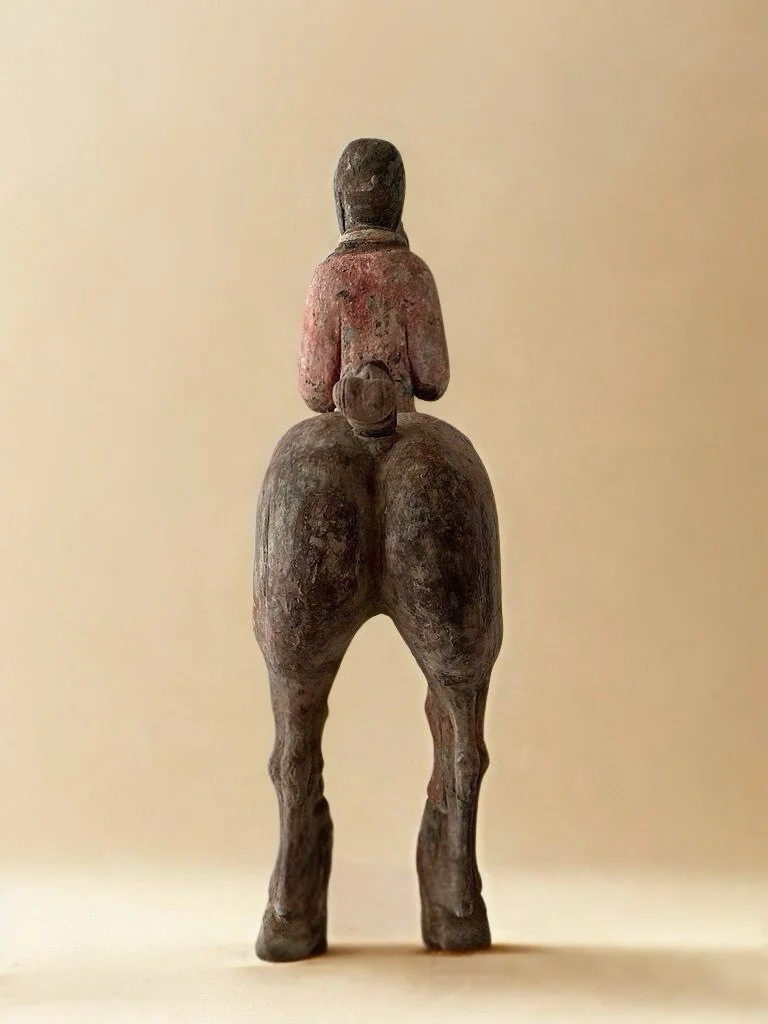
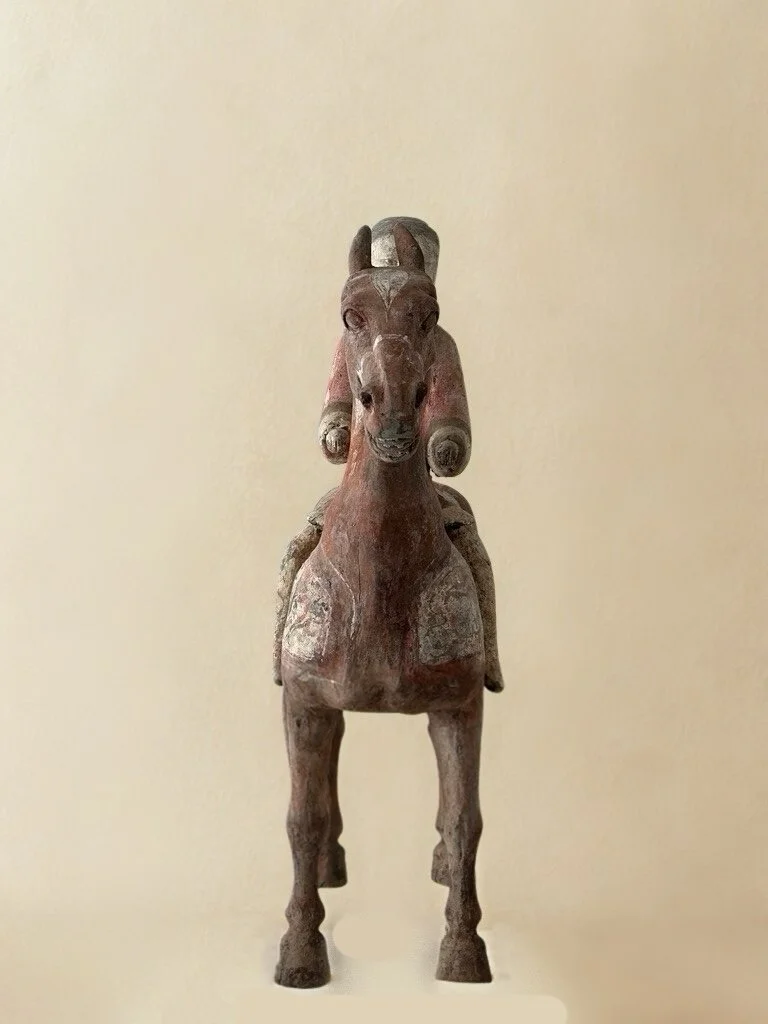
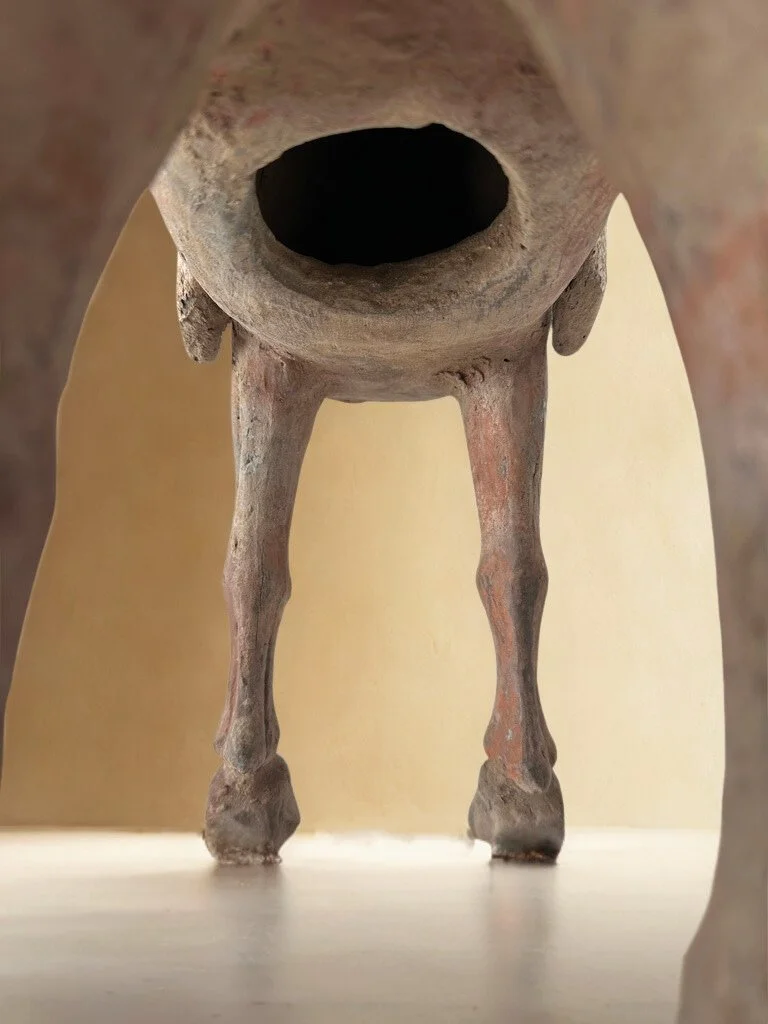
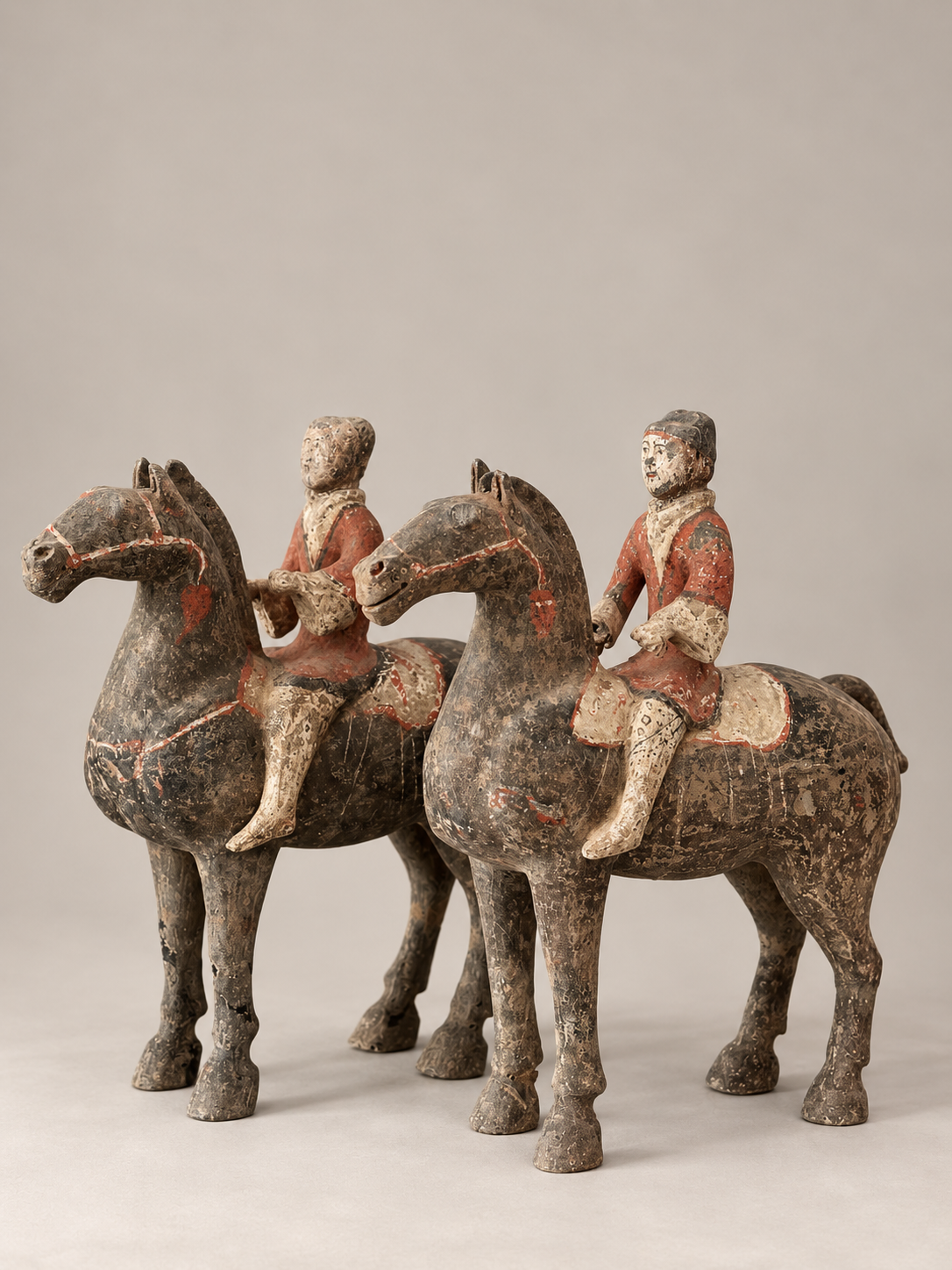
This striking pair of painted pottery equestrian figures belongs to the distinctive sculptural tradition associated with the celebrated Yangjiawan-type riders of the Han dynasty. Each figure depicts a mounted attendant seated upright upon a strongly modelled horse, the riders dressed in red garments with contrasting pale details and the horses retaining traces of red and cream-painted harness decoration.
The horses are characterised by their compact bodies, powerful chests and alert, upright necks, while the riders are rendered with simplified yet expressive features. Their restrained modelling and rhythmic silhouettes create a strong sense of order and movement, reflecting the importance of cavalry, horsemanship and military organisation within Han society.
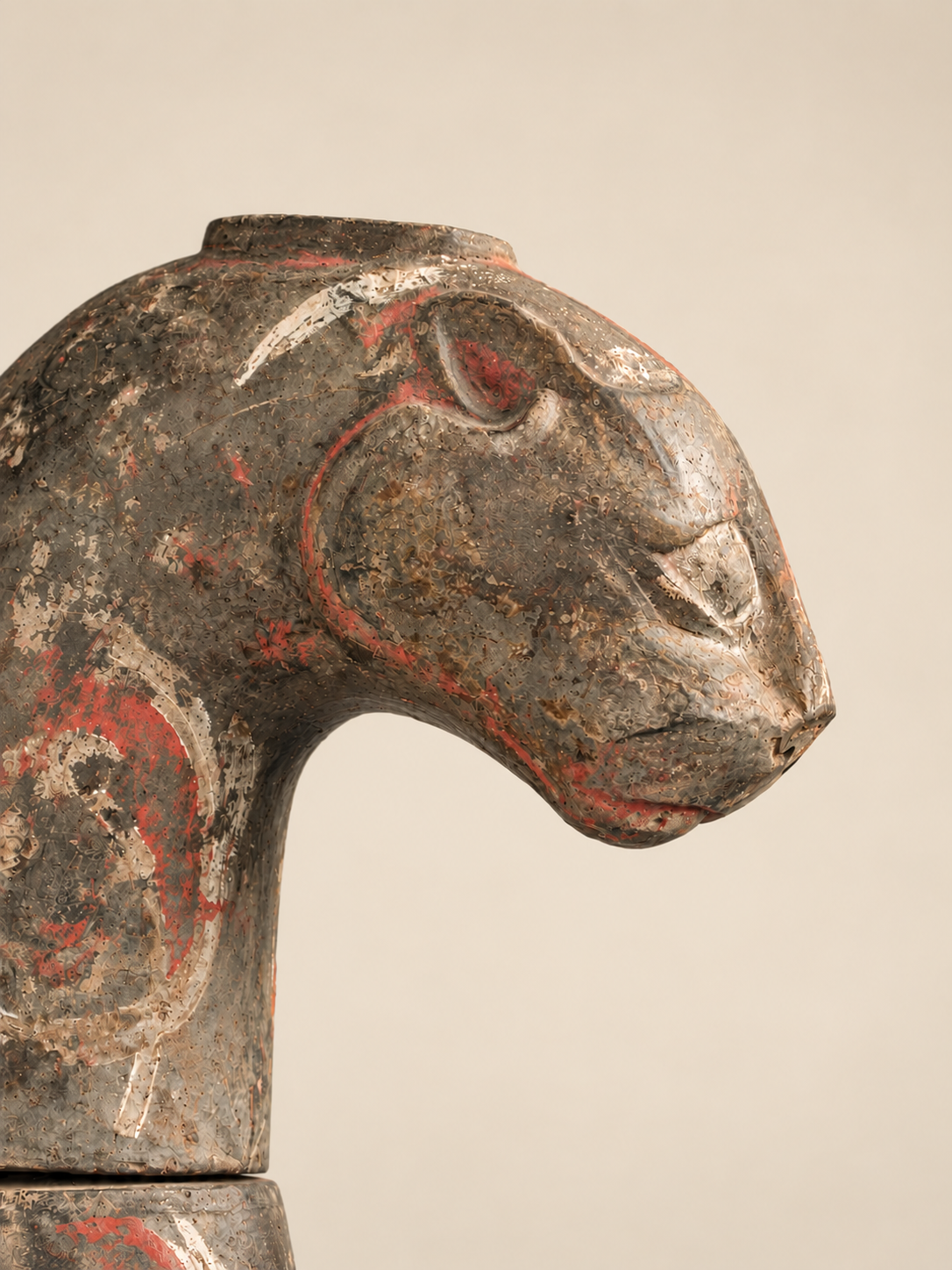
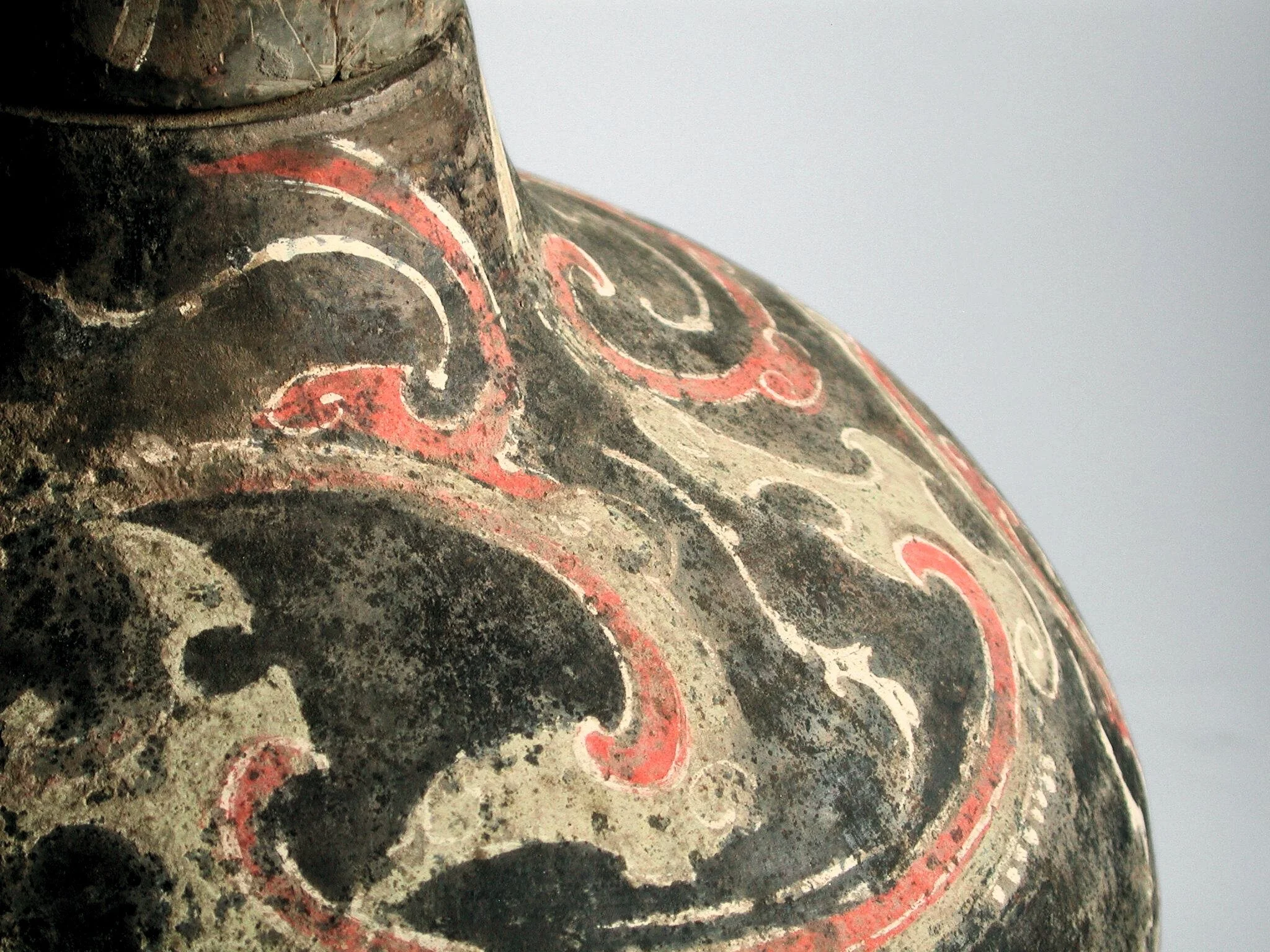
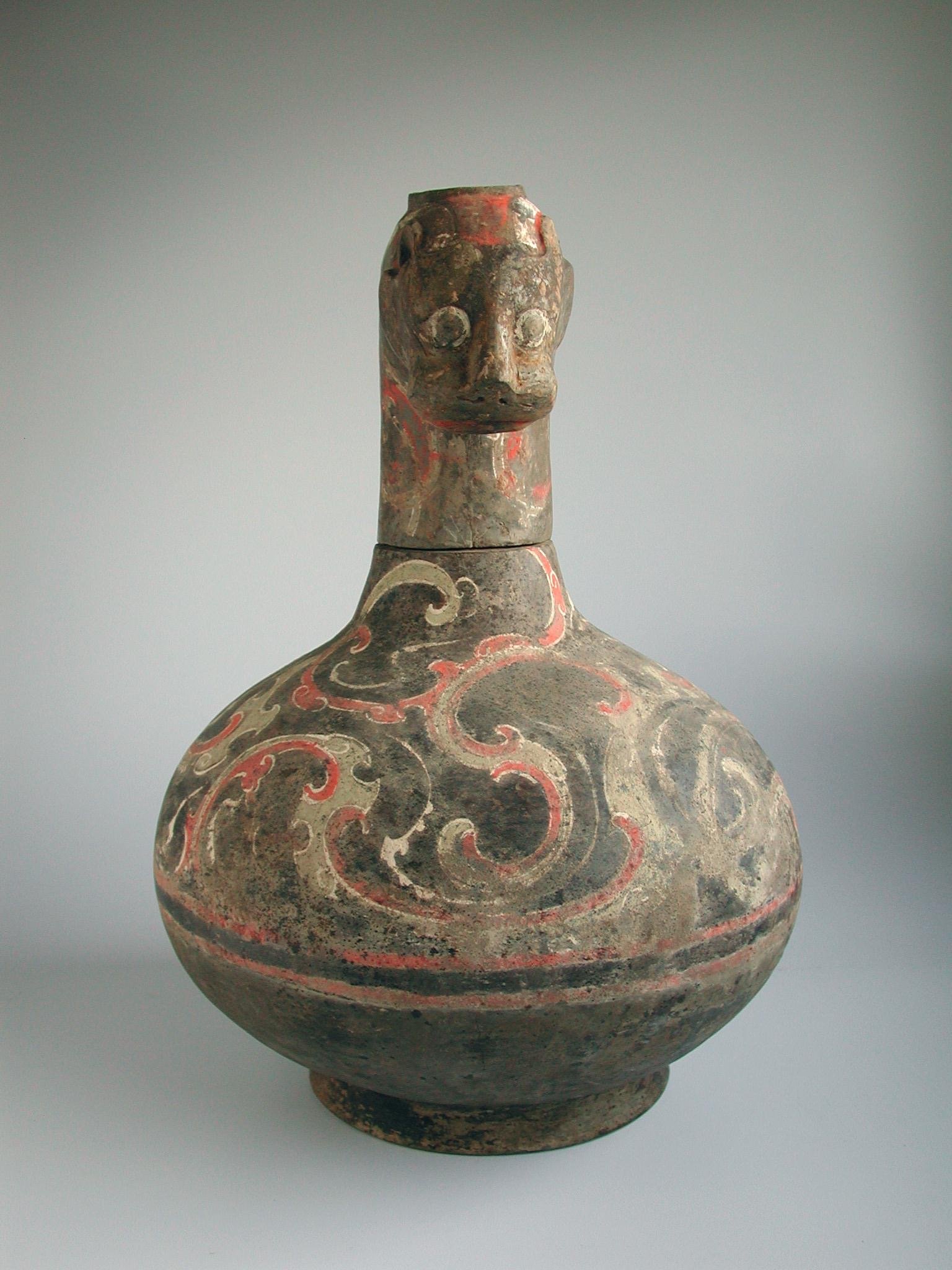
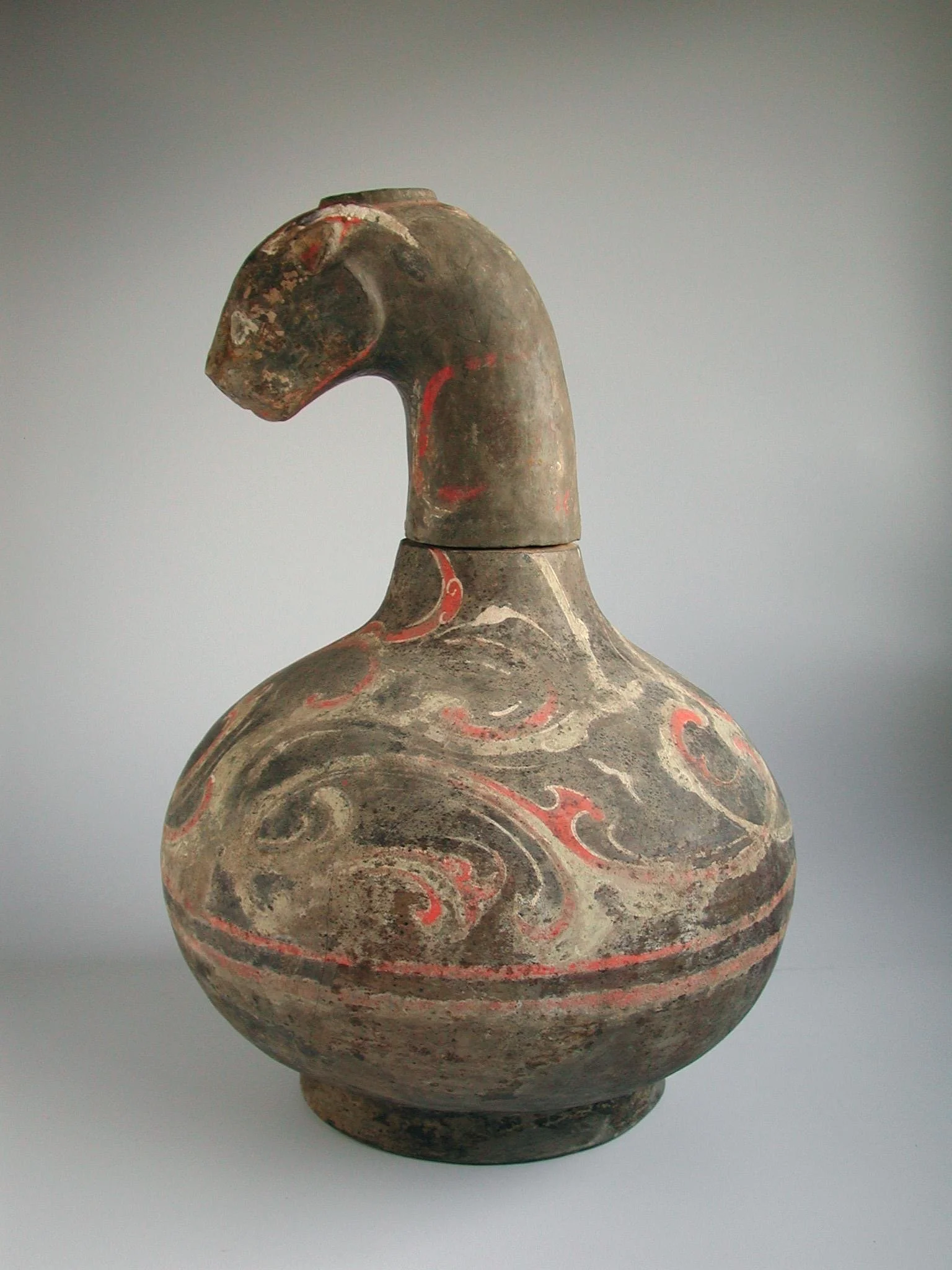
The surviving pigments are particularly appealing, with red, white and dark tones still visible across the riders, saddles and bridles. Despite the considerable age of the figures, these painted details preserve much of their original visual character and lend the pair a vivid sculptural presence.
Presented together, the riders form a balanced and highly decorative ensemble, representing an important category of early Chinese ceramic sculpture and the enduring prominence of the horse in Han dynasty art.
Han dynasty (206 BC–220 AD)
This striking pair of painted pottery equestrian figures belongs to the distinctive sculptural tradition associated with the celebrated Yangjiawan-type riders of the Han dynasty. Each figure depicts a mounted attendant seated upright upon a strongly modelled horse, the riders dressed in red garments with contrasting pale details and the horses retaining traces of red and cream-painted harness decoration.
The horses are characterised by their compact bodies, powerful chests and alert, upright necks, while the riders are rendered with simplified yet expressive features. Their restrained modelling and rhythmic silhouettes create a strong sense of order and movement, reflecting the importance of cavalry, horsemanship and military organisation within Han society.
The surviving pigments are particularly appealing, with red, white and dark tones still visible across the riders, saddles and bridles. Despite the considerable age of the figures, these painted details preserve much of their original visual character and lend the pair a vivid sculptural presence.
Presented together, the riders form a balanced and highly decorative ensemble, representing an important category of early Chinese ceramic sculpture and the enduring prominence of the horse in Han dynasty art.