 Image 1 of 1
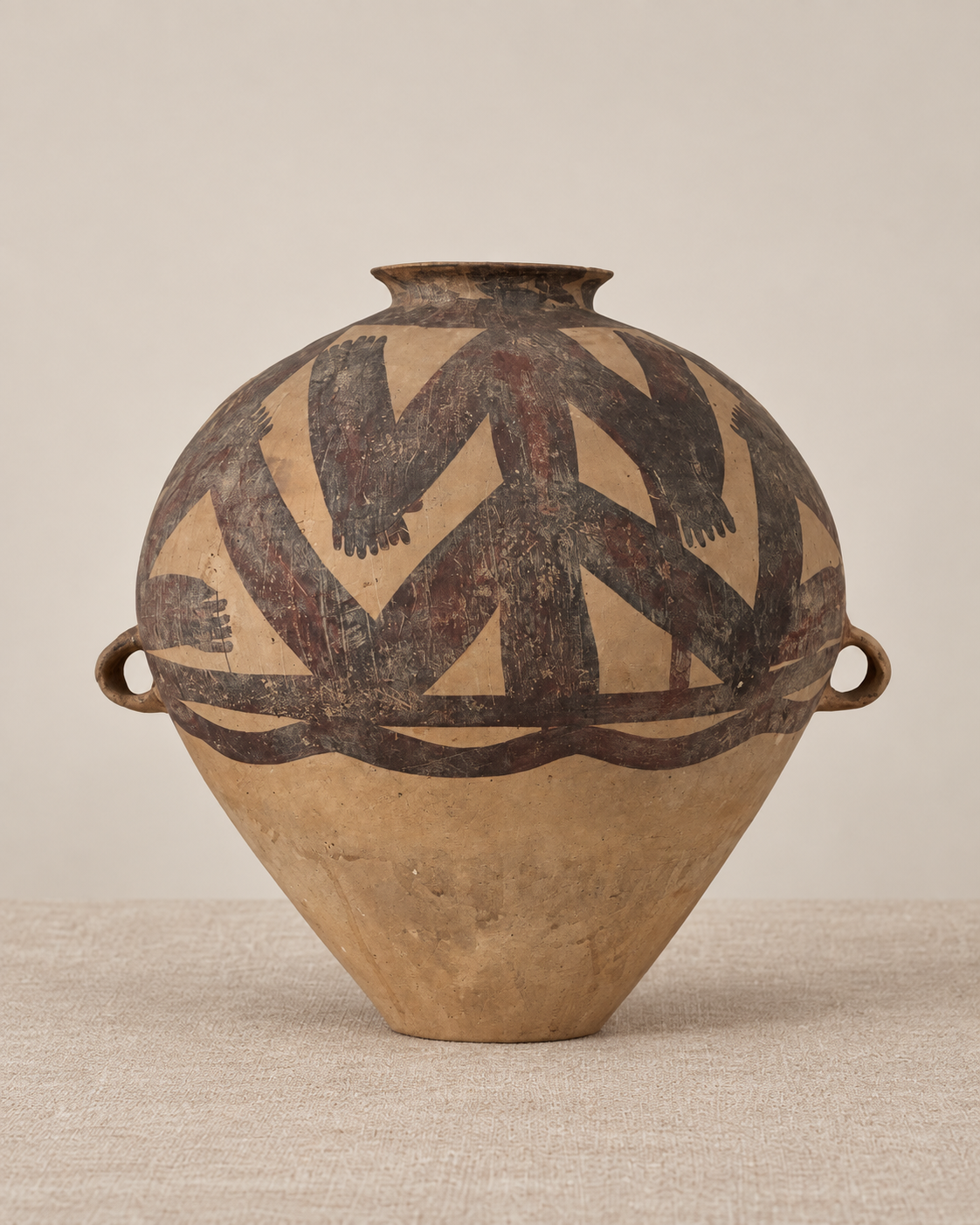
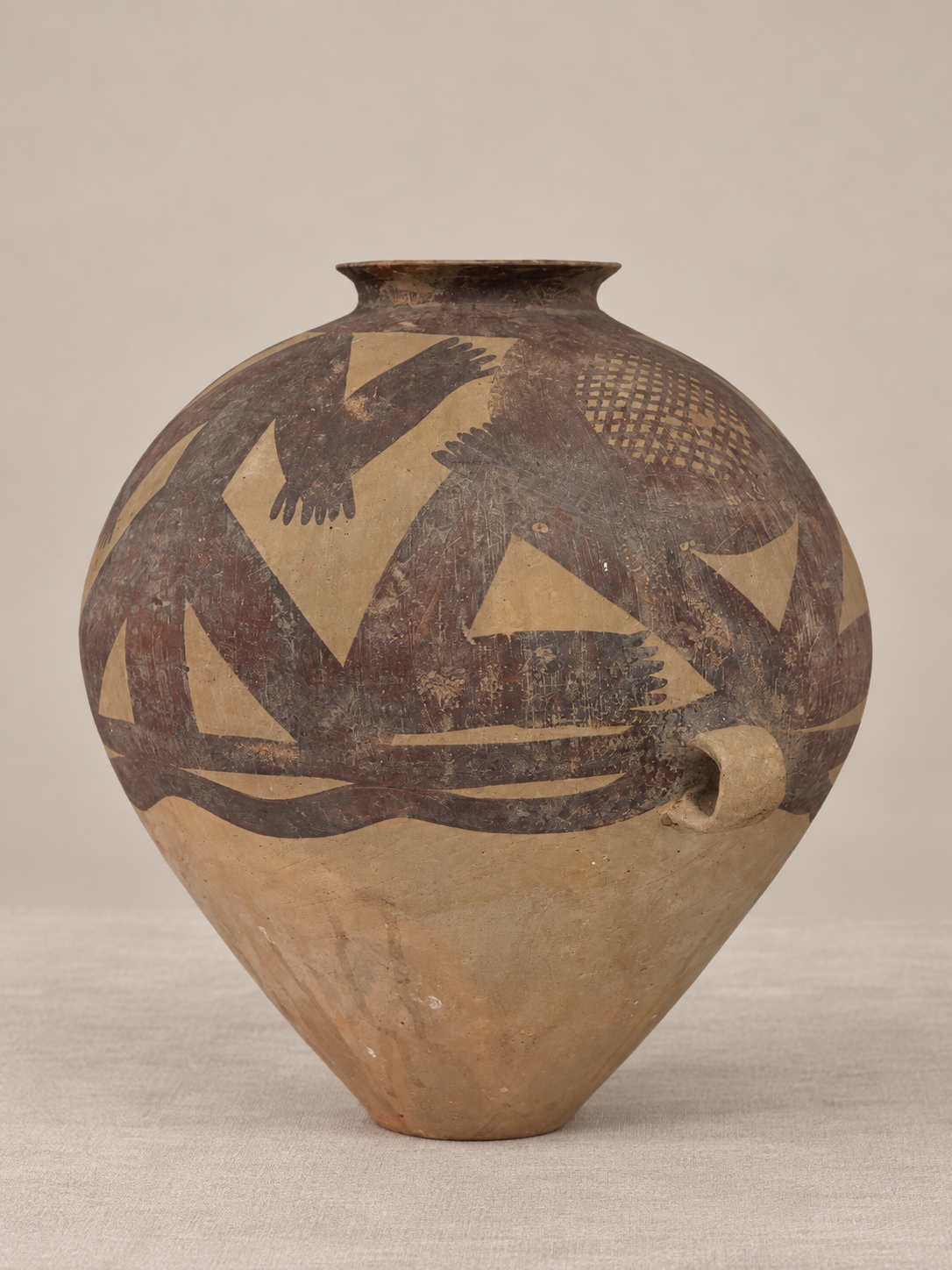
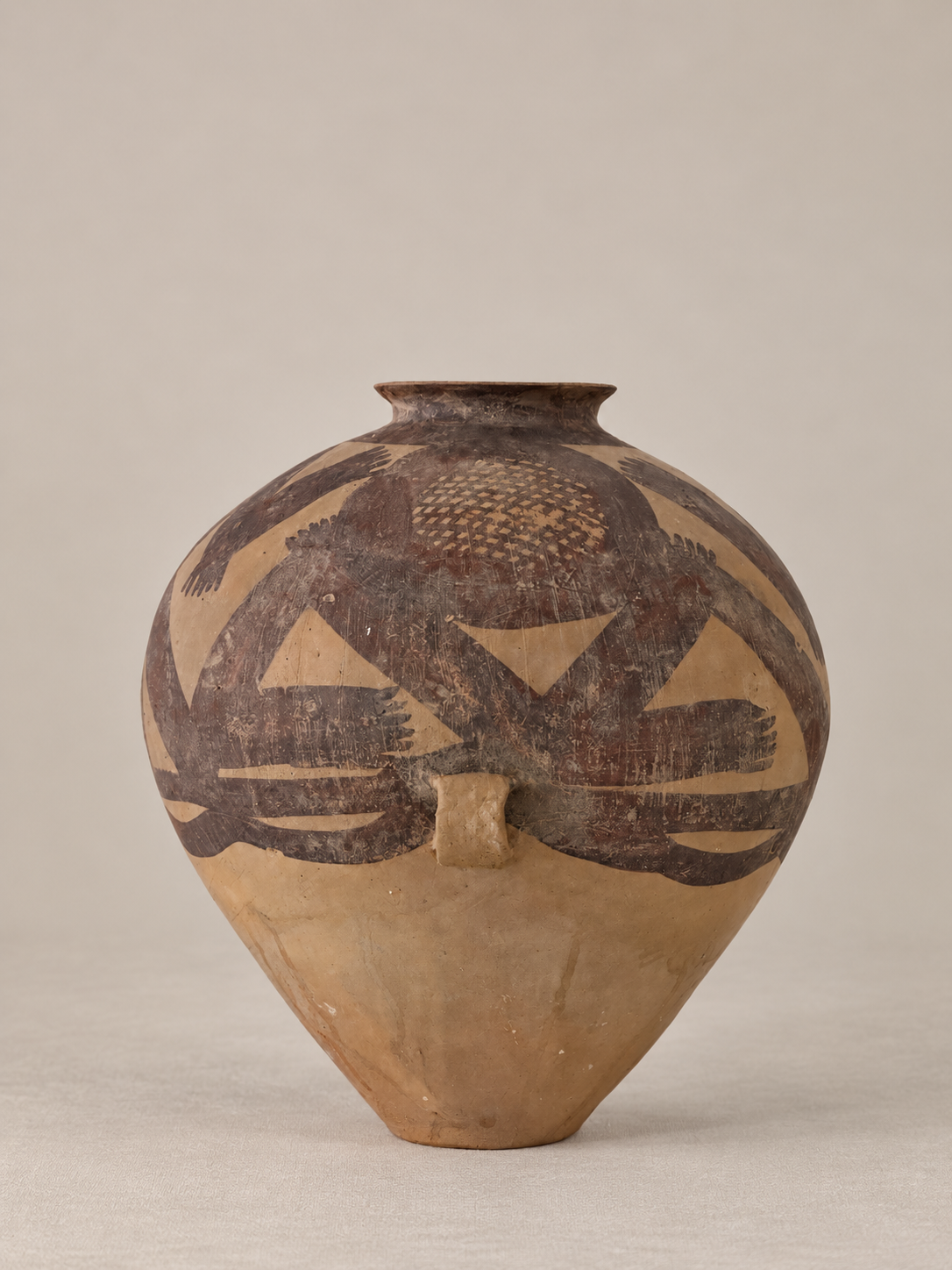
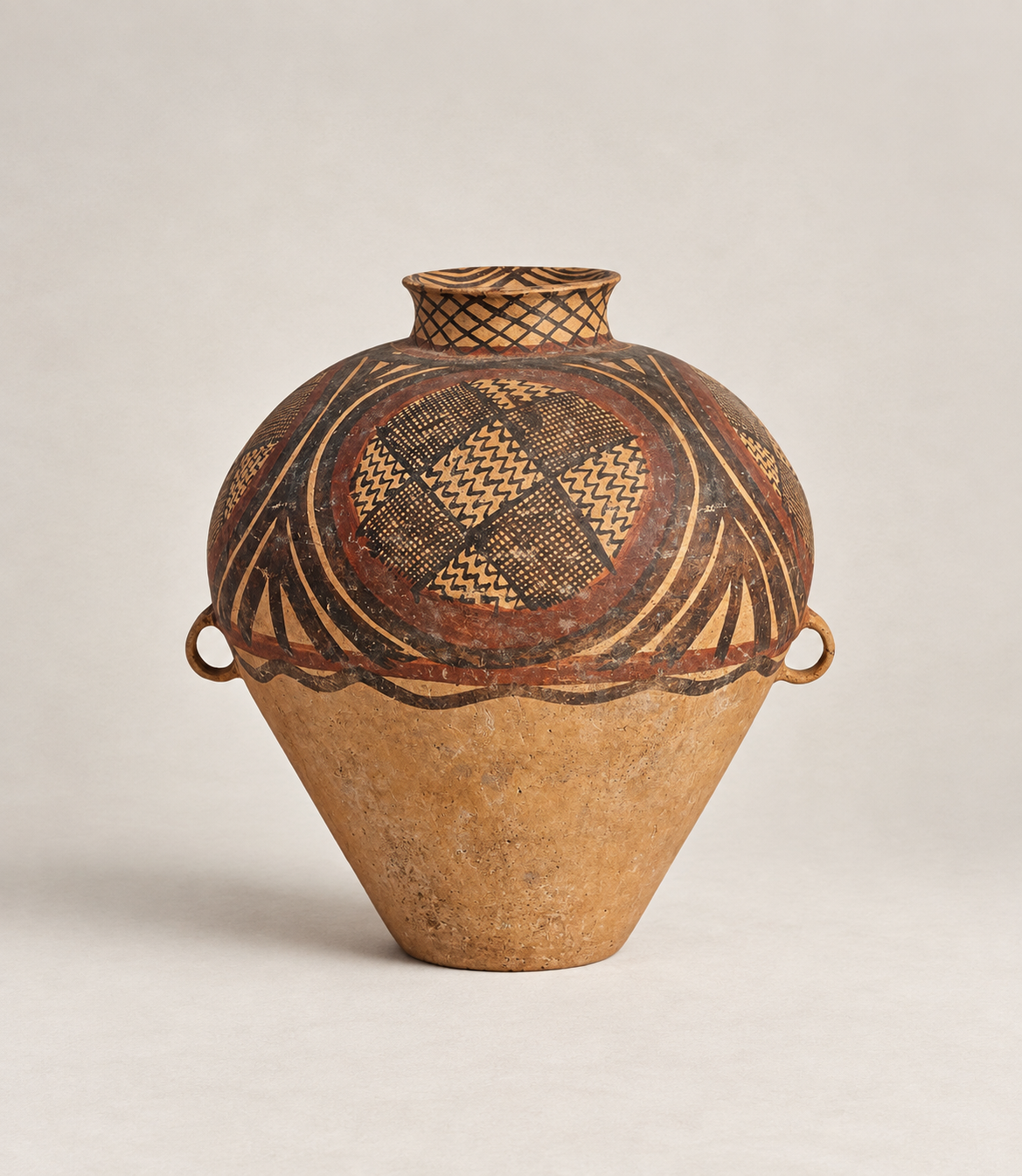
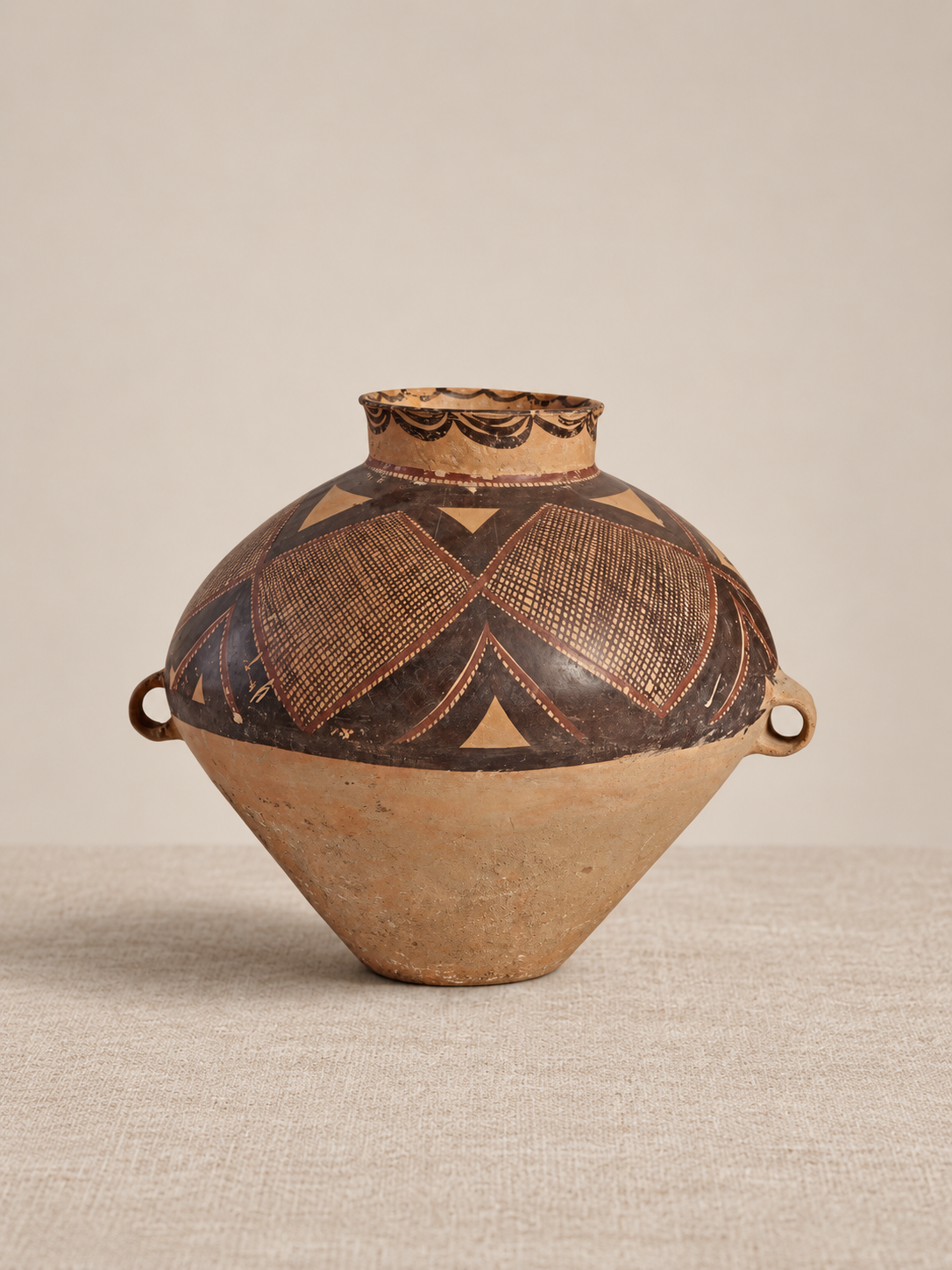
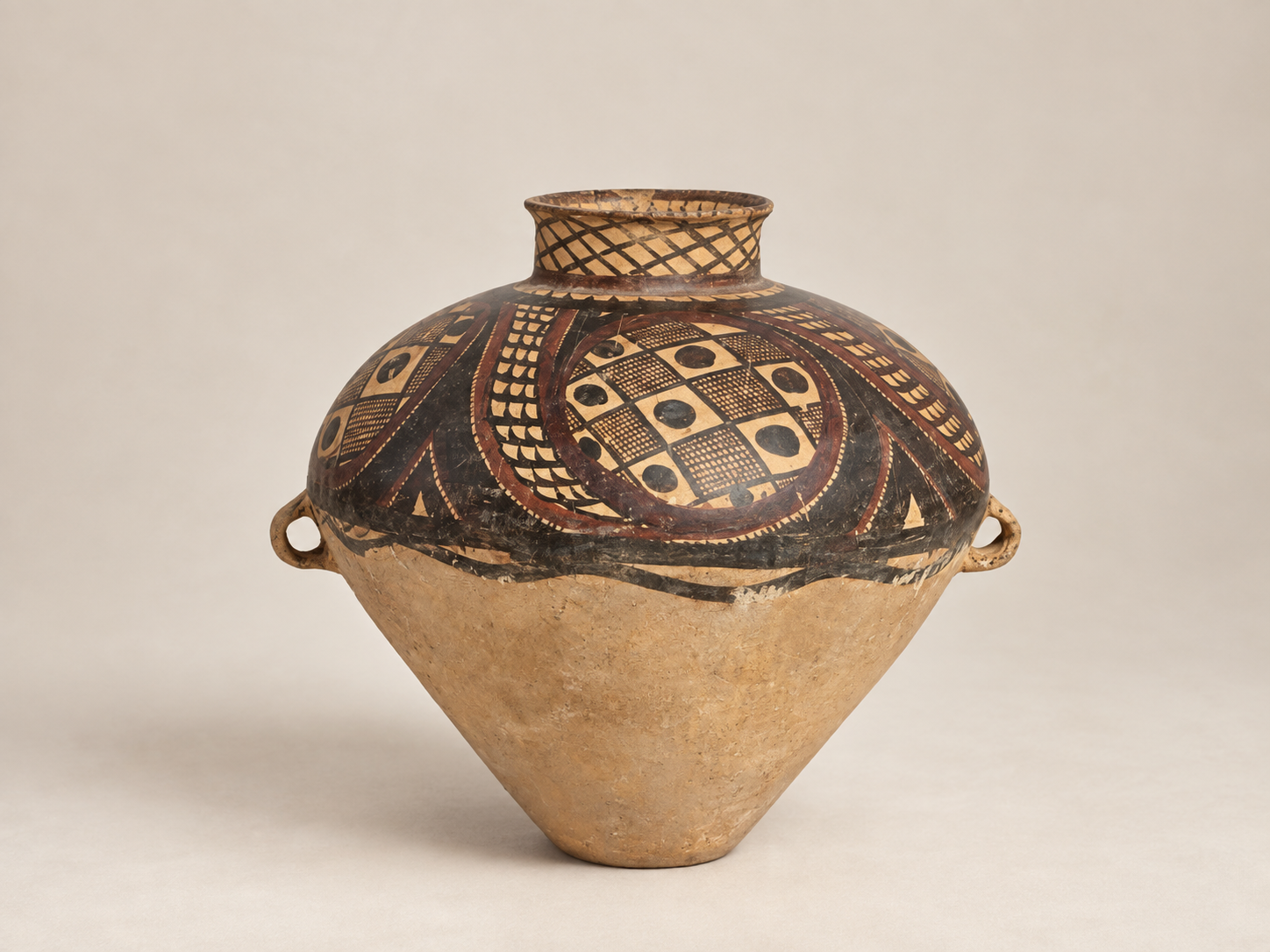
A large and visually striking painted pottery jar from the Banshan phase of the Majiayao culture, standing 45 cm in height and 52 cm in width. The vessel is robustly potted with a broad, rounded shoulder tapering elegantly to a narrower base, topped by a short neck with a slightly everted rim. A pair of small loop handles is applied at the shoulder, enhancing both its functionality and visual balance.
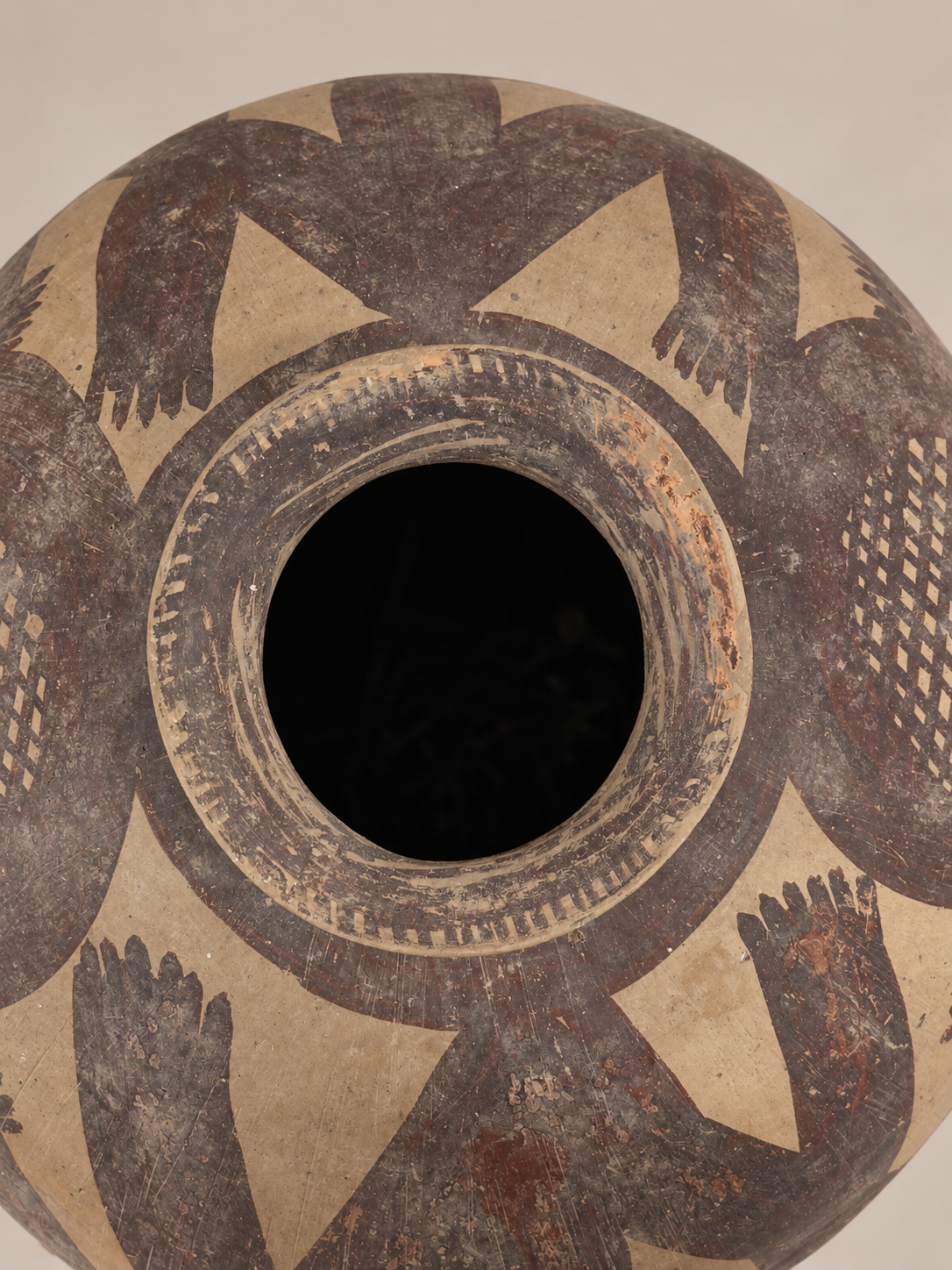
The decoration is conceived to be appreciated from a top-down perspective, a characteristic feature of Banshan pottery. When viewed from above, the composition reveals a carefully balanced arrangement of circular medallions and radiating geometric motifs. These medallions, filled with lattice grids, dots, and cross-hatched patterns, are interconnected by sweeping curved bands that create a dynamic sense of rotation and visual rhythm across the surface.
Such geometric designs are widely understood to carry symbolic as well as decorative meaning. The circular motifs may evoke celestial bodies such as the sun, while the repeated dot patterns can suggest seeds, fertility, or cycles of life. The interlocking grids and net-like patterns are often interpreted as representations of order, structure, or early cosmological concepts—reflecting a worldview in which harmony between natural and spiritual realms was essential. The swirling arrangement further enhances this impression, suggesting movement, transformation, and cyclical time.
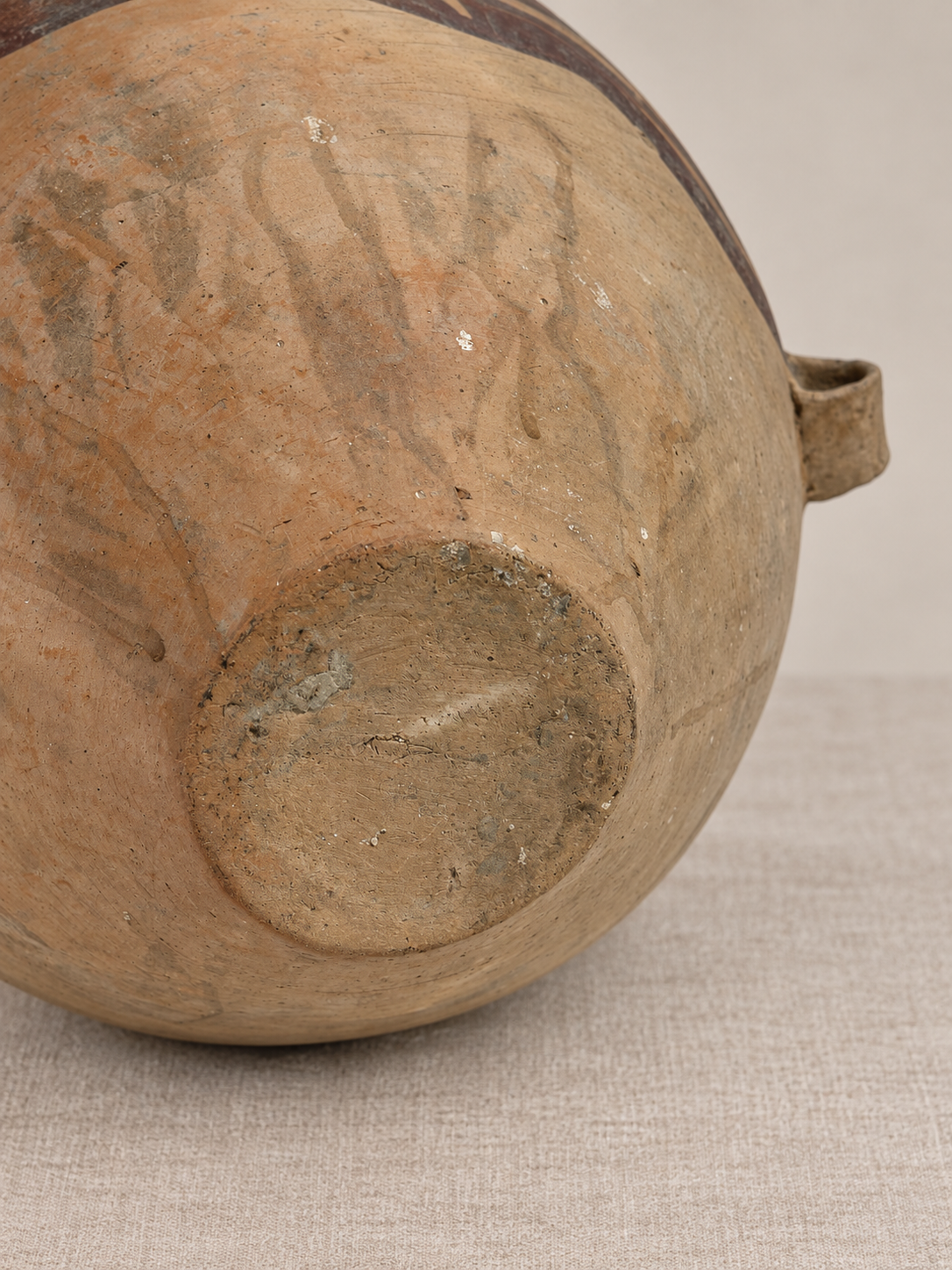
The upper body is richly ornamented in deep brown to black mineral pigments over a warm buff ground, the painted decoration remaining vibrant and visually compelling. The lower body is intentionally left plain, creating a refined contrast that grounds the composition and accentuates the complexity above.
The jar is in exceptional condition for its great age, as can clearly be seen in the images above. There are the expected traces of burial accretions, contributing to its authenticity, while surface wear is minimal. There is no evidence whatsoever of restoration or repair, and the original painted decoration is beautifully preserved throughout. Simply stunning, a true masterpiece.
A powerful and scholarly example of Banshan painted pottery, notable not only for its impressive scale and remarkable state of preservation, but also for its sophisticated design and profound symbolic resonance.
Provenance:
Private Collection, Greenwich, Connecticut
A large and visually striking painted pottery jar from the Banshan phase of the Majiayao culture, standing 45 cm in height and 52 cm in width. The vessel is robustly potted with a broad, rounded shoulder tapering elegantly to a narrower base, topped by a short neck with a slightly everted rim. A pair of small loop handles is applied at the shoulder, enhancing both its functionality and visual balance.
The decoration is conceived to be appreciated from a top-down perspective, a characteristic feature of Banshan pottery. When viewed from above, the composition reveals a carefully balanced arrangement of circular medallions and radiating geometric motifs. These medallions, filled with lattice grids, dots, and cross-hatched patterns, are interconnected by sweeping curved bands that create a dynamic sense of rotation and visual rhythm across the surface.
Such geometric designs are widely understood to carry symbolic as well as decorative meaning. The circular motifs may evoke celestial bodies such as the sun, while the repeated dot patterns can suggest seeds, fertility, or cycles of life. The interlocking grids and net-like patterns are often interpreted as representations of order, structure, or early cosmological concepts—reflecting a worldview in which harmony between natural and spiritual realms was essential. The swirling arrangement further enhances this impression, suggesting movement, transformation, and cyclical time.
The upper body is richly ornamented in deep brown to black mineral pigments over a warm buff ground, the painted decoration remaining vibrant and visually compelling. The lower body is intentionally left plain, creating a refined contrast that grounds the composition and accentuates the complexity above.
The jar is in exceptional condition for its great age, as can clearly be seen in the images above. There are the expected traces of burial accretions, contributing to its authenticity, while surface wear is minimal. There is no evidence whatsoever of restoration or repair, and the original painted decoration is beautifully preserved throughout. Simply stunning, a true masterpiece.
A powerful and scholarly example of Banshan painted pottery, notable not only for its impressive scale and remarkable state of preservation, but also for its sophisticated design and profound symbolic resonance.
Provenance:
Private Collection, Greenwich, Connecticut